Small-scale farmers, guests from the U.S. Dept. of Agriculture, and college researchers came to the College of Agriculture and Environmental Sciences this month to discuss the role of underserved producers in the bioeconomy.
But first, they had to define the term.
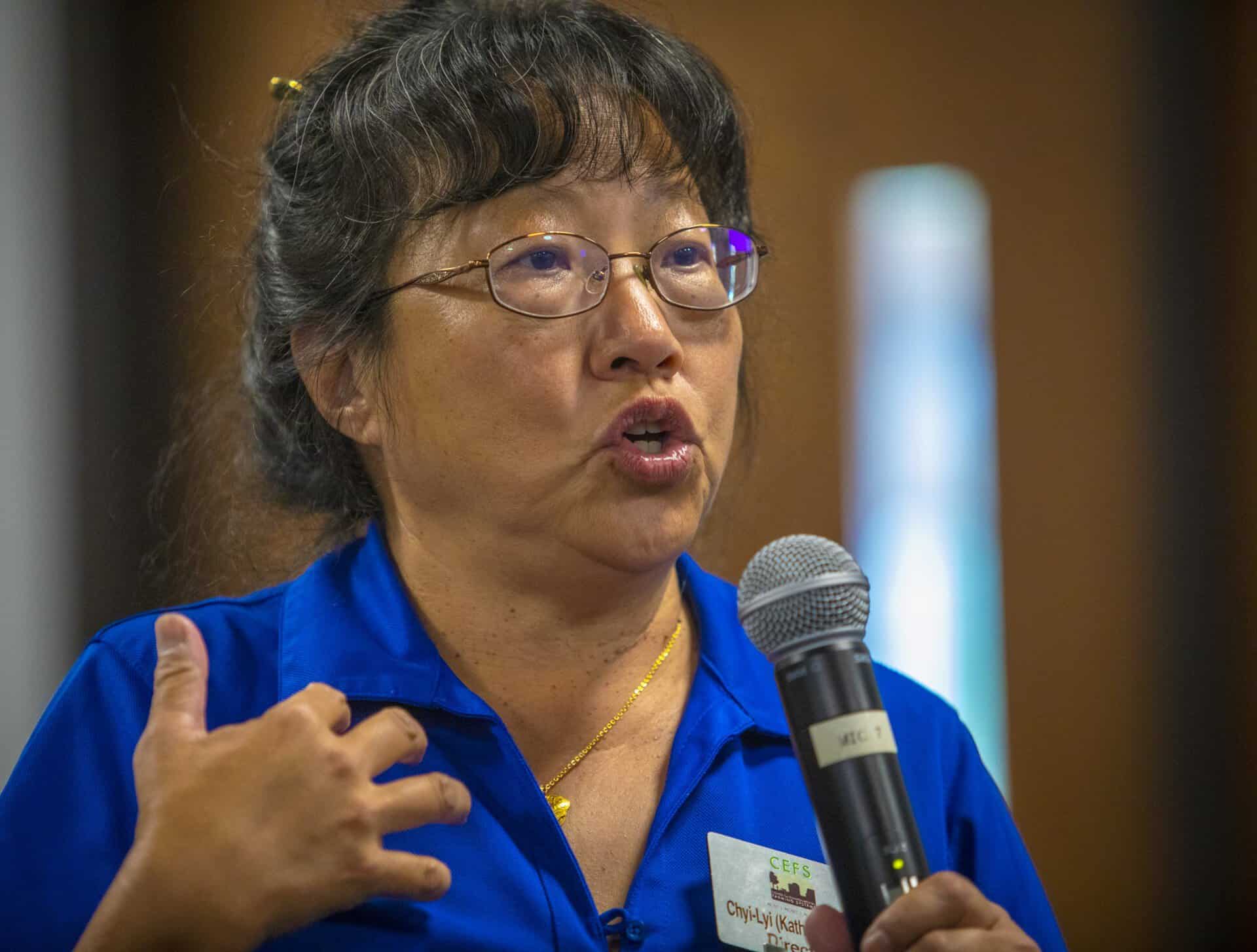
“Everything comes from Mother Nature and goes back to Mother Nature,” said Kathleen Liang, Ph.D., host of the event. “Whether high tech or low tech, the end goal is to work with Mother Nature and what she gives us, and we figure out how to reuse it or turn negativity into positivity and give it back as new resources.”
“Bioeconomy” refers to the whole food system, from production to supply chain to consumption, said Liang, who is W.K. Kellogg Distinguished Professor of Sustainable Agriculture at the CAES. But there are two main aspects: resiliency and conservation.
The resiliency, or renewal, aspect of the bioeconomy is important so that citizens and businesses worldwide “don’t just keep spending money to keep looking for new thing all the time – we build reusing, recycling, composting, that sort of thing, into the way we do business,” Liang said.
The conservation aspect focuses on how people worldwide utilize, or reutilize, production resources and leftovers from consumption.
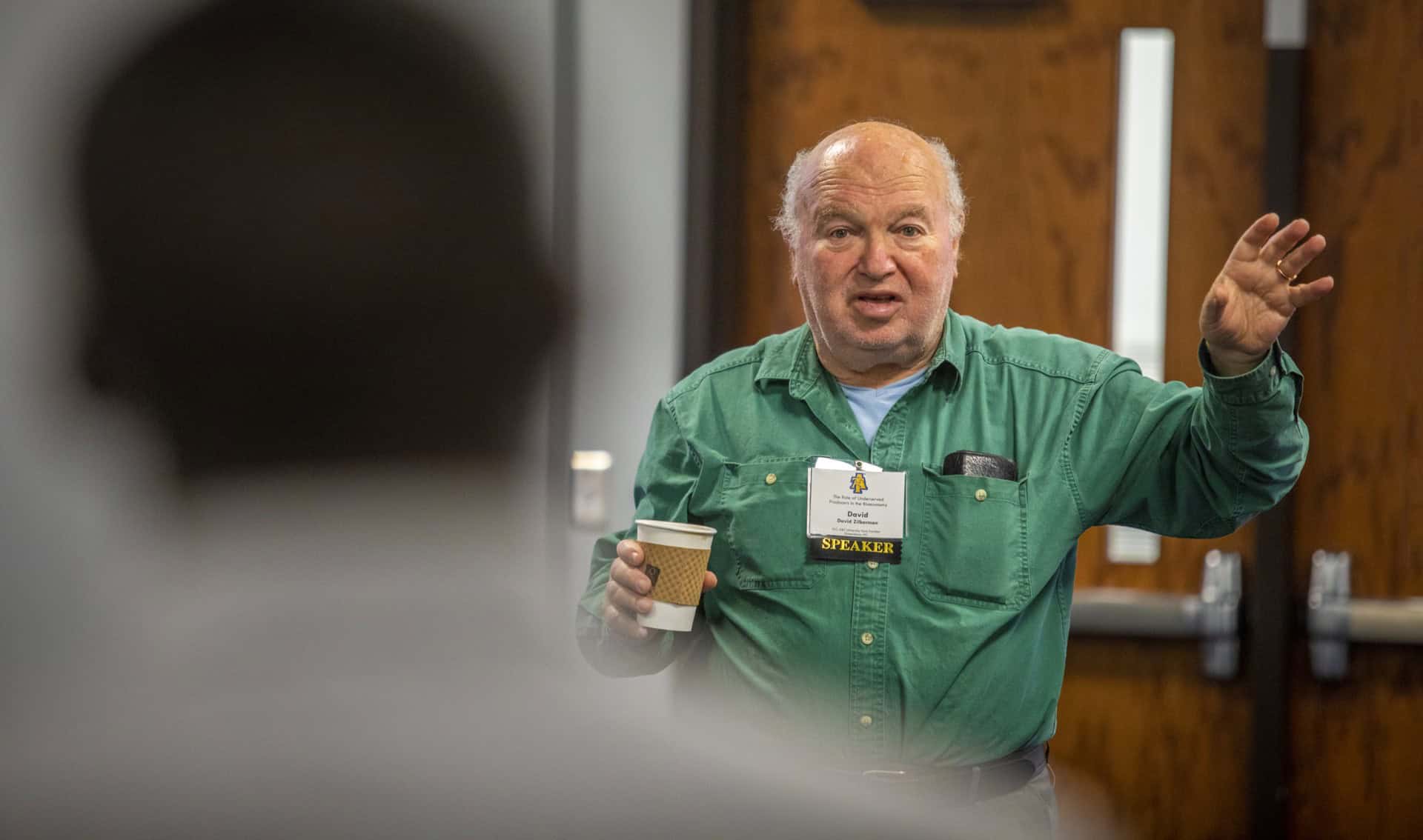
“Bioeconomy is much more than food and fiber,” said David Zilberman, Ph.D., a distinguished professor and Wolf Prize laureate from the University of California-Berkeley who presented at the conference. “It’s food, fuel, chemicals, everything. For example, we’re creating new ways to produce, such as using biochar, bioenergy, solar. We’ve moved to electric cars, but we still rely on renewable fuel, we rely on physics and we rely on biology to solve the world’s fuel problem.”
Joseph Cooper, senior policy advisor to USDA’s chief economist, said that, although technology creates new ways to produce, such biochar, bioenergy and renewable energies like solar power, it’s equally important to reuse the resources already in our system.
“That also applies to consumption side – ways that we work on local and state regulators and work with consumers to reduce food waste,” he said.
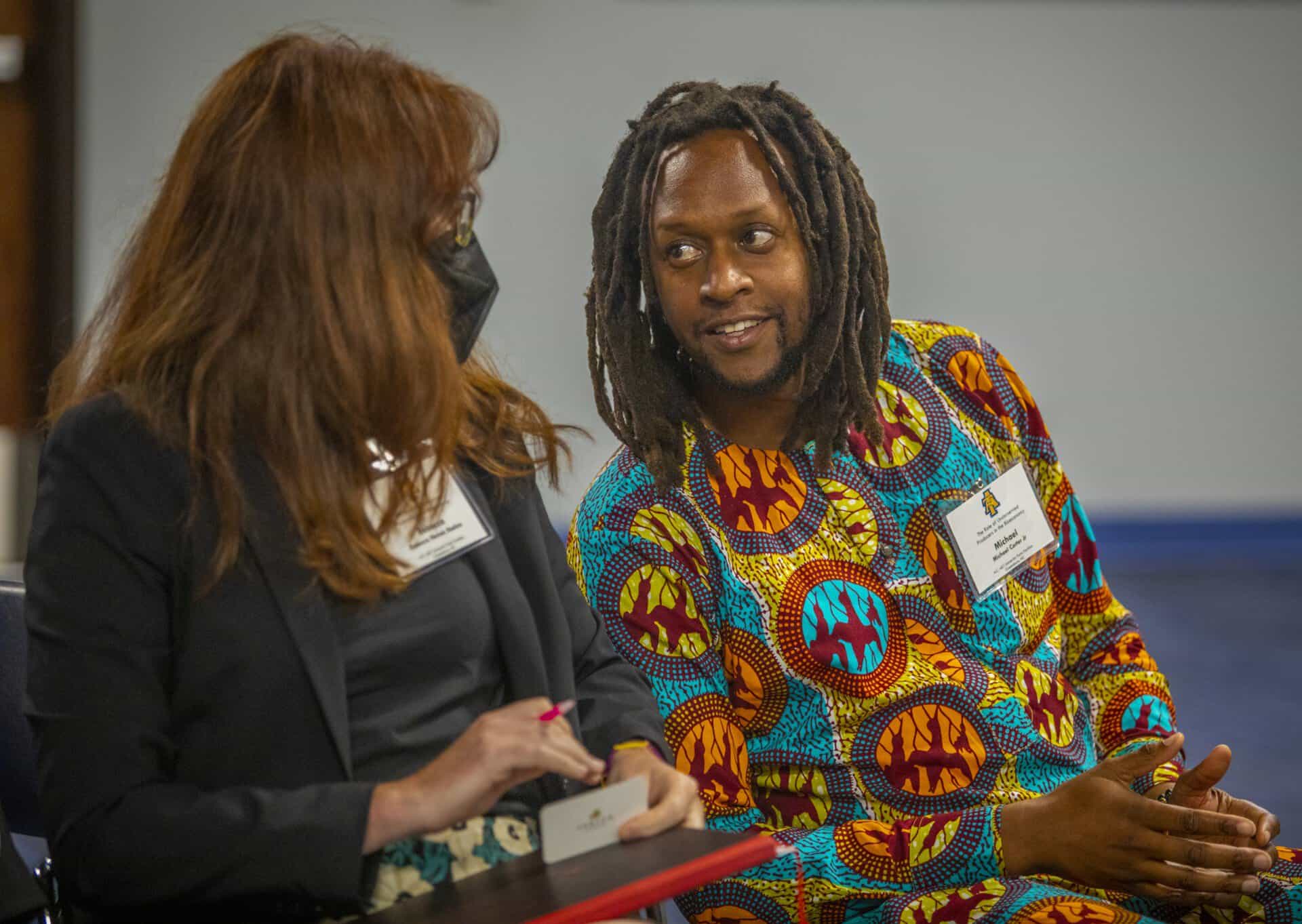
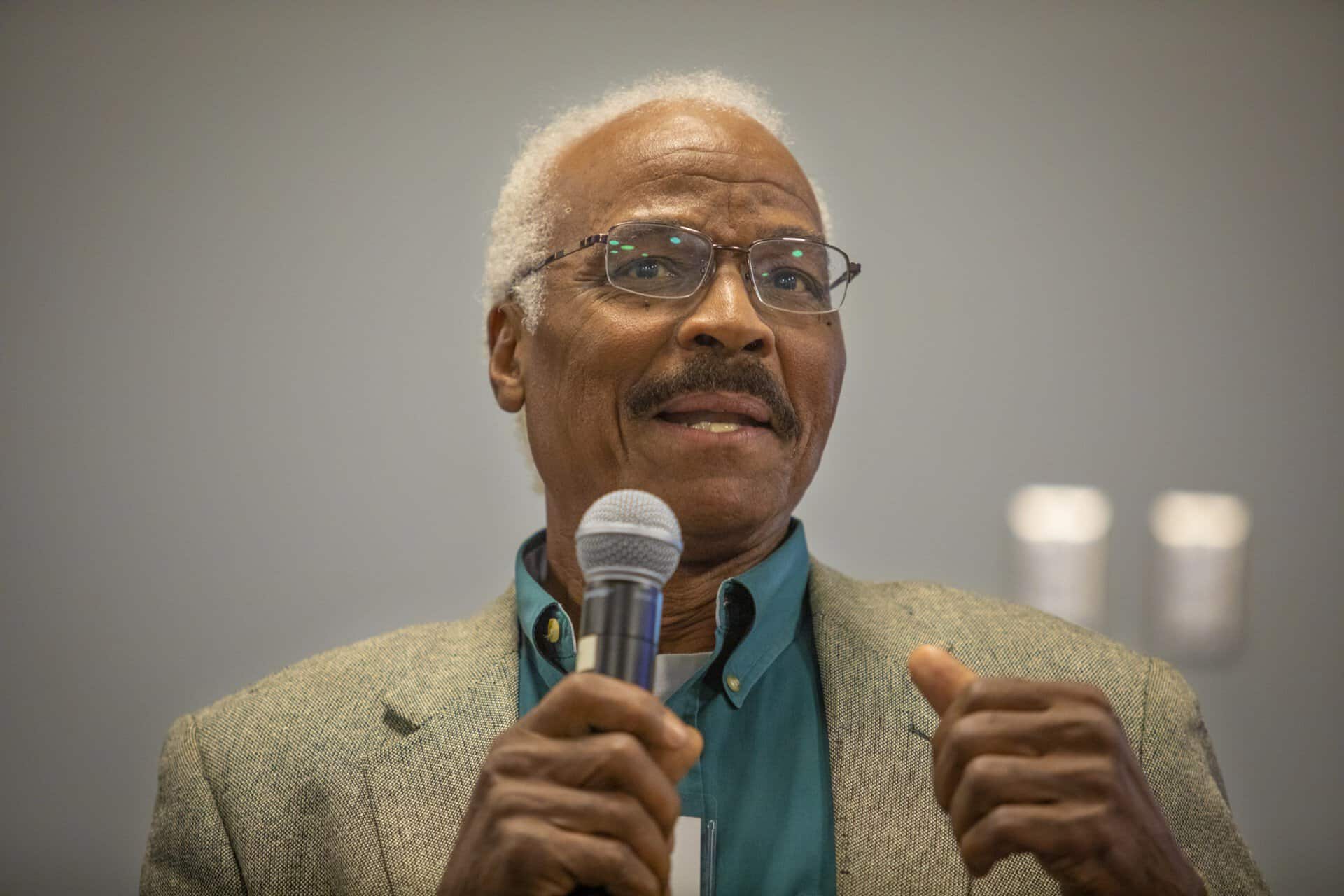
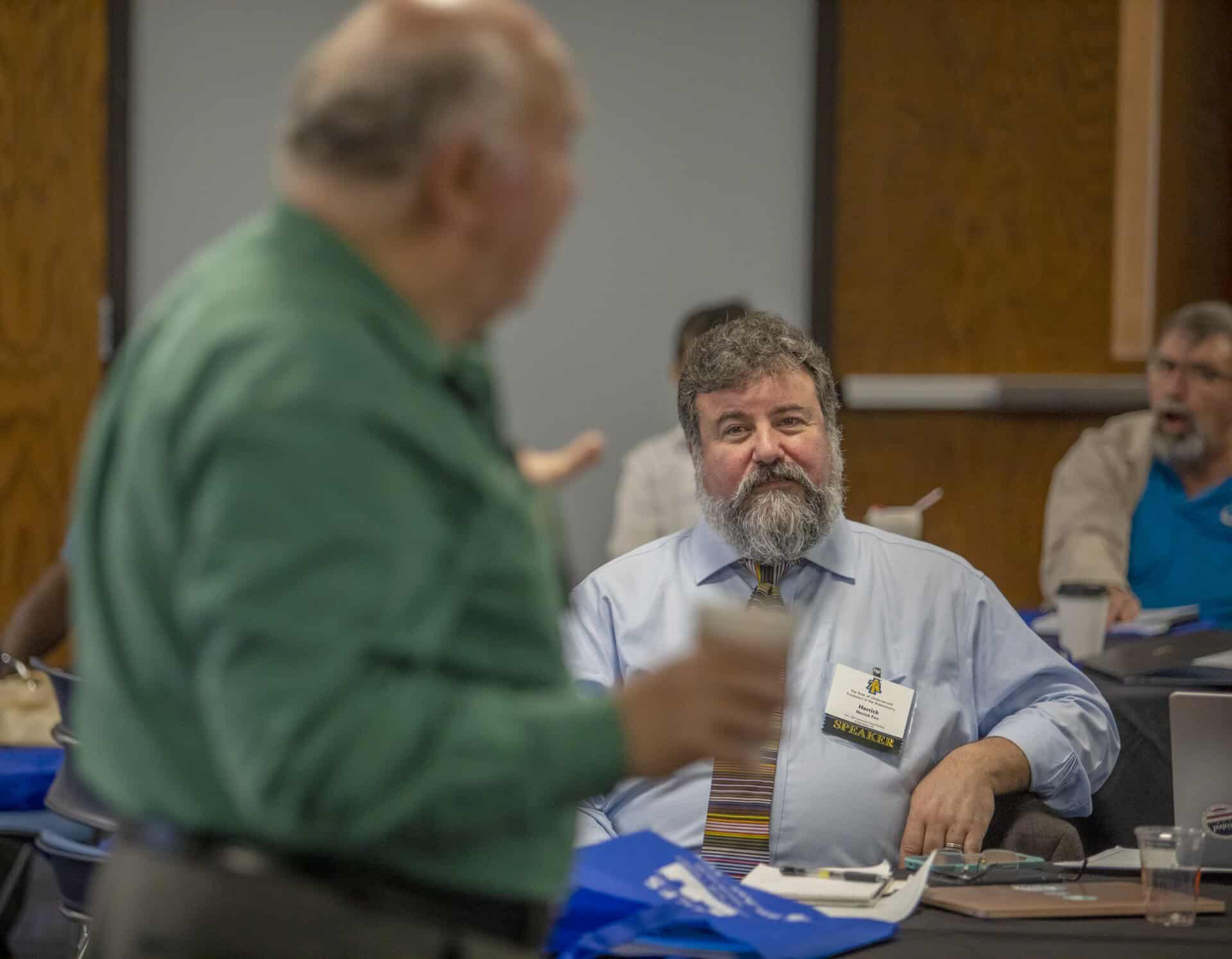
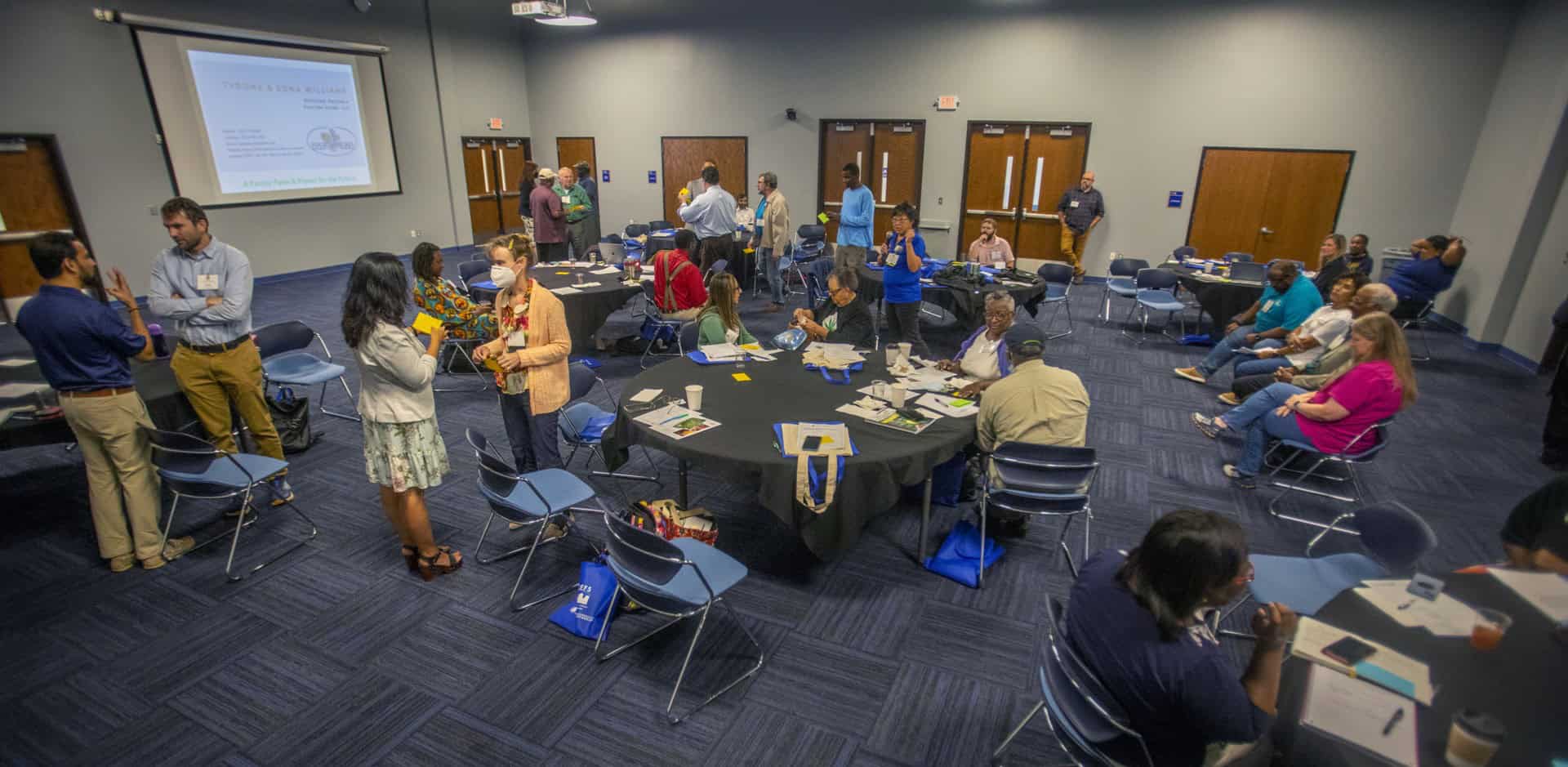
The conference, hosted at the University Farm Pavilion, introduced small-scale producers to members of Cooperative Extension at N.C. A&T, representatives of the USDA and visiting professors across the nation in an open dialogue about the role of underserved producers.
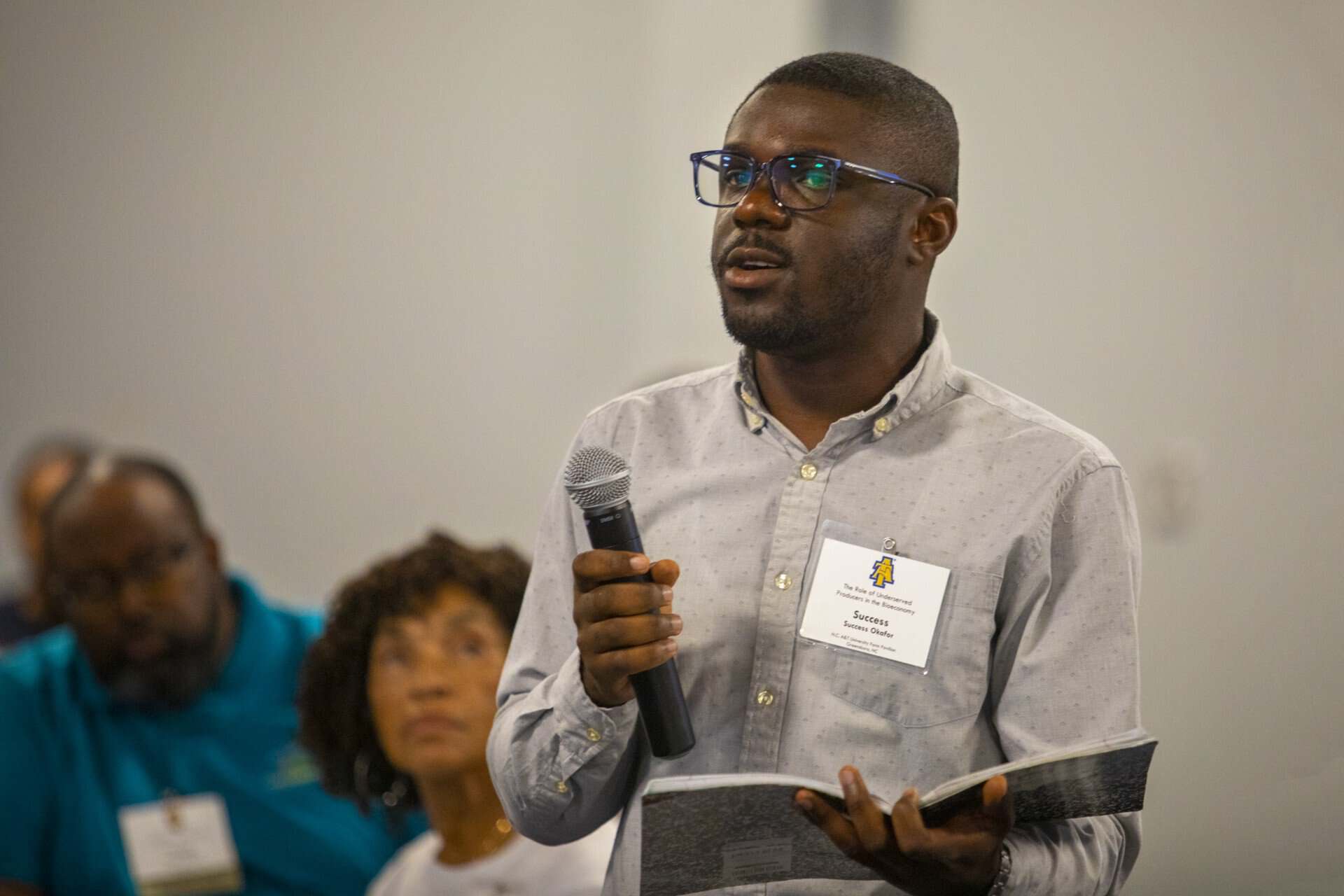
Calvin Jones, a Warren County farmer, asked the guests how the farmers and the USDA can collaborate to better assist underserved producers.
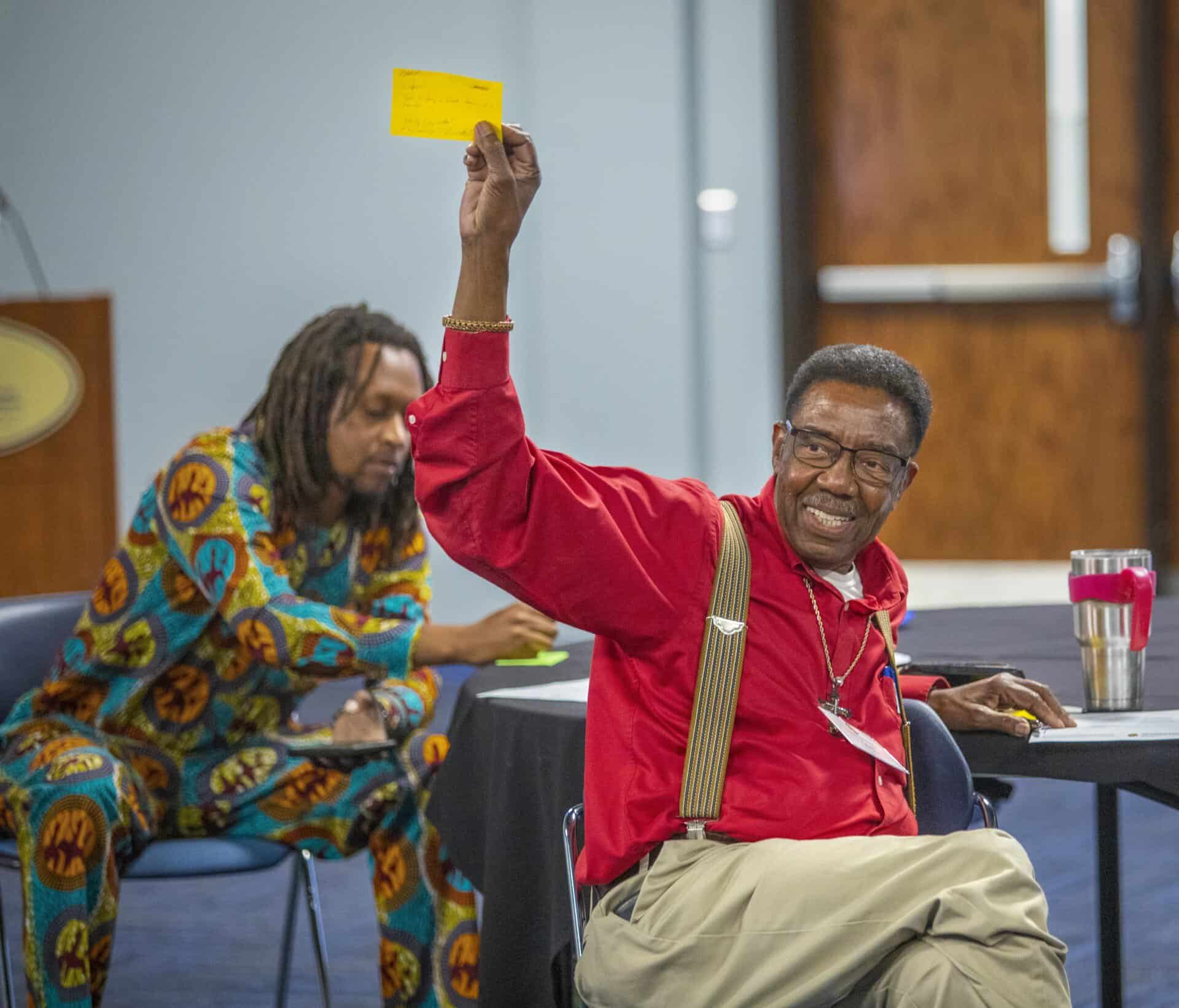
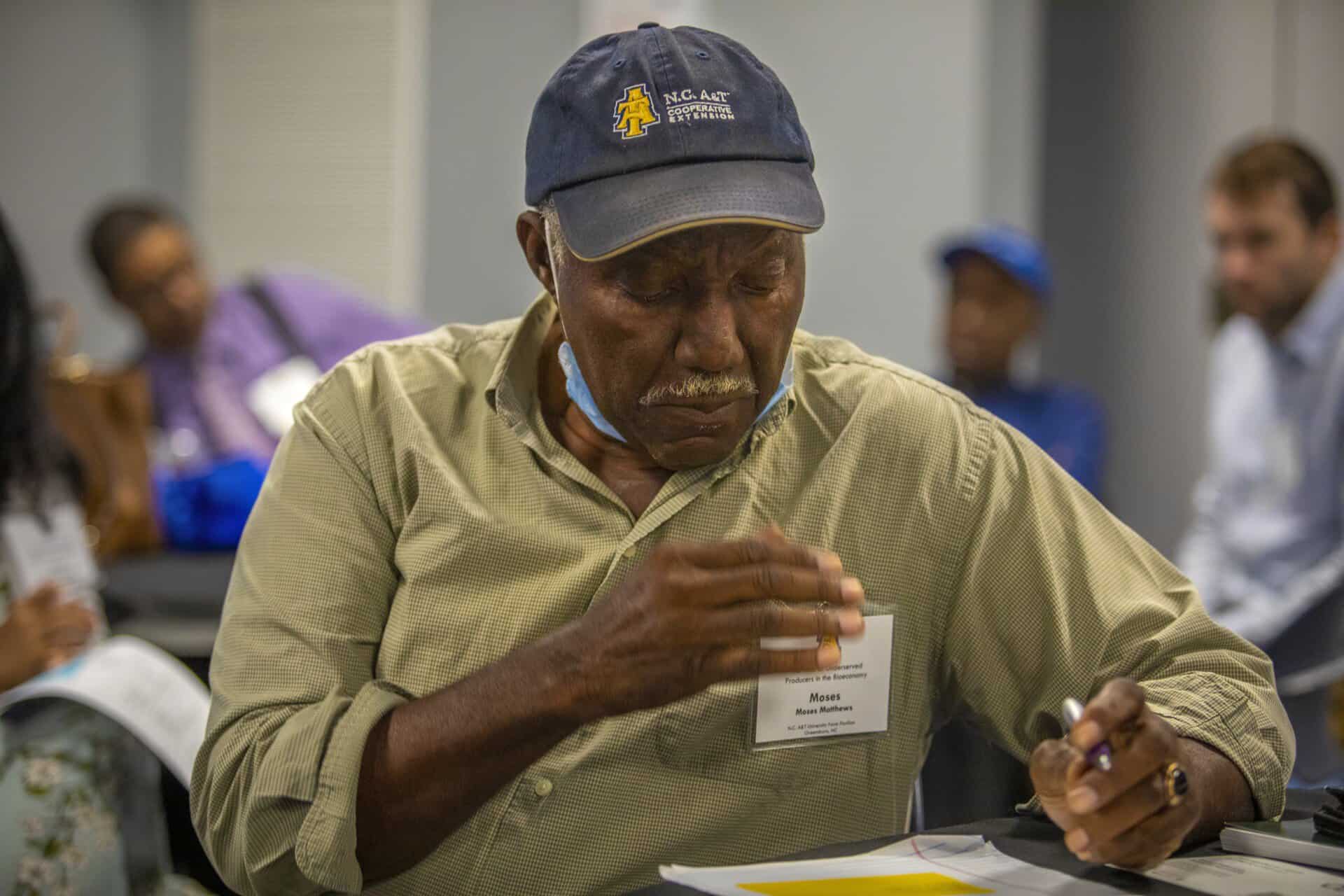
Calvin Jones, an attendee, participates in an exercise during "The Role of the Underserved Producers in the Bioeconomy" conference held at the University Farm Pavilion.
“We know discrimination exists, and we know there’s a key bracket or a spreadsheet or some information that can help,” said Jones. “How can we hit the nail on the head?”
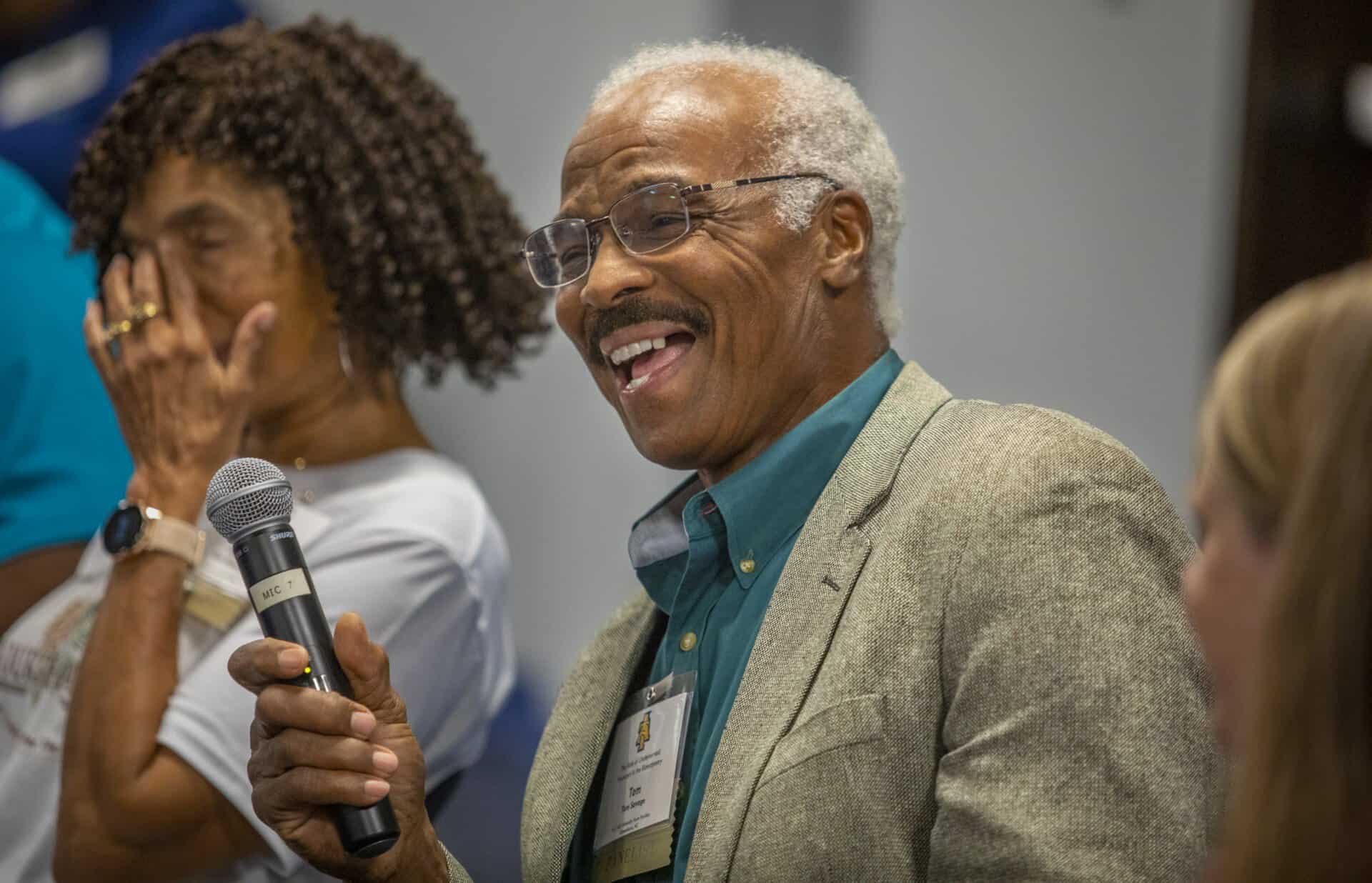
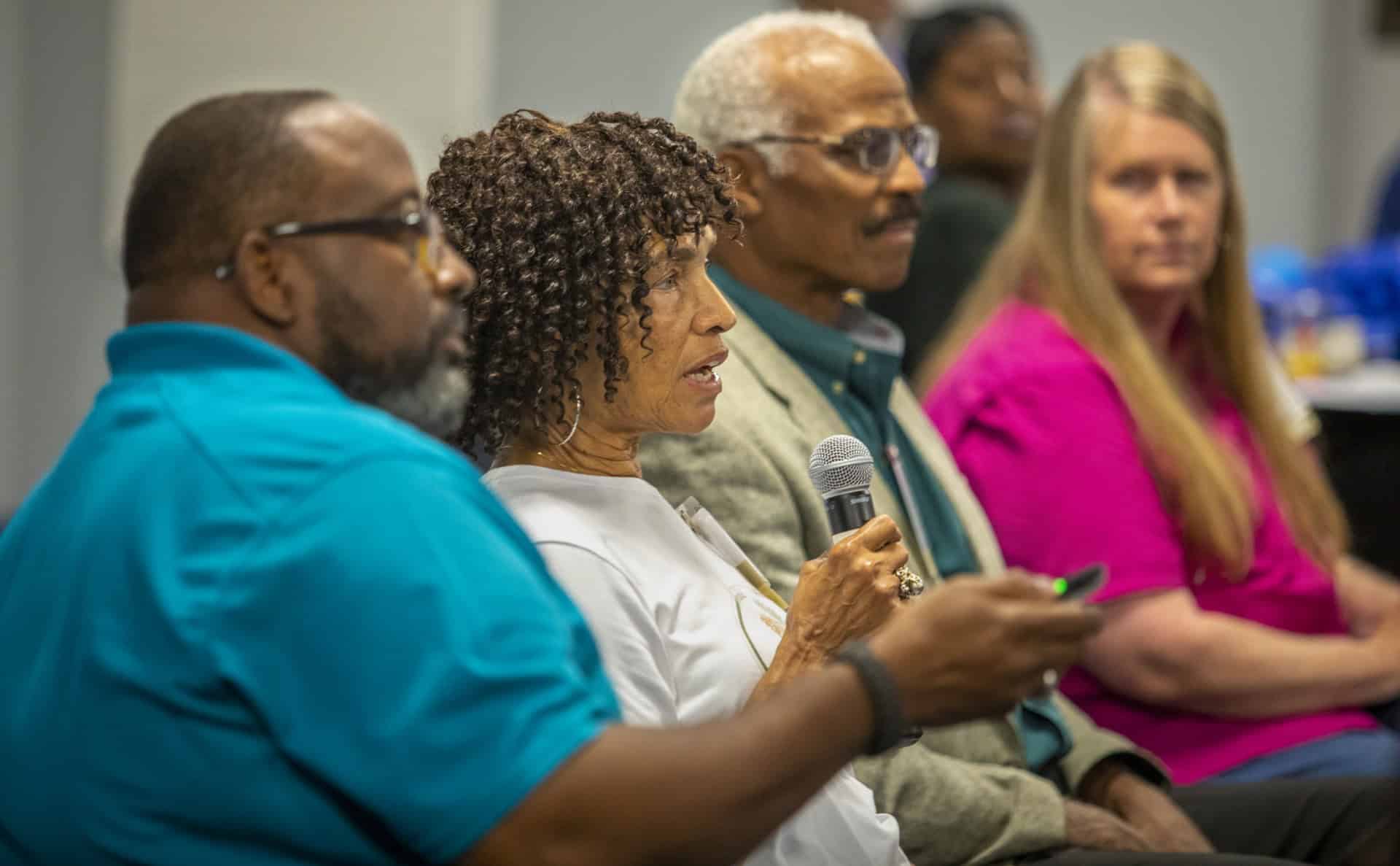
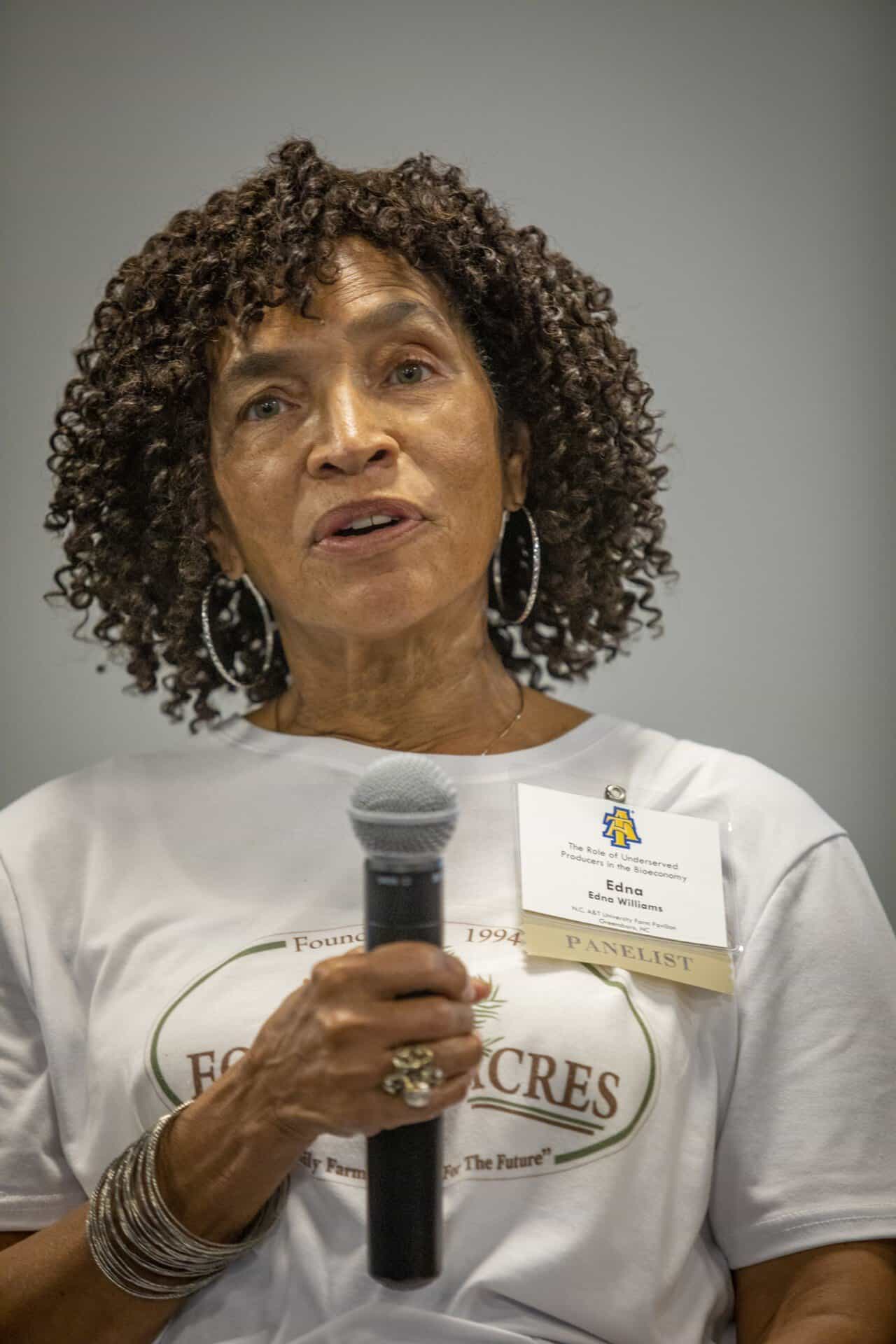
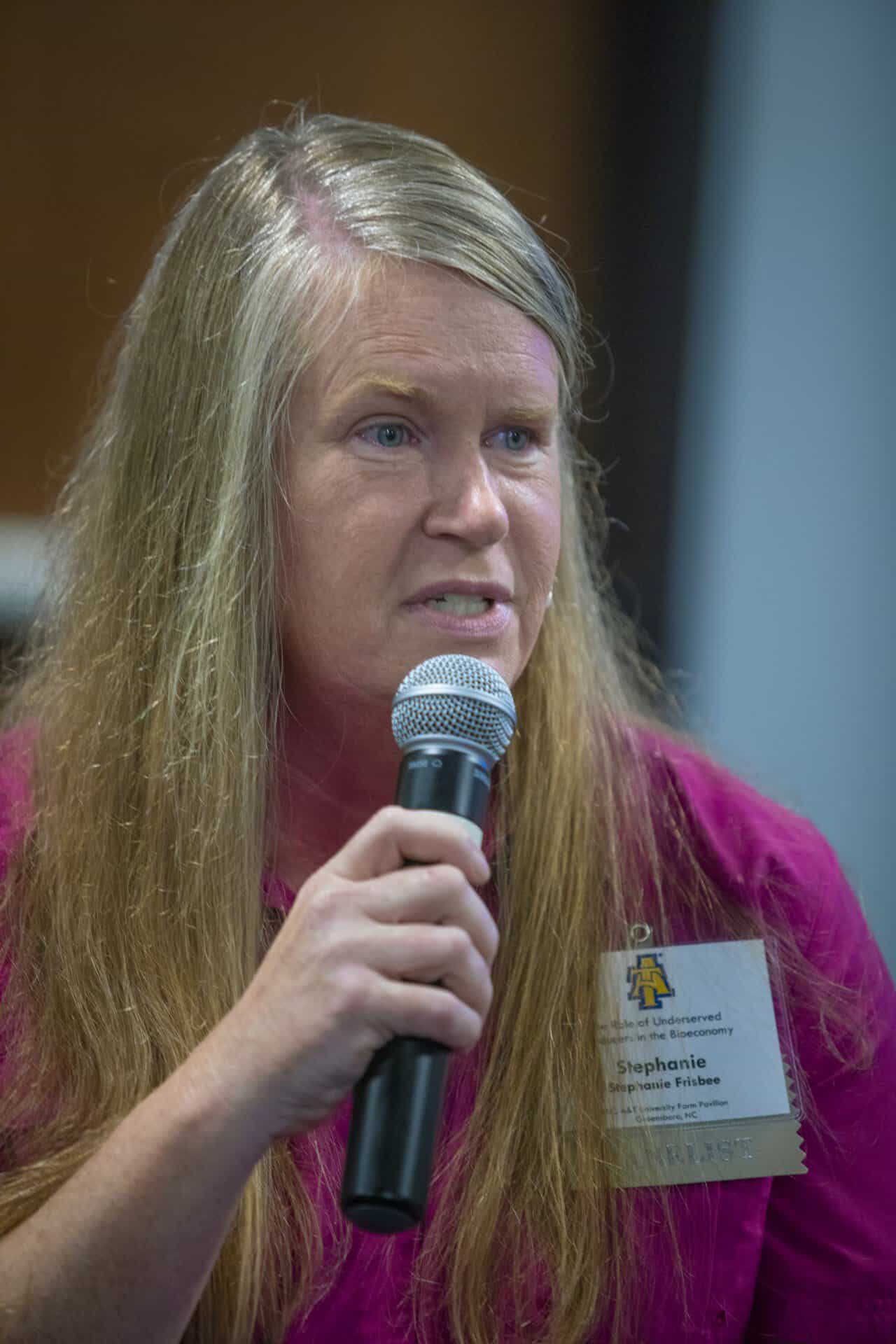
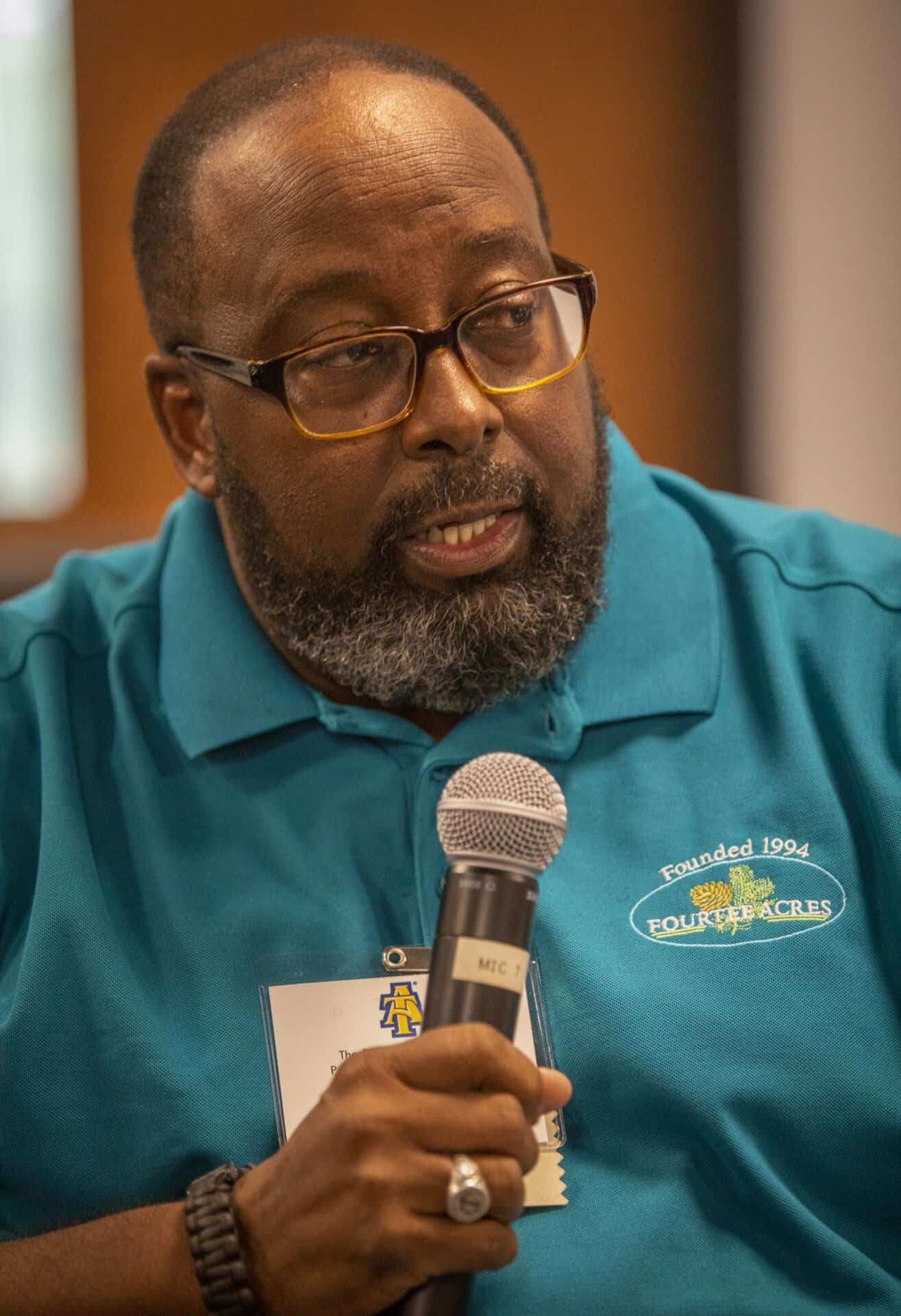
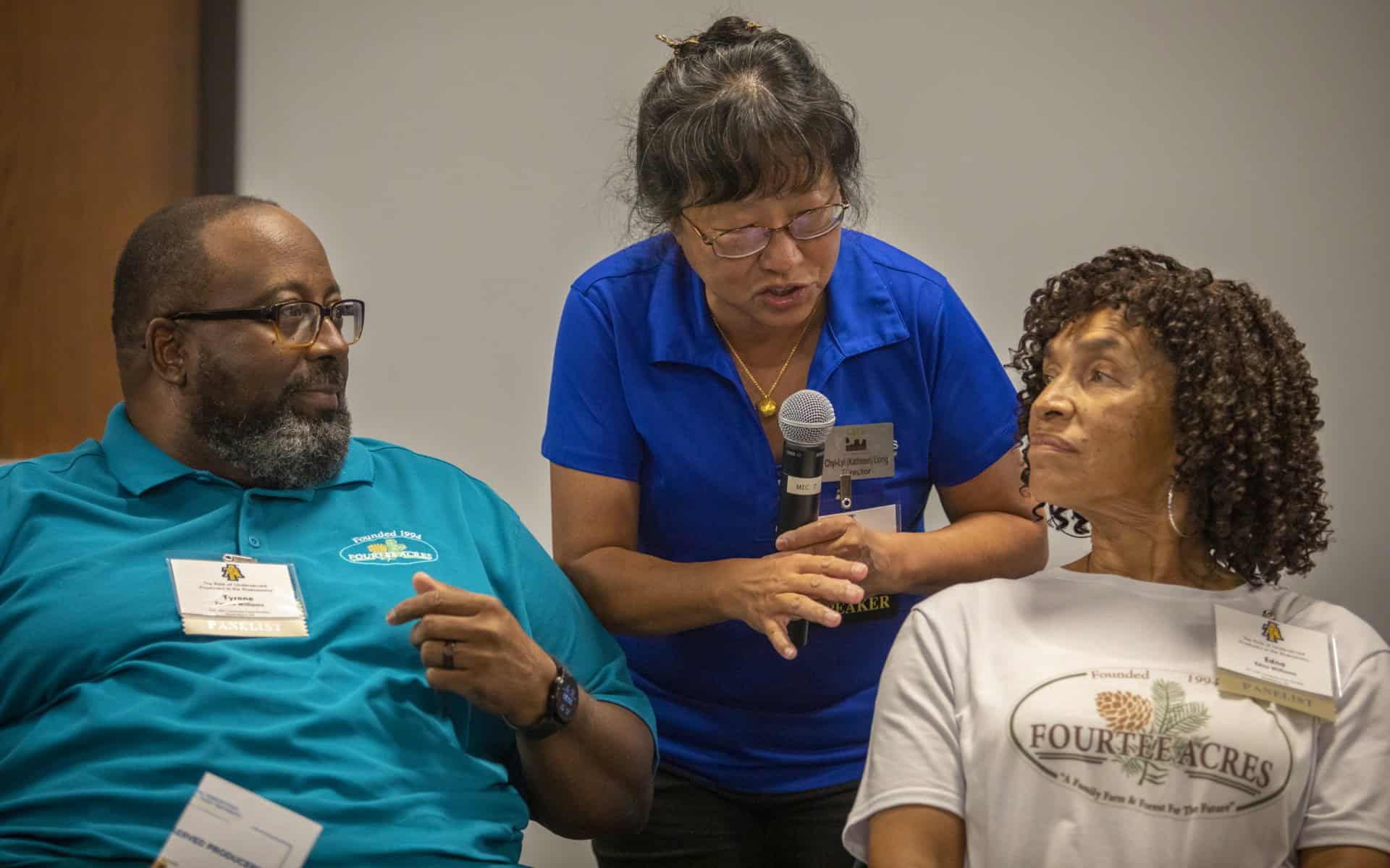
A fixture of the event involved a panel discussion with three diverse groups of producers: Tom Savage of Allied Organic Farms, Stephanie Frisbee of Hope Acres Farms, and Tyrone & Edna Williams of Fourtee Acres Farms.
“Our high tunnel is smaller than most high tunnels,” said Edna Williams. “It’s a 30 x 35’ tunnel, but working with Dr. Liang, we grow vertically and we’re able to produce just as much as a 35 x 70’ and we’re still sustaining our produce.”
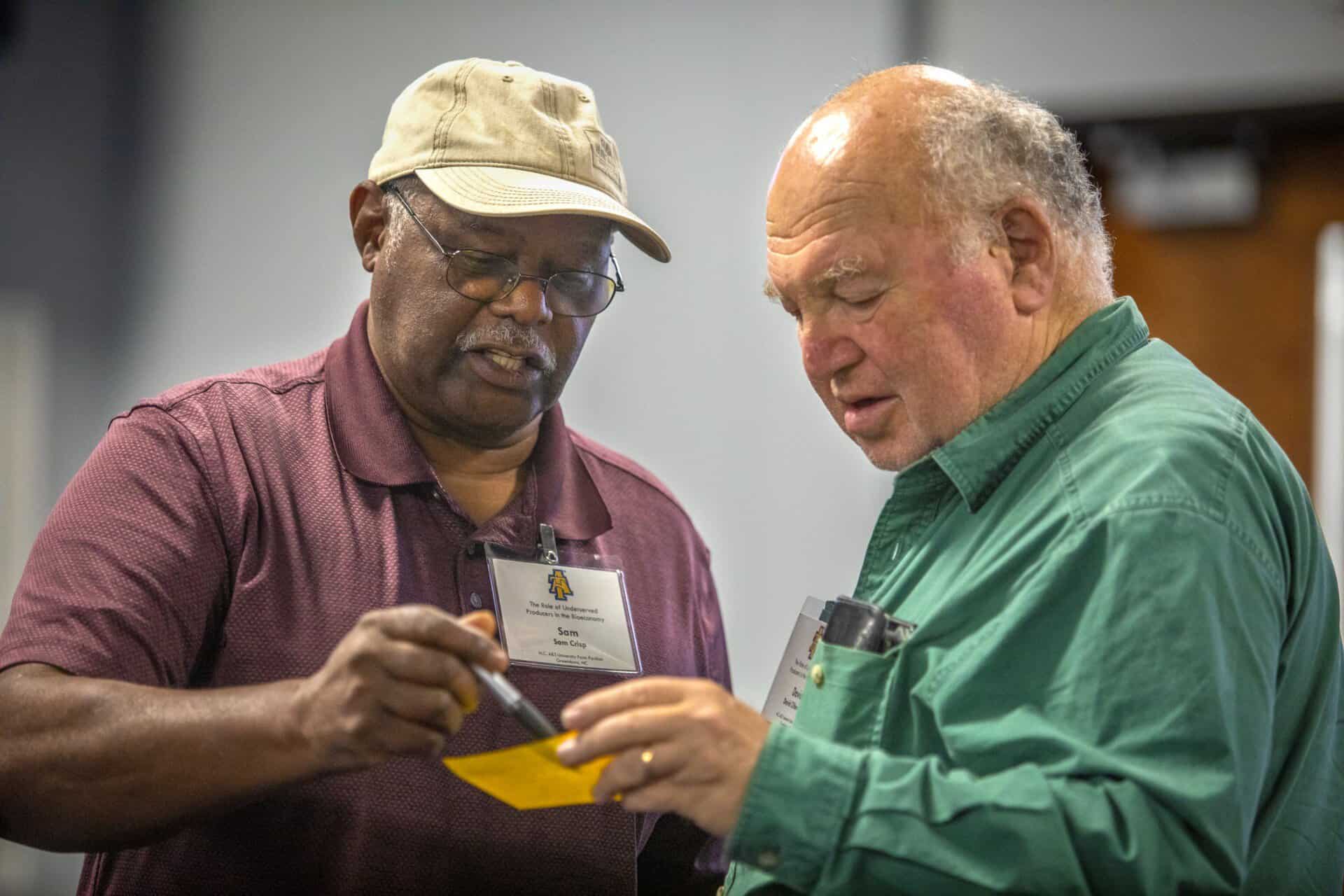
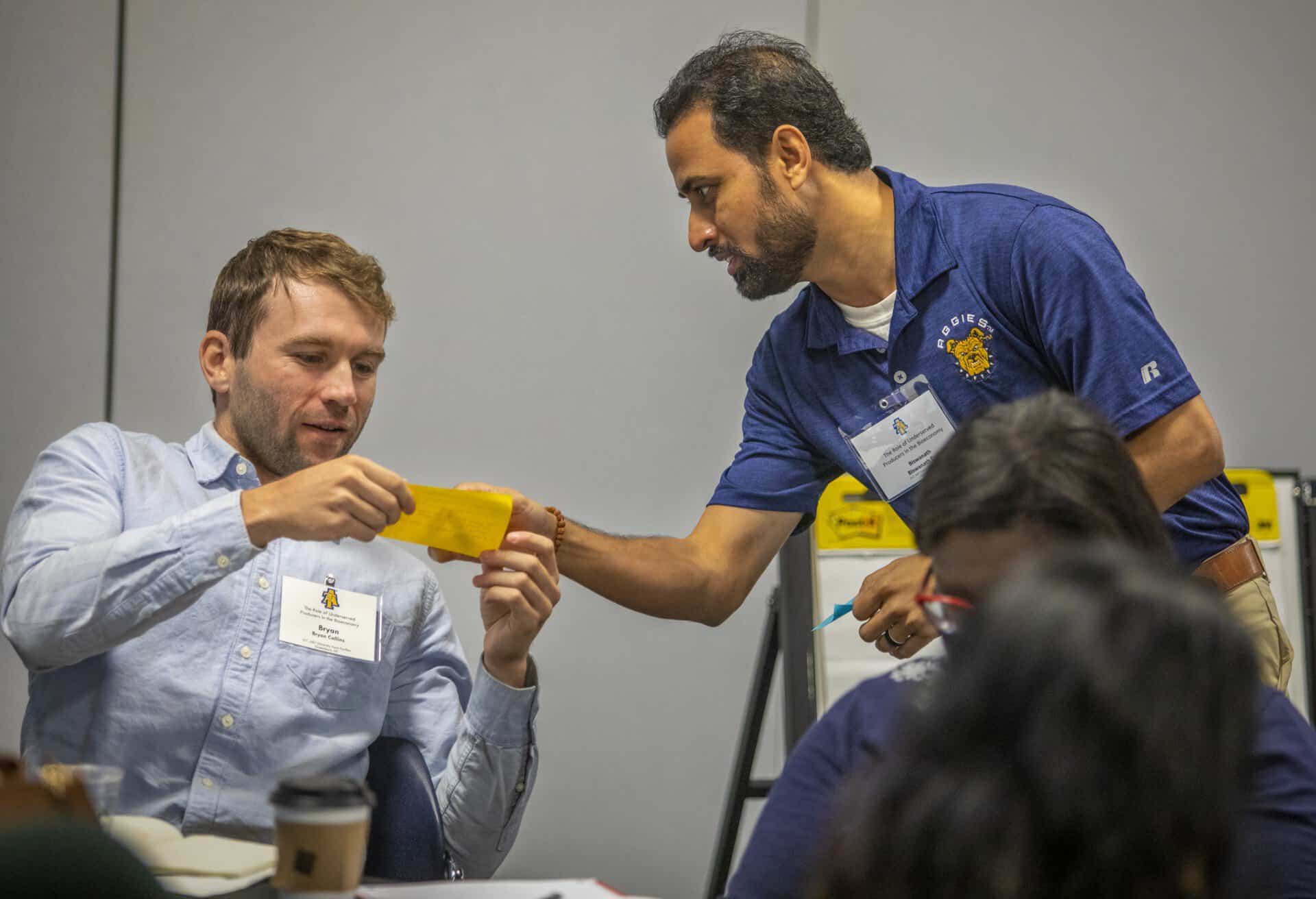
As part of the event, Liang held an engagement activity for the guests in the room, asking everyone with agricultural experience – be it small-scale farmer or USDA representative – to write on a notecard three concerning issues facing producers. Responses varied from value-added specialty crops and funding to climate change and the commercial challenges of working as an underrepresented farmer.
"Another challenge has been working as a woman farmer," said Frisbee. "For so long, when I went with my brother, people thought that I was just there to support him. But I am a farmer. There are women making great strides in agriculture, and we all deserve a seat at the table.”
By the end of the panel, Liang offered her definition of bioeconomy and how the guests can thrive with its use.
“A simple example, when I work with a lot of these producers, is multifunctional agriculture,” said Liang. “Multifunctional agriculture is the base of bioeconomy. People will collect debris to build a biochar and put it back as a fuel source for their farm. Chicken manure, pig feed, whatever is left over, we can biochar it.
“Sunflowers, for example, are a reliable cover crop that serves multiple purposes - you can cut it and sell it for $5 a head at the farmer’s market; you can use the stalk as an excellent ground covering; the root is the deepest of all cover crop roots that can draw water from subsoil to maintain moisture levels in the layer of other vegetables. That one sunflower itself serves multiple economic purposes.”