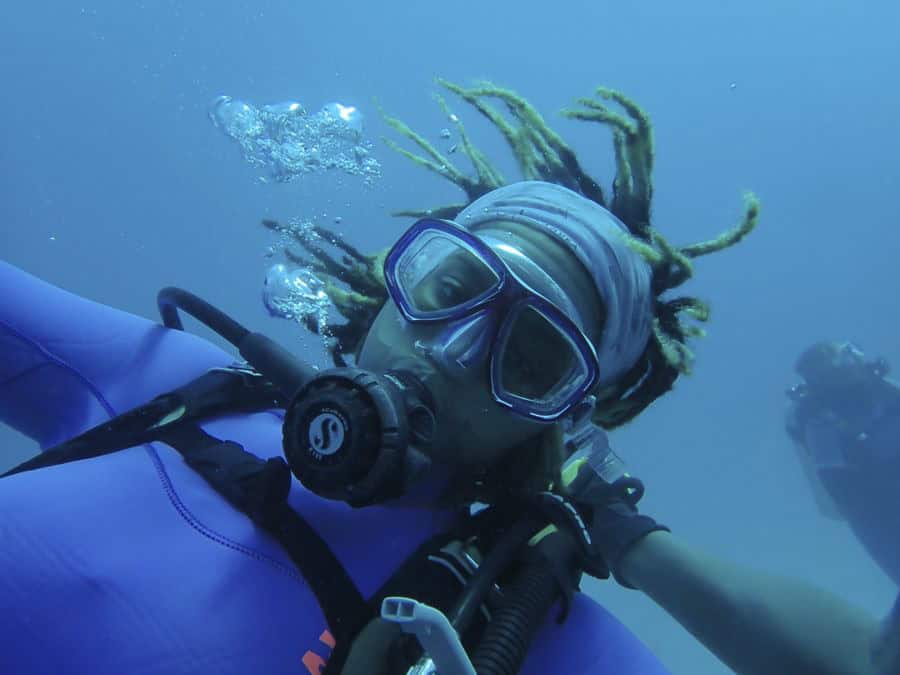
North Carolina Agricultural and Technical State University may be land-locked, but that didn’t stop senior D’Karia Bascom from diving into the field of marine biology.
Bascom, who is studying laboratory animal science and animal sciences in the College of Agriculture and Environmental Sciences, was one of only eight young people from North America chosen to attend the Citizens of the Ocean Summit in March. The gathering in Boulogne-sur-Mer, France, of future leaders in the marine science field featured programs on how to advocate for and create policy for the oceans.
“I had such a great time connecting with other young-minded scientists from literally all over the world,” Bascom, 24, said.
During the previous six months, Bascom had worked with the participants to draft policies that support the UN Ocean Decade Challenges. Those challenges include combatting marine pollution, creating a digital representation of the ocean, and increasing community resilience to ocean and coastal risks.
Bascom, who was inspired to pursue a career in marine biology by the movie “Finding Nemo,” said she hopes to get everyday people as well as policymakers involved in ocean conservation and advocacy.
A manifesto that she contributed to will be presented at the third United Nations Oceans Conference in Nice, France. “I think that that's really cool to know that something that I helped curate will be brought up to policy leaders and government officials,” she said.
Bascom is well-suited for this, according to Sheyla Ravelo Perez, education specialist at Mote Marine Laboratory in Sarasota, Florida.
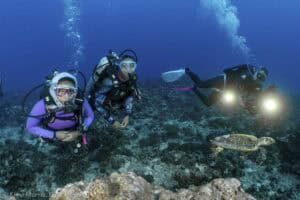
Photo Credit: Kimo Moris, Ph.D.
“She presents herself in a very professional manner, and she kind of has this air about her that makes others feel comfortable approaching her, makes people feel listened to, makes people feel at ease,” said Ravelo Perez, who is also the facilitator for the North American youth delegation to the summit. “Especially within science, those soft interpersonal skills are so important, because if the science only stays … within the scientific community and doesn't trickle down to the populations that need it most, (like) vulnerable coastal communities, then we're not really doing much good.”
Bascom said one way to reach people may be through art and film focused on marine conservation. “I feel like if you don't make it fun, if you don't connect it to the person, they're not going to want to do it,” she said.
Bascom said her mother, Tiffany Cody, a part-time liberal arts teacher at A&T, encouraged her to apply to A&T because of its animal sciences department.
“I absolutely love this school,” Bascom said, adding that the professors and administrators have supported her in following her passion for marine biology.
“I’ve seen what happens when you just go for it and you just kind of get your foot in the door,” said Bascom, who mentors another A&T student who also is interested in marine biology.
Dr. Andrea Gentry-Apple, the university’s coordinator of veterinary education and clinical associate veterinarian, called Bascom “a trailblazer.”
“Being in a program that does not focus on marine science can be very difficult, but D'Karia has utilized her translational skills to break barriers and show other students interested in marine science that they can find opportunities to accomplish their goals,” Gentry-Apple said.
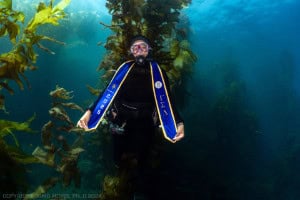
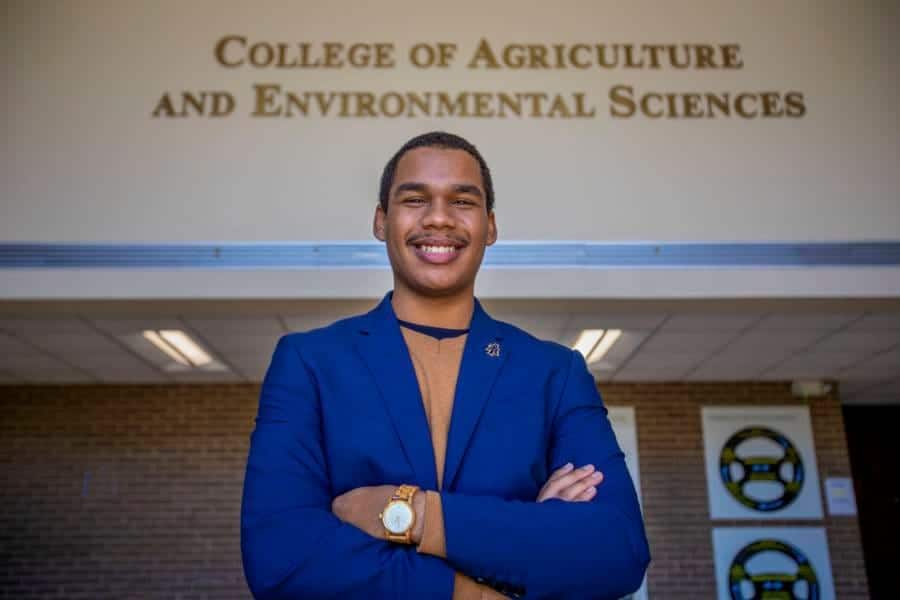
D’Karia Bascom, a senior studying laboratory animal science and animal sciences in the College of Agriculture and Environmental Sciences, will graduate in May 2025. Photo Credit: Kimo Moris, Ph.D.
Bascom plans to take a year off after graduating before pursuing her master’s degree in California. “But I’ll still be doing research,” Bascom said. “I’m hoping to be in Panama this year. And then I go to French Polynesia in January for more research.”
Ultimately, she wants to study the relationship between coral reefs and marine life – and encourage others to learn more about our oceans.
“I hope to inspire those that are around me that may want to go into marine science or who have a passion for ocean conservation or ocean policy,” she said. “People who are seeing the state of our Earth and what's happening, to inspire them to help out or just want to learn.”