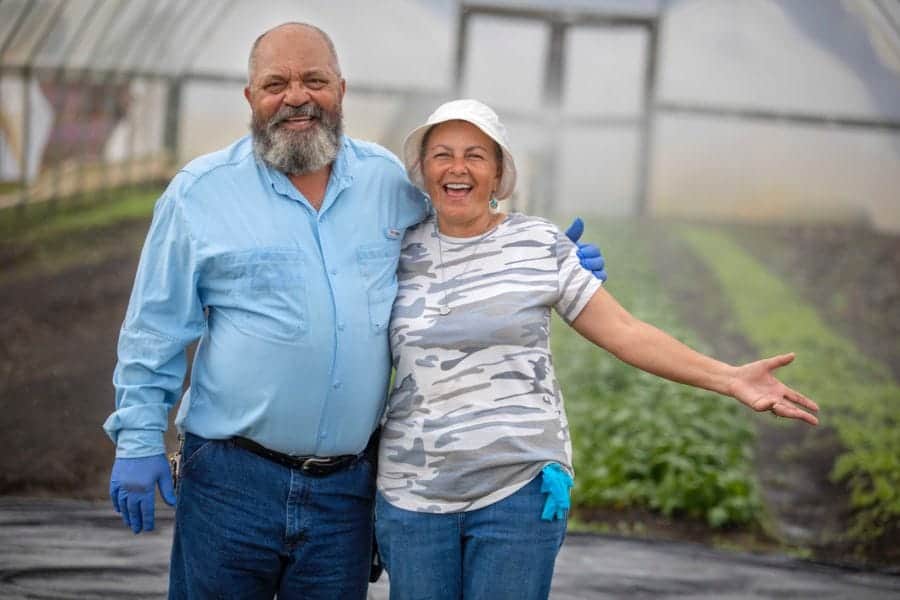
Millard and Connie Locklear of New Ground Farm in Pembroke have used high tunnels and reduced tillage as strategies to offset changing weather conditions. “They have made a real difference for us,” Millard Locklear said.
Climate-resilient agriculture practices can help small farms in North Carolina adapt to a changing climate profitably, according to new research by North Carolina Agricultural and Technical University Cooperative Extension and Environmental Defense Fund (EDF).
The research summarizes the real-world financial and climate-resilience benefits that practices such as reduced tillage, cover cropping and high tunnel use are providing three small farms in diverse growing regions: the coastal plain, the Piedmont and the mountains.
Variable and extreme weather associated with a changing climate, including severe weather events and hotter summer nights, presents challenges to small farms in North Carolina. While some farms across the state are adapting to the changing weather by using climate-resilient practices to manage changing weather conditions, it is also important for these practices to have positive financial impacts on the farm.
N.C. A&T Cooperative Extension and EDF evaluated the financial impacts of reduced tillage, cover crops and high tunnels on three small farms in North Carolina. A summary report and three case studies share key insights for farmers and their advisers to inform their financial decision-making when considering implementation of climate-smart agriculture practices.
“Supporting our small farms across North Carolina as they adapt to a changing climate includes educating them on new practices and how to implement them in a way that benefit their bottom line,” said Mark Blevins, Ed.D., assistant administrator for agricultural and natural resources at N.C. A&T Cooperative Extension. “Our financial case studies demonstrate that practices like reduced tillage and investing in high tunnels can make farms more resilient to severe weather, while also paying off financially.”
N.C. A&T Cooperative Extension and EDF conducted financial analysis of climate-resilient practices on three small farms in the coastal plain, the Piedmont and the mountains. New Ground Farm in Pembroke; Blackwell’s Farm in Riedsville; and Against the Grain in Zionville have all adopted new practices to adjust to more variable and severe precipitation, changing growing season durations and increasingly frequent hurricanes. The farmers attribute better water management during severe rain events and droughts, less erosion and improved soil health to their use of climate-resilient practices.
“Adjusting farming practices to adapt to a changing climate can also generate financial benefits on the farm,” says Vincent Gauthier, senior analyst at EDF. “The farmers we worked with were able to increase their revenue by growing high-value crops efficiently in high tunnels and reduce operating costs with reduced tillage and cover crops.”
The case studies include a partial-budget analysis of the three North Carolina farms to demonstrate the changes in revenue and costs associated with adopting the climate-resilient practices.
Holly Whitesides is one of the farmers who participated in the project. She and her husband Andy Bryant own and operate Against the Grain farm in the mountains of Zionville, North Carolina, where they grow a wide variety of vegetables including tomatoes, lettuce, greens and ginger. They also raise livestock, including cattle and pigs. They have adopted cover crops and grow their high-value crops in high tunnels.
“By using high tunnels, we've been able to grow crops for longer seasons and have a more nuanced approach to our watering,” Whitesides said. “Cover crops and composting have reduced the mountains and the valleys of our soil moisture, so it stays more consistent over time.”
Against the Grain Farm has seen higher revenue from growing tomatoes, ginger and peppers in high tunnels and lower organic fertilizer expenses from using cover crops.
“To know your numbers is to be empowered by them,” said Whiteside. “So having the financial piece in play has helped us make good and balanced decisions.”