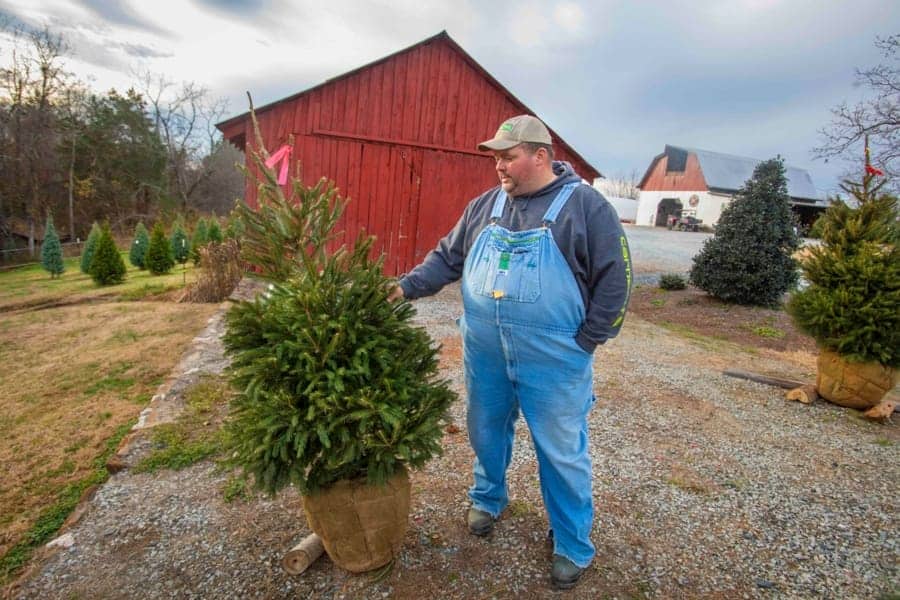
Kevin Gray, an owner of Hickory Creek Farm in Greensboro, looks over a Norway Spruce, one of his last few Christmas trees that are in planters. He has nearly sold out of the 15 or so that he generally sells per season. These trees, after the decorations come down, are replanted in the ground.
The holiday season is upon us! It’s a time of year is full of traditions, family gatherings and friendship reunions, but perhaps most of all… it’s a season of consumption! The spirit of giving can be satisfied without sacrifice to the health of our planet.
Here are some tips for creating new eco-friendly holiday traditions:
Plant a Christmas tree. When you buy a live tree, you are positively impacting the environment. Many Christmas trees are grown for the sole purpose of being displayed in someone’s living room briefly, then sent to the curb by January. Living trees come in planters and have a root ball. When the decorations come down at the end of the year, you can plant the tree and start a new tradition of planting a tree each year instead of cutting one down.
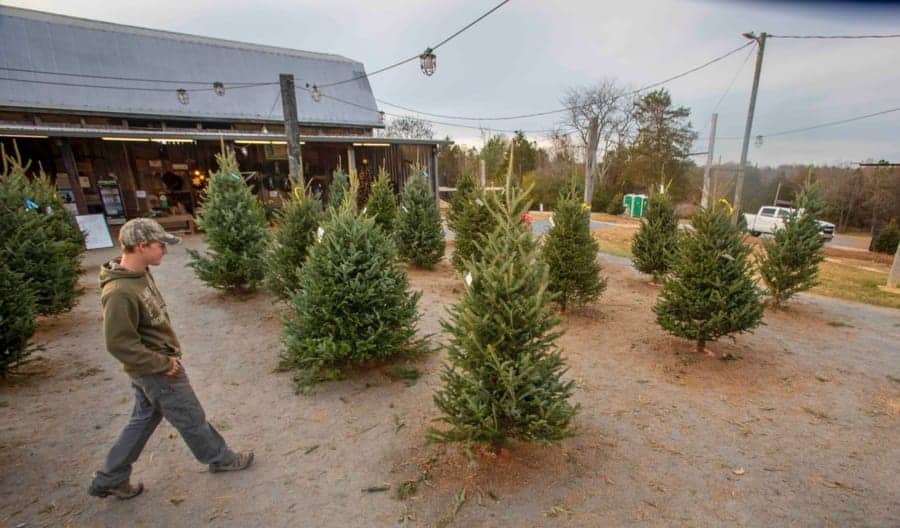
Buy a local Christmas tree. North Carolina is a top Christmas tree producer nationally, so there are Christmas tree farms nearby offering beautiful, fresh trees. Consider buying an organically grown local tree, especially if you have children or pets. Your local Cooperative Extension office can help you find the Christmas tree farms near you.
Recycle your Christmas tree. Each year, 10 million Christmas trees end up in the landfill. Many municipalities will pick your tree up from the curb and bring it to the land fill, which is convenient for many households. However, find out if your city offers a tree recycling program, in which trees are chipped, creating mulch. The National Christmas Tree Association. has more information.
Plastic trees. If you don’t want to water a live tree, then plastic trees are the way to go – but consider buying it locally and keeping it as long as possible. According to the Carbon Trust Fund, it takes thousands of years for plastic to break down. Research has shown that “micro plastics,” which are formed during the decomposing process, have negative effects at all levels of the food chain and can cause life threatening illnesses.
Buy from local businesses and farmers. To buy from a small local business is to support a dream! Not only will the product be fresher, you will also be contributing to the growth of your local economy. Prices at most farmer’s markets are comparable to chain grocers, and the quality of food is higher. Also, every dollar spent in your local community has an impact of between $1.20 and $1.50. https://pulse.naspo.org/post/keeping-up-with-the-economy-local-economic-multipliers/
Reuse or make your own wrapping paper. Now is your chance to be creative! Wrap gifts in the newspaper comics, use a bandana, reuse paper shopping bags, fabric - or consider not wrapping them at all. Most wrapping paper is not recyclable, so the planet will thank you. There are also companies like https://wrappily.com/ that sell recyclable wrapping paper.
Buy energy efficient LED Christmas lights. If you haven’t already, it is time to switch over to LED lights. They last longer and reduce your electric bill. According to one U.S. Department of Energy study, “if everyone replaced their conventional holiday light strings with LEDs, at least two billion kilowatt-hours of electricity could be saved in a month”. https://www.smallfootprintfamily.com/eco-friendly-holiday-tips#ixzz66gFjh6gJ
Give handmade gifts. People really do love homemade gifts because by taking the time to make something personal for your loved one shows them how much you care. There are so many things you can do that won’t take up too much time and are affordable to make. Check out Pinterest for an endless supply of DIY gift ideas! Making your gifts is an inexpensive way to show people you care.
Offset your Holiday travel. Traveling has a significant impact on our climate. Aviation accounts for 75% of the industry’s greenhouse gas emissions, 10,000 miles emits 4,175 lbs. CO2. There are organizations such as Carbonfund and Terrapass that are committed to supporting climate change projects. If you can purchase an offset for your holiday travel, do so. That purchase will be used to help fund a project working towards carbon neutrality. For example, you can pay $20 to Carbon Fund to offset your holiday travel and you can choose what type of project you want that money to go to. This also makes a great!
Donate your time and skills. Not everyone has the time, but we all have special skills. If you are able, donate that time and skills to people in your community who are less fortunate than you. Volunteering is a great family activity and a tangible way to give joy and hope to people during the holiday season.
Collin Brown works at Hickory Creek Farm in Greensboro. The farm is located at 1489 Burnetts Chapel Road.
Did you know:
Americans throw away about 25% more trash between Thanksgiving and New Year’s Eve.
Holiday food waste, shopping bags, bows and ribbons, packaging, and wrapping paper contribute an additional 1 million tons a weekto our landfills.
The most ecofriendly way to have a Christmas tree for the holidays is to purchase a potted tree and keep it alive until you can plant it in the earth.
Innovative Practices Lead to Small Farmer of the Year Award
March 24, 2021
At the age of 40, Mike Jones finally had enough resources to buy land in Franklin County and pursue his dream of owning his own farm.
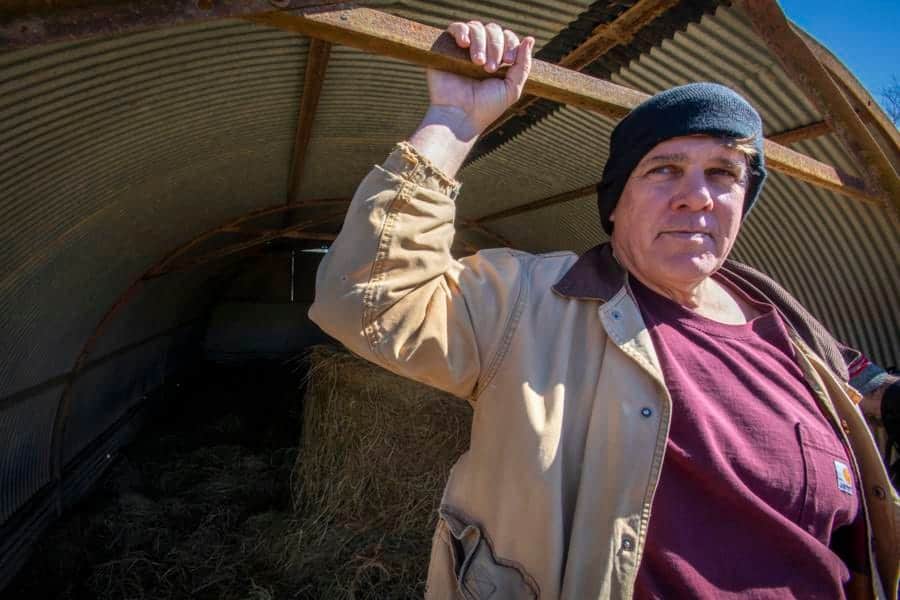
He came from a farming background, but the family lost its farm in the 1950s and since then, family members had worked as sharecroppers and tenant farmers. Fifteen years ago, he bought a 73-acre abandoned tobacco farm and turned it into a successful agricultural operation called MAE Farm. Today, he is the 2021 N.C. Small Farmer of the Year, a recognition awarded annually by Cooperative Extension at North Carolina A&T State University as part of Small Farms Week.
NC AgrAbility Partnership helps keep farmers on the land they love
March 22, 2022
ROWAN COUNTY - On a hot and humid July day, Suzanne Ramsey was out on her Gator™ utility vehicle surveying the vegetables, berries and flowers on her farm near Mooresville in Rowan County.
Student and Community Farm grows healthy engagement
November 8, 2021
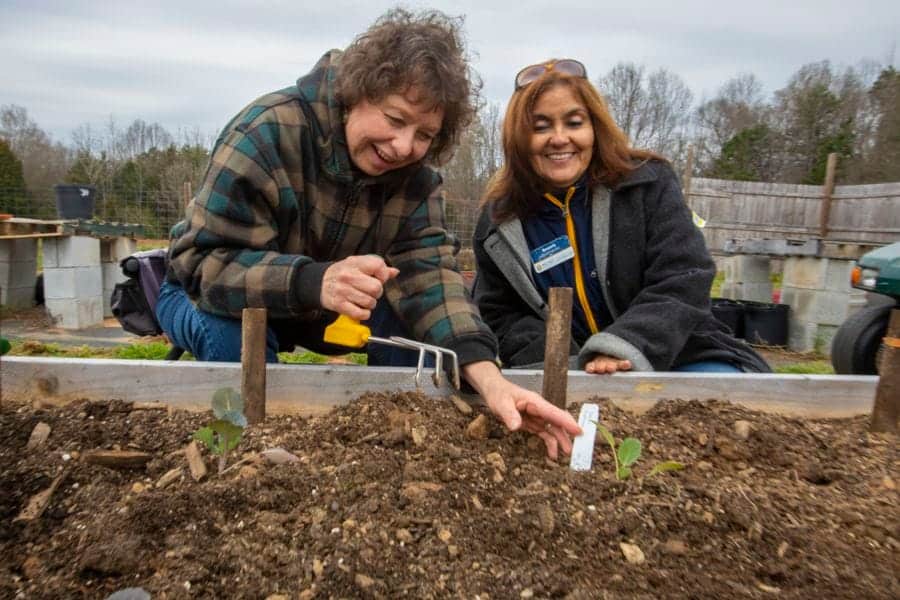
The College of Agriculture and Environmental Sciences’ latest farming adventure isn’t just for researchers and established farmers or ranchers. At the Student and Community Farm, students can experience many types of agriculture and members of the community can have a safe place to grow food – and enjoy each others’ company. This joint project shares staff and faculty from the Department of Natural Resources and Environmental Design and Cooperative Extension at N.C. A&T and is part of the 492-acre University Farm.
Advocate for Small Farmers, Rural Development to Deliver Small Farms Week Keynote
February 26, 2026
When Kimberly Ratcliff traded her successful career in corporate America for jeans, a cowboy hat, and life on her family farm in Texas, she saw a large gap between big business and family farms simply working to make ends meet and provide the best agricultural products possible.