CaesNews

Where Science Meets Society

CaesNews

Where Science Meets Society

Extension Specialist Teaches Ruminant Health Training in Farm Workshop

March 26, 2026

|

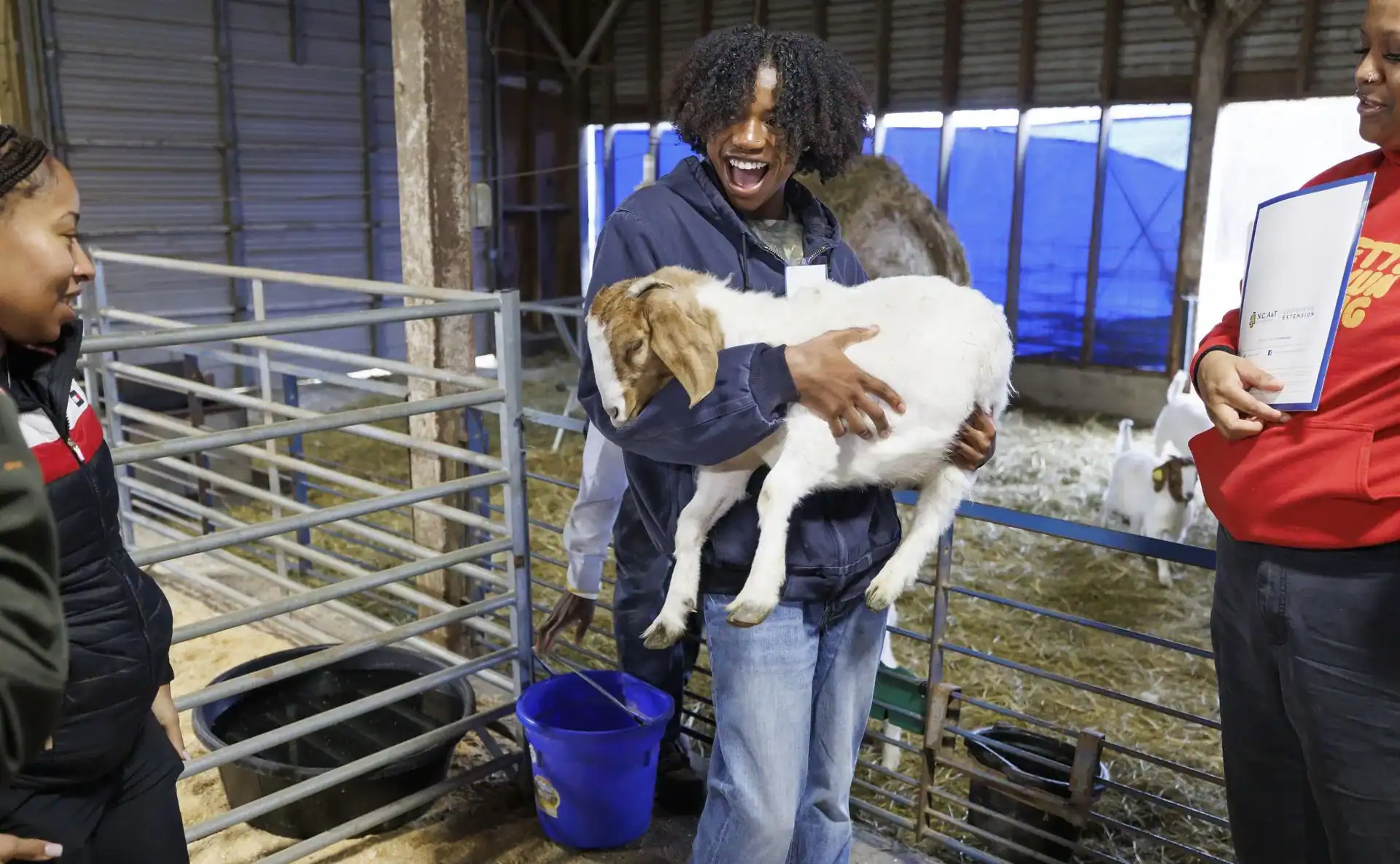
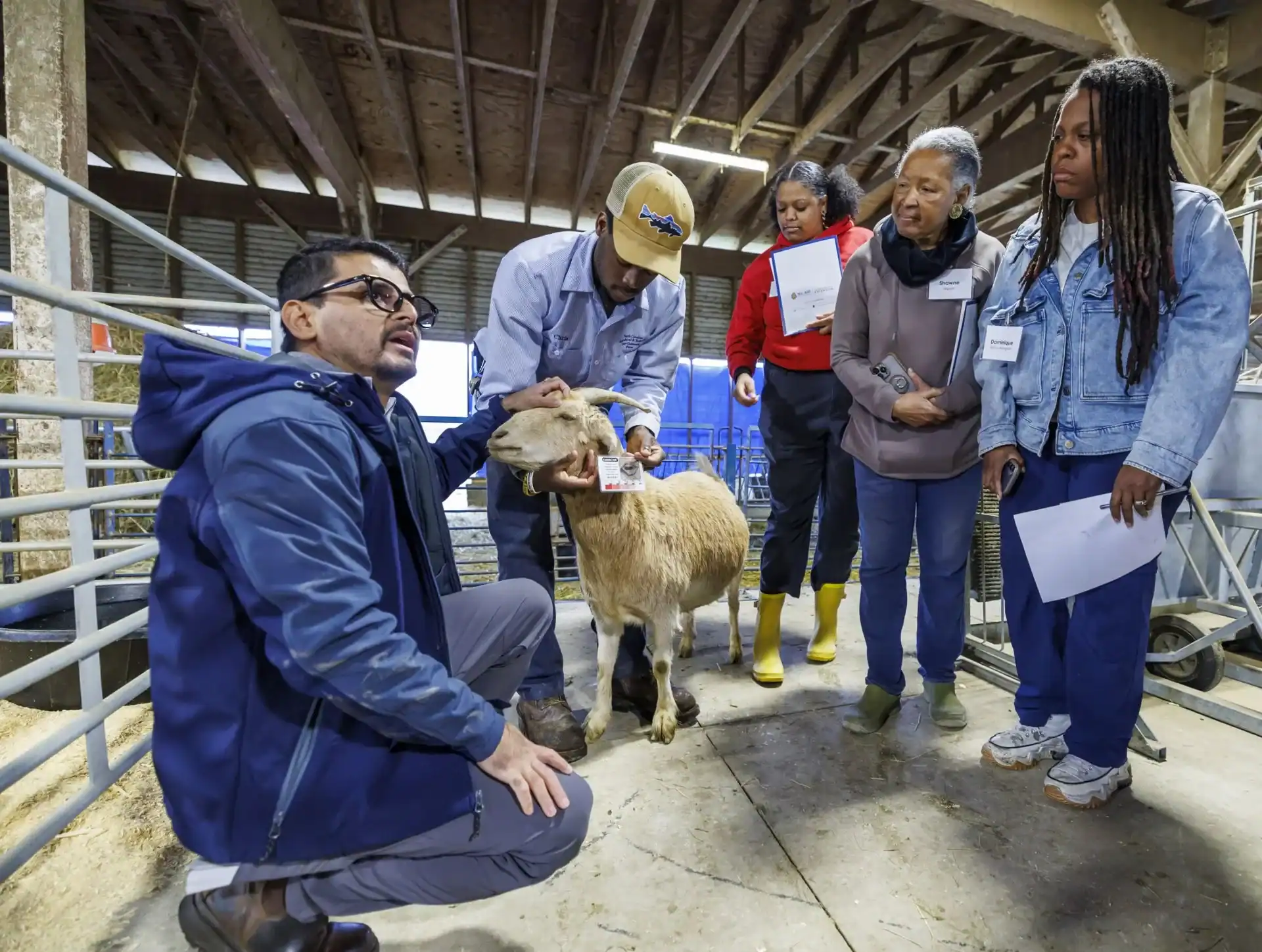
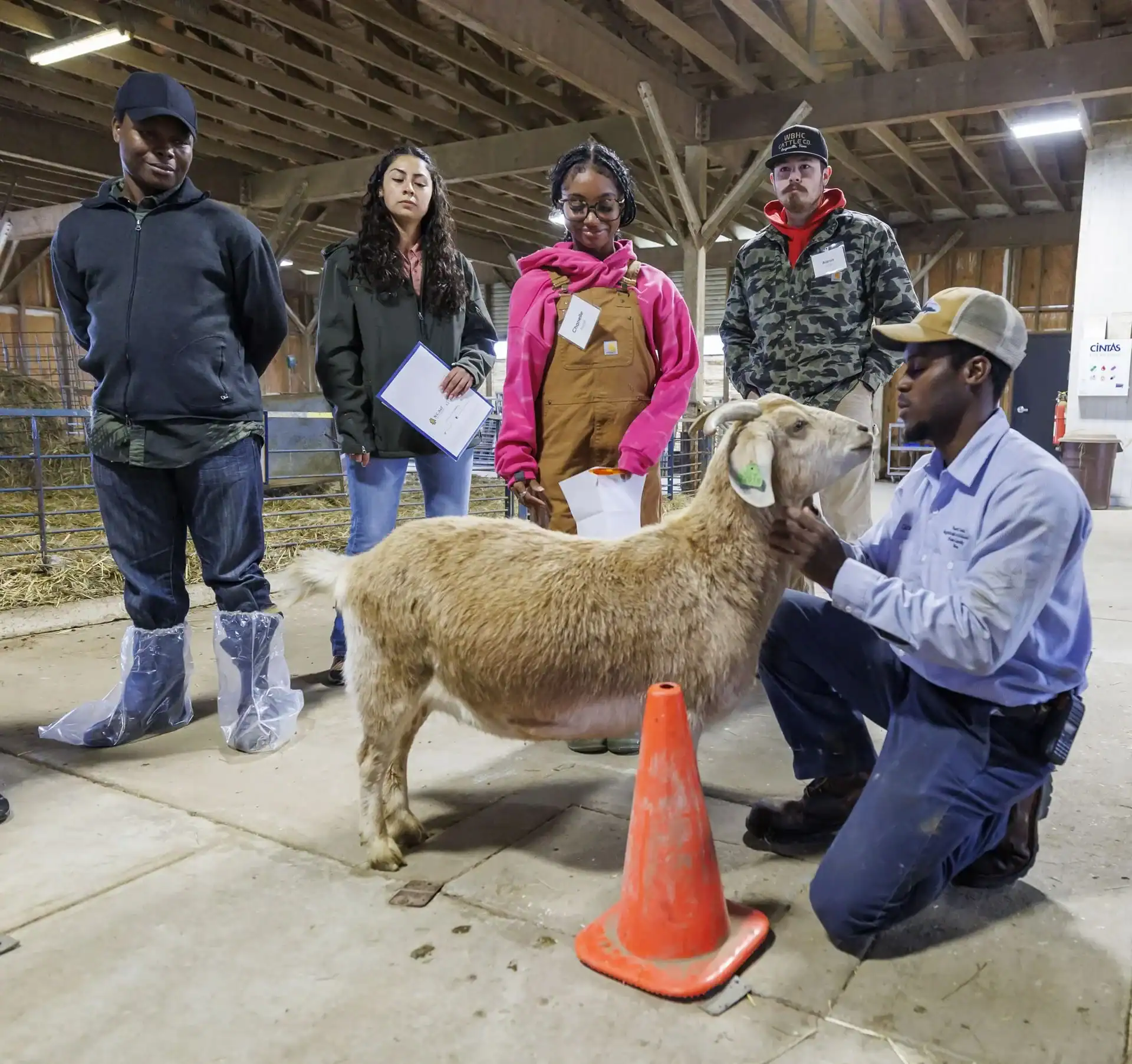
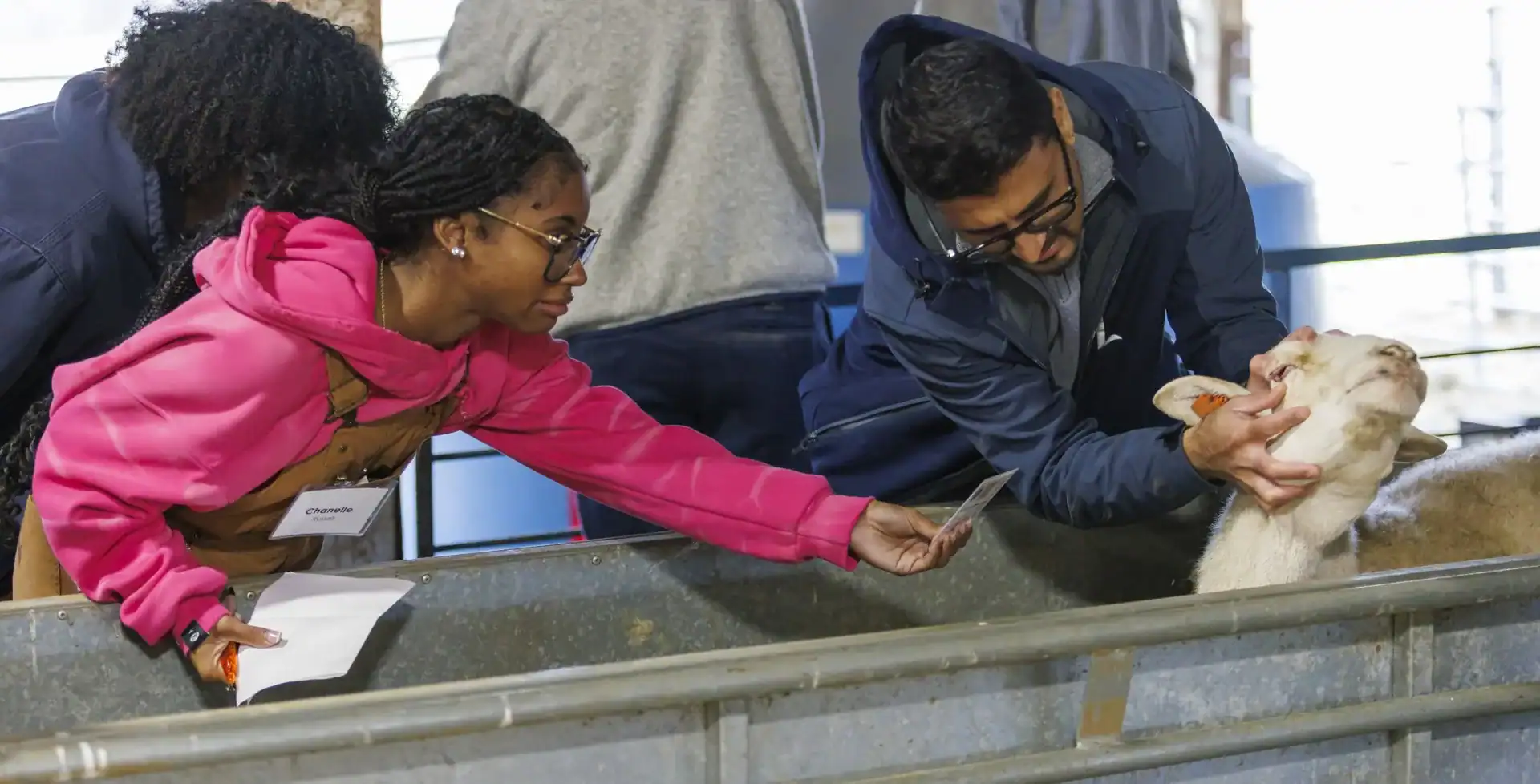
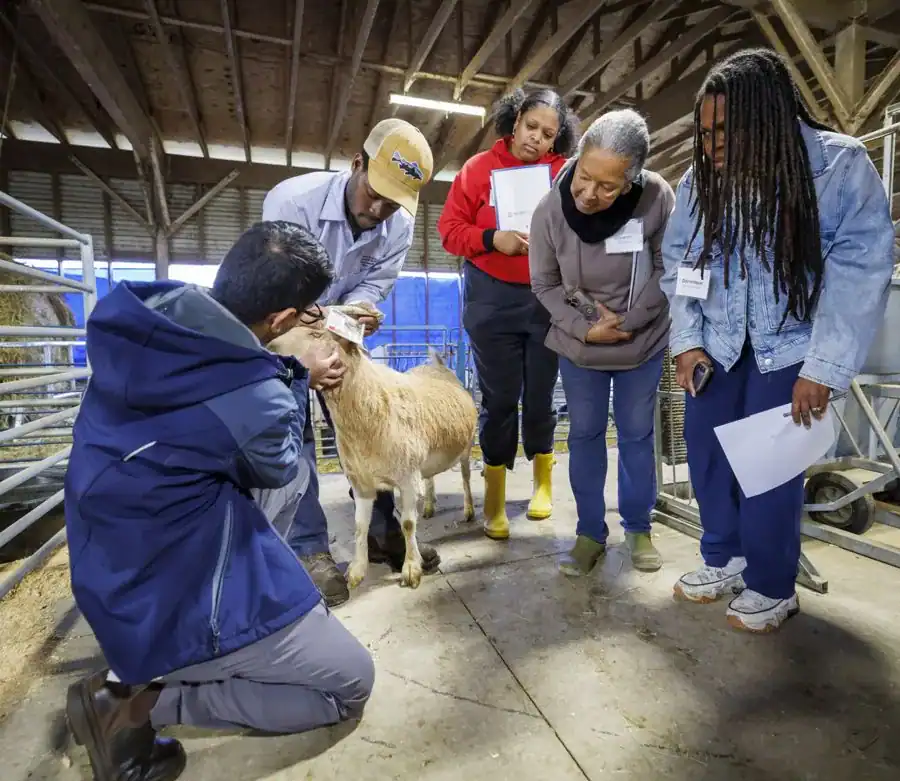
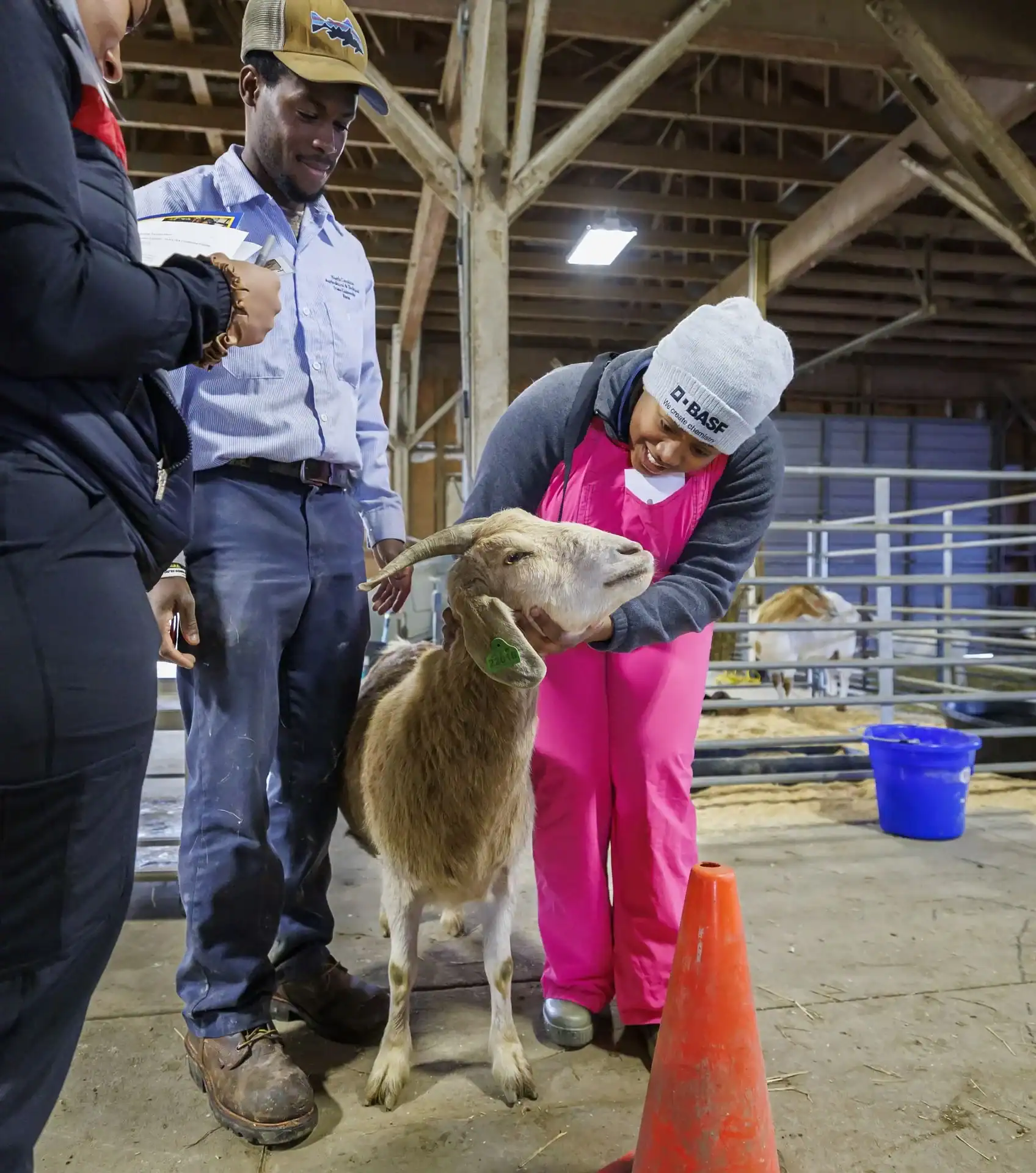
A group of people observes a man examining a goat in a barn. The individuals appear engaged and are holding papers while learning about animal care.

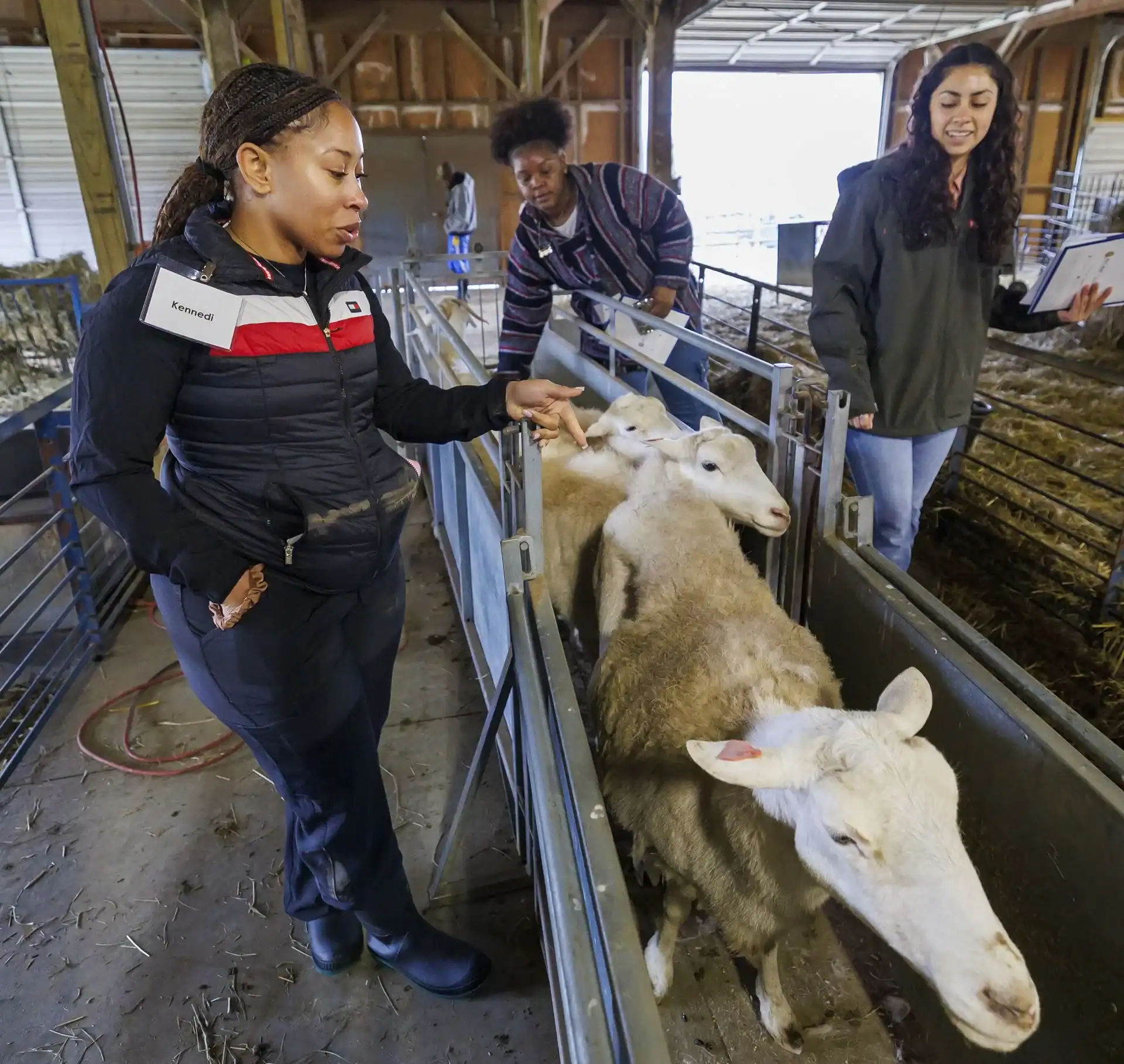
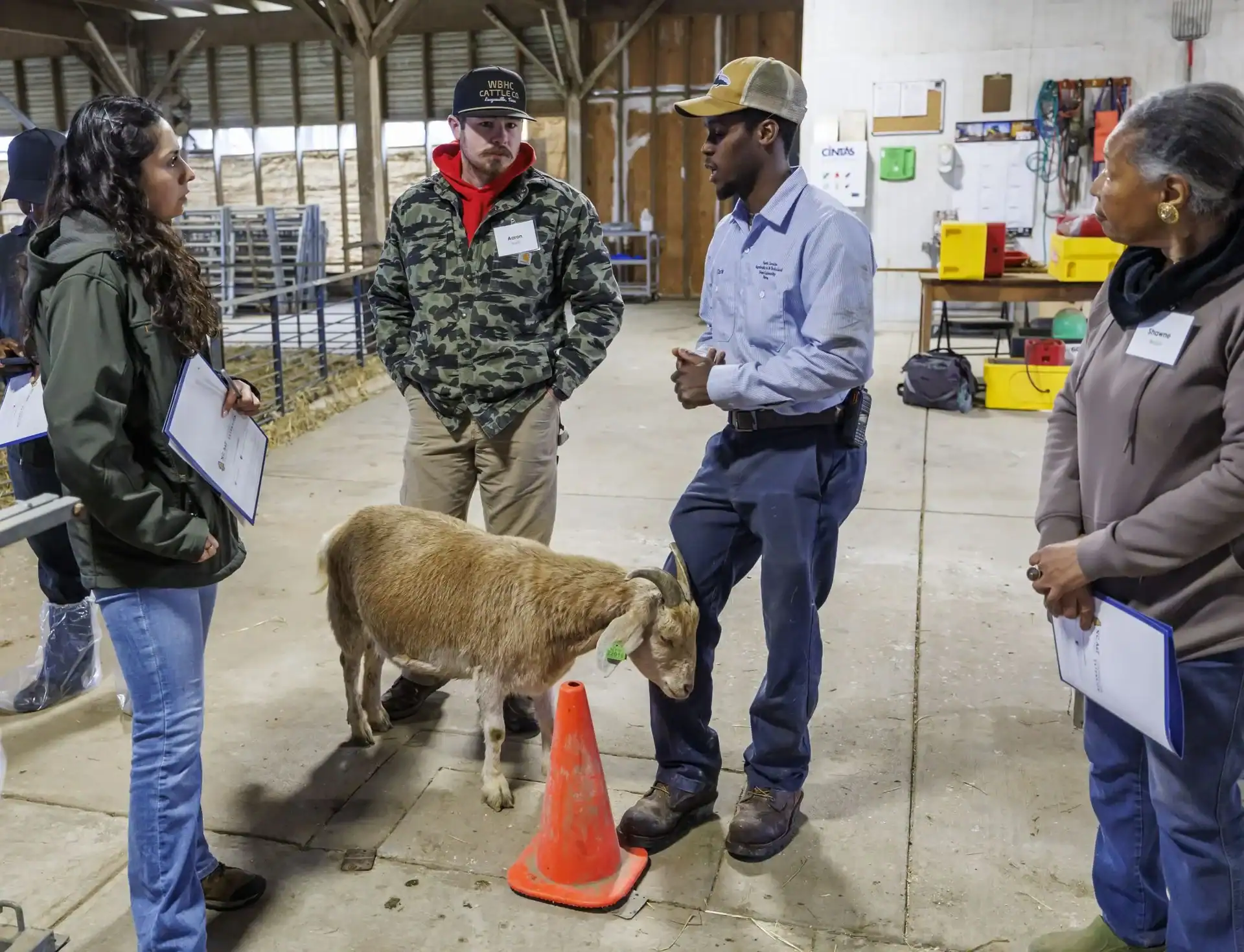
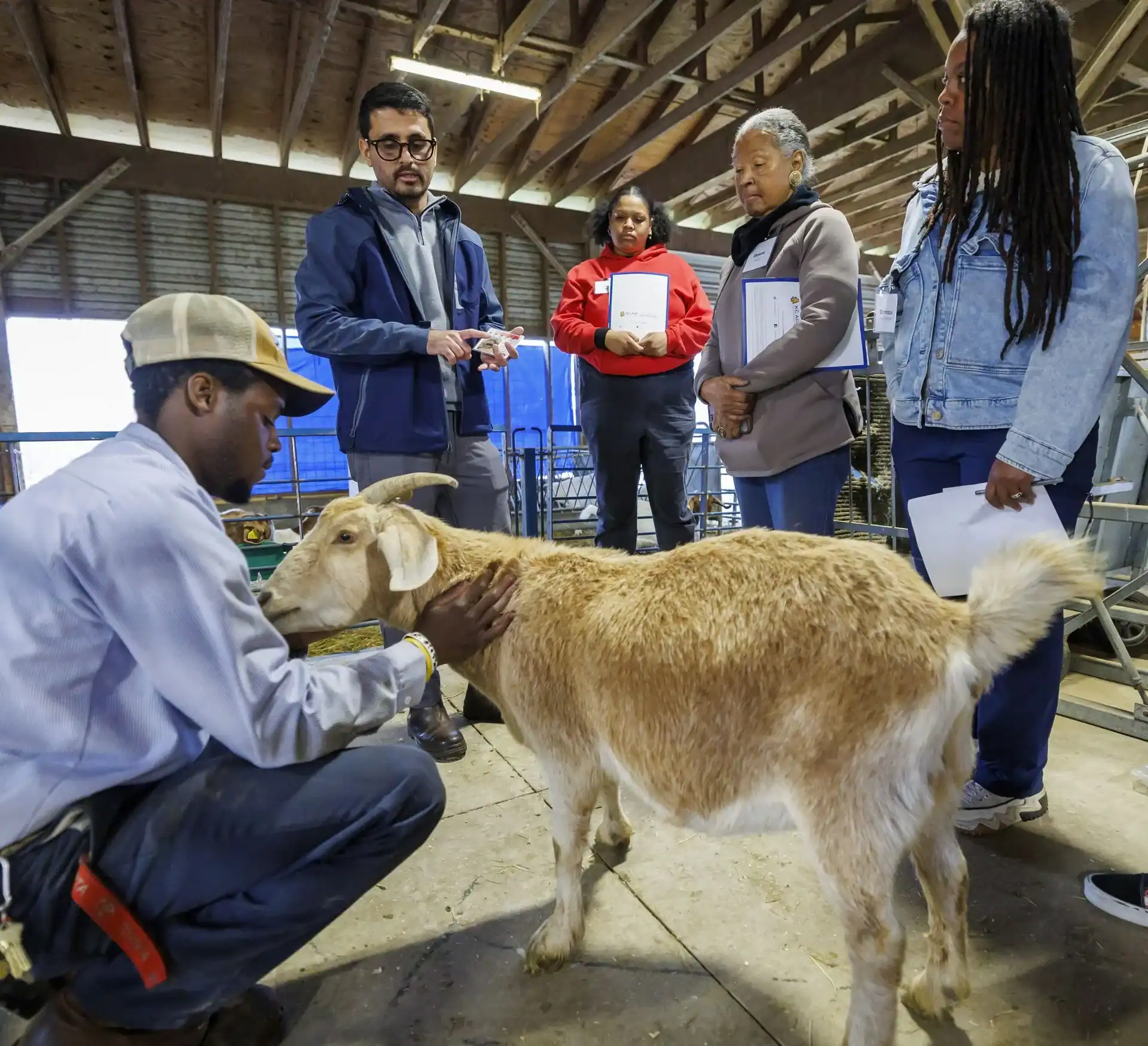
Sanjok Poudel, Ph.D., assistant professor and Extension animal production specialist at North Carolina Agricultural and Technical State University, left, with assistance from research technician and small ruminant manager Chris Casterlow, second from left, demonstrate how to us the FAMACHA scoring technique to evaluate the health of a goat (or sheep) during a Small Ruminant Workshop hands-on session at the N.C. A&T farm. Attendees pictured, from right, are Dominique Bostic-Arrington, Shawne Bryant, and Savannah Jackson.

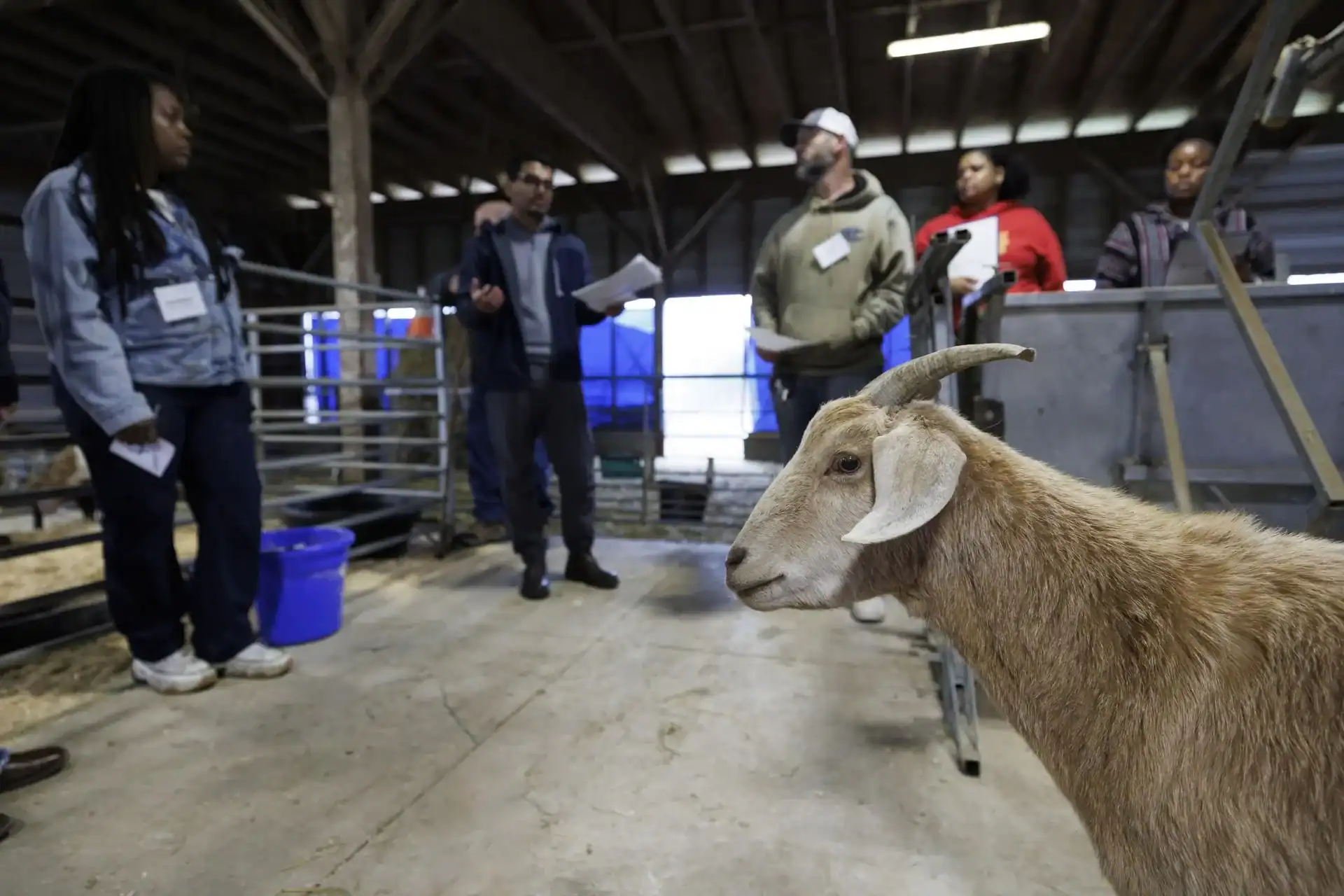
N.C. A&T Cooperative Extension hosted a small ruminant training course at the University Farm this spring, inviting guests to learn about five-point animal assessment and earning their FAMACHA certification. Led by Sanjok Poudel, Ph.D., assistant professor and Extension animal specialist, a group of 20 ruminant enthusiasts and students took part in assessing the health of the farm’s sheep and goats.

“Each of you will receive a FAMACHA card and will be scoring two animals,” Poudel told the group. “Your exercise will tell you based on your score whether to treat the animals, wait & watch and look for the symptoms, or not treat the animals.”

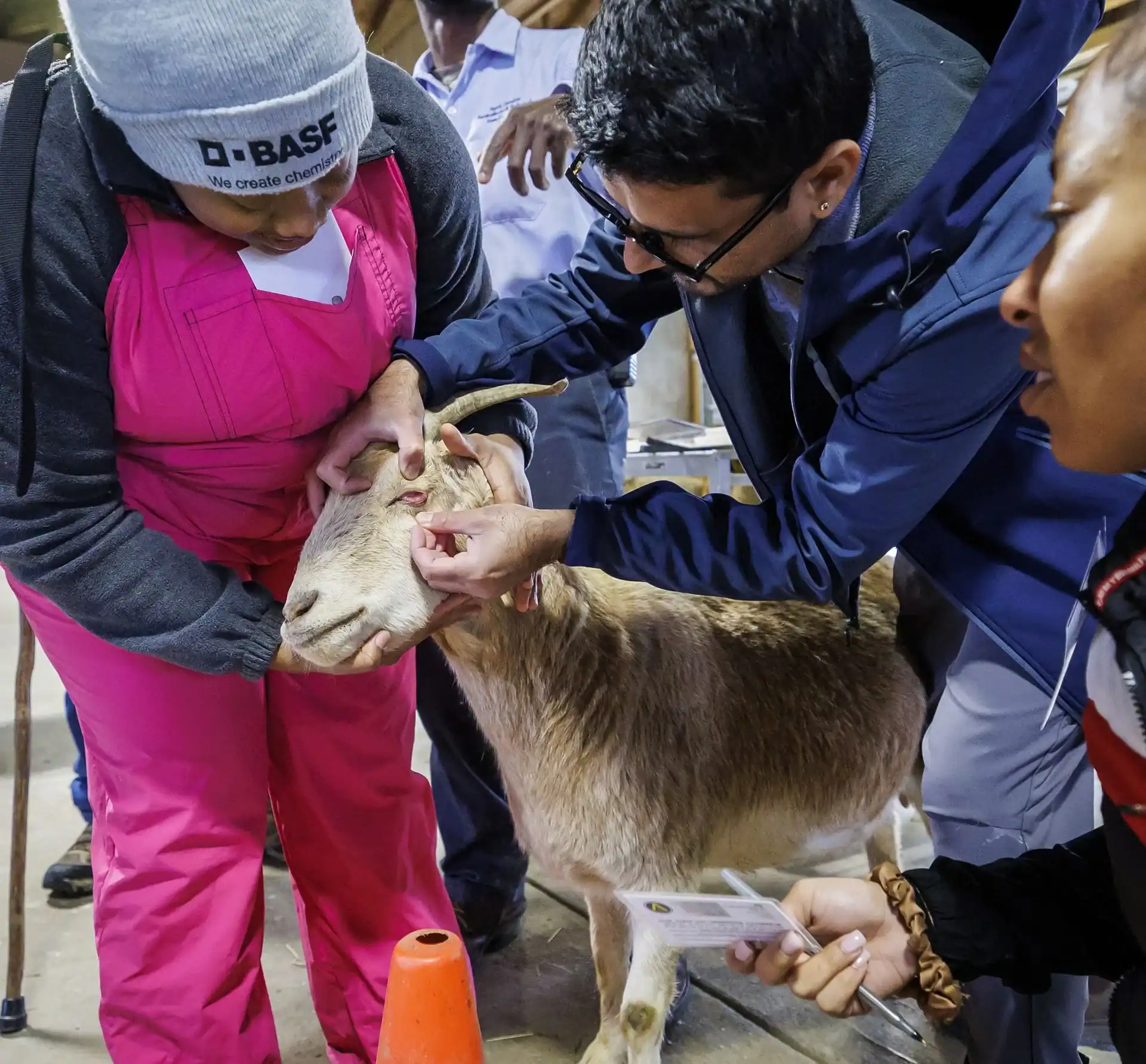
FAMACHA scores are a diagnostic tool used to assess the risk of anemia in goats, sheep, and other small ruminants. Using a “cover, push, pull, pop” method, Poudel explained how pulling down on the animal’s eyelid, revealing the eye’s mucus membrane, and comparing its shade of color to the score on the FAMACHA card would help determine if it had anemia.

“The darker the shade is on your FAMACHA card, the less likely the animal is of being anemic,” Poudel explained. “This rarely happens, but if you have two eyes that are different numbers, one is a 2 and another is a 3, then you should go with the higher number.”
Gallery

Read more CAES News

Opening Doors to Agribusiness: New Center Focuses on Technology, Entrepreneurship

Opening Doors to Agribusiness: New Center Focuses on Technology, Entrepreneurship

André Davis is excited to see the launch of the Agriculture Business Innovation Center (ABIC) at N.C. A&T. “I know that it’s going to help benefit me,” said Davis, owner of Drozik’s Urban Farm in High Point, North Carolina. “I’m looking forward to it because (the ABIC team has) that drive or that initiative that I need to get me to the next level.”
Panel: Climate change putting farmers in the hot seat

Panel: Climate change putting farmers in the hot seat

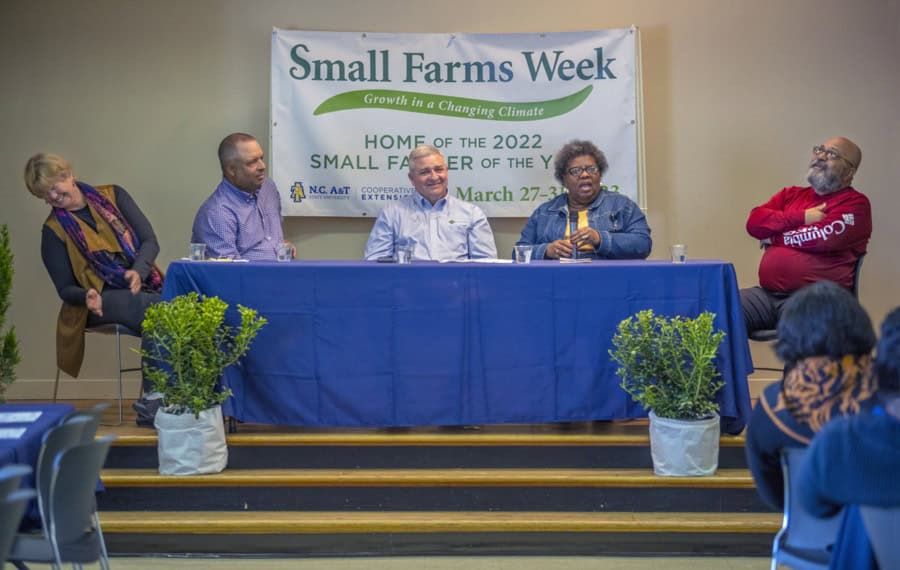
Warmer nights, farmland loss and changing consumer habits all add up to create a challenging environment for farmers now and for consumers in the near future, a panel of farmers and farm-service providers told the audience at the kickoff event for Cooperative Extension at A&T’s 37th Small Farms Week.
Black Extension Leader Overcame Odds to Serve His Community

Black Extension Leader Overcame Odds to Serve His Community

Being a trailblazer in your field often can be challenging, and for North Carolina’s Black Extension workers who started their careers during the segregation era, the challenges were many and often daunting.
AgrAbility Makes Connections to Help Lee County Farmer Stay Mobile

AgrAbility Makes Connections to Help Lee County Farmer Stay Mobile

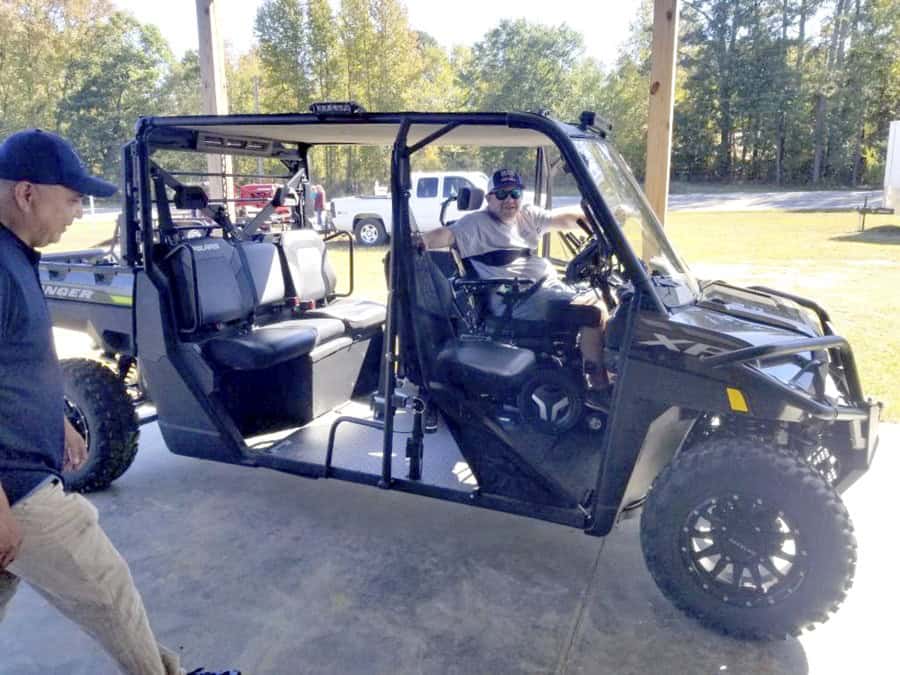
Thanks to help from the North Carolina’s Division of Vocational Rehabilitation Services and the NC AgrAbility program at Cooperative Extension at N.C. A&T, he is able to continue his work despite a life-changing accident.
No results found.

Never Miss an Issue

Recent Articles

Extension Exhibit Puts Kids on Speedway to Healthy

N.C. A&T’s Free Lactation Clinic Moves into The Resurgent

N.C. A&T-Led Student Success and Workforce Development Center Holds 2026 Symposium