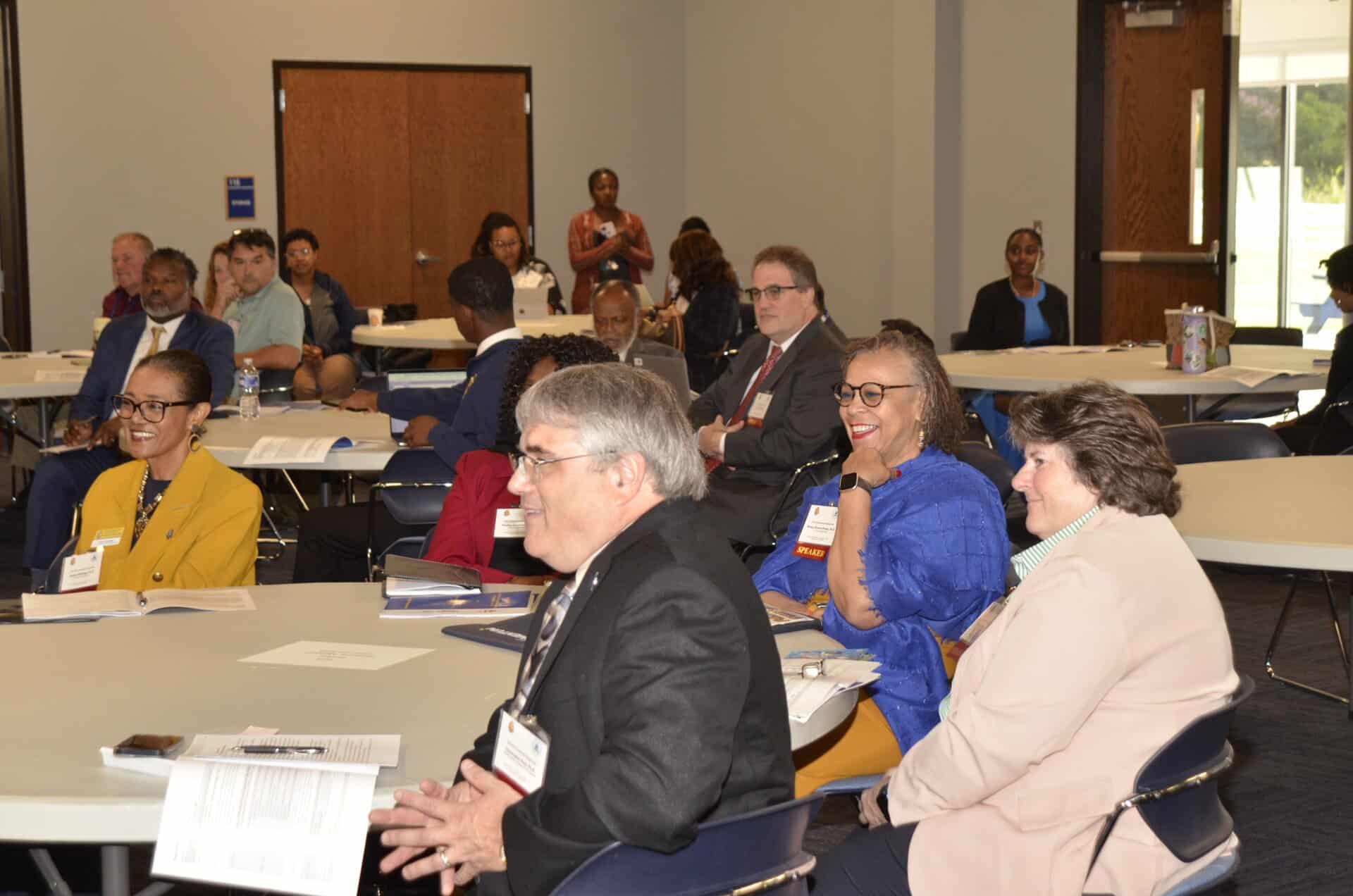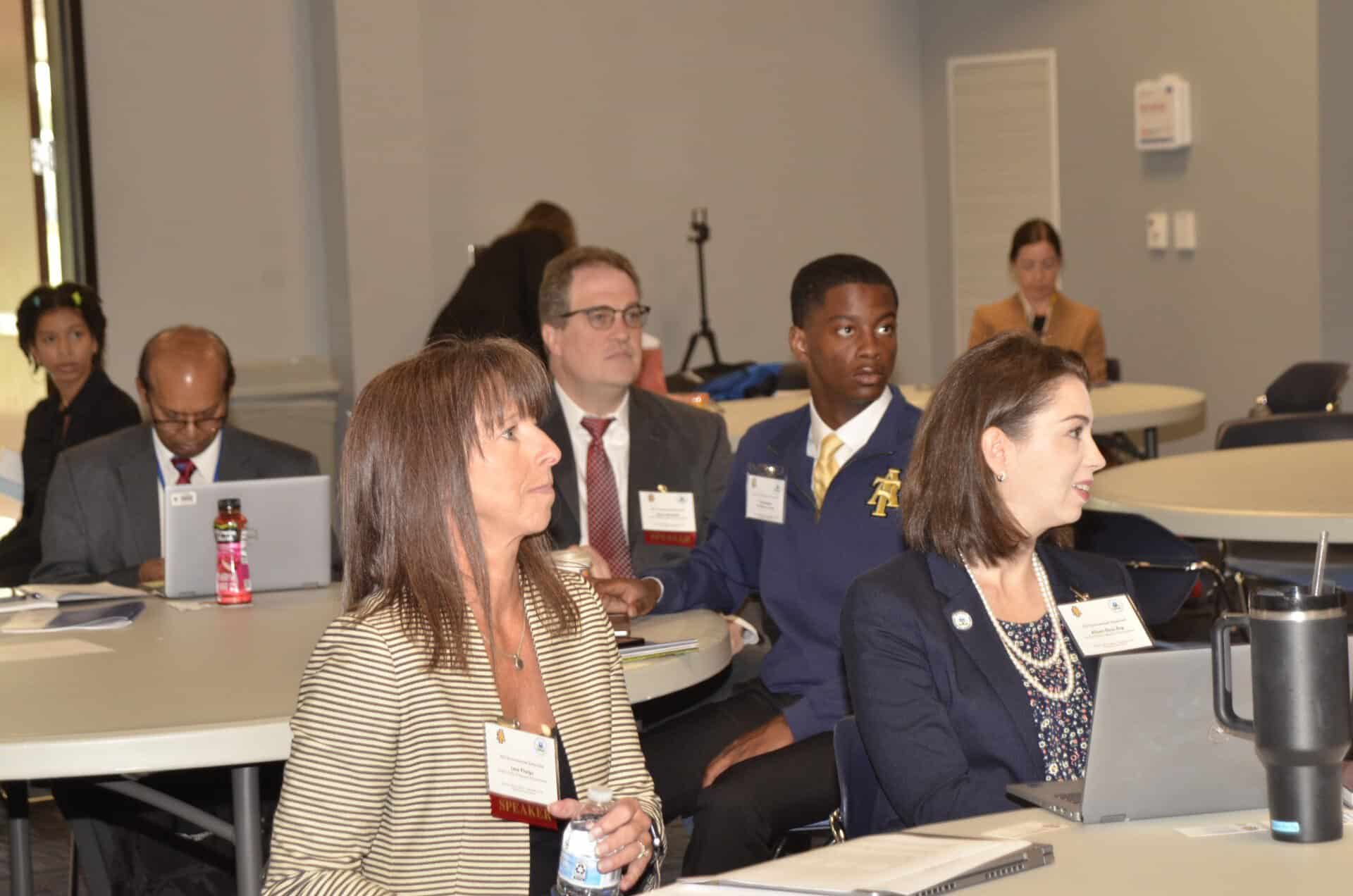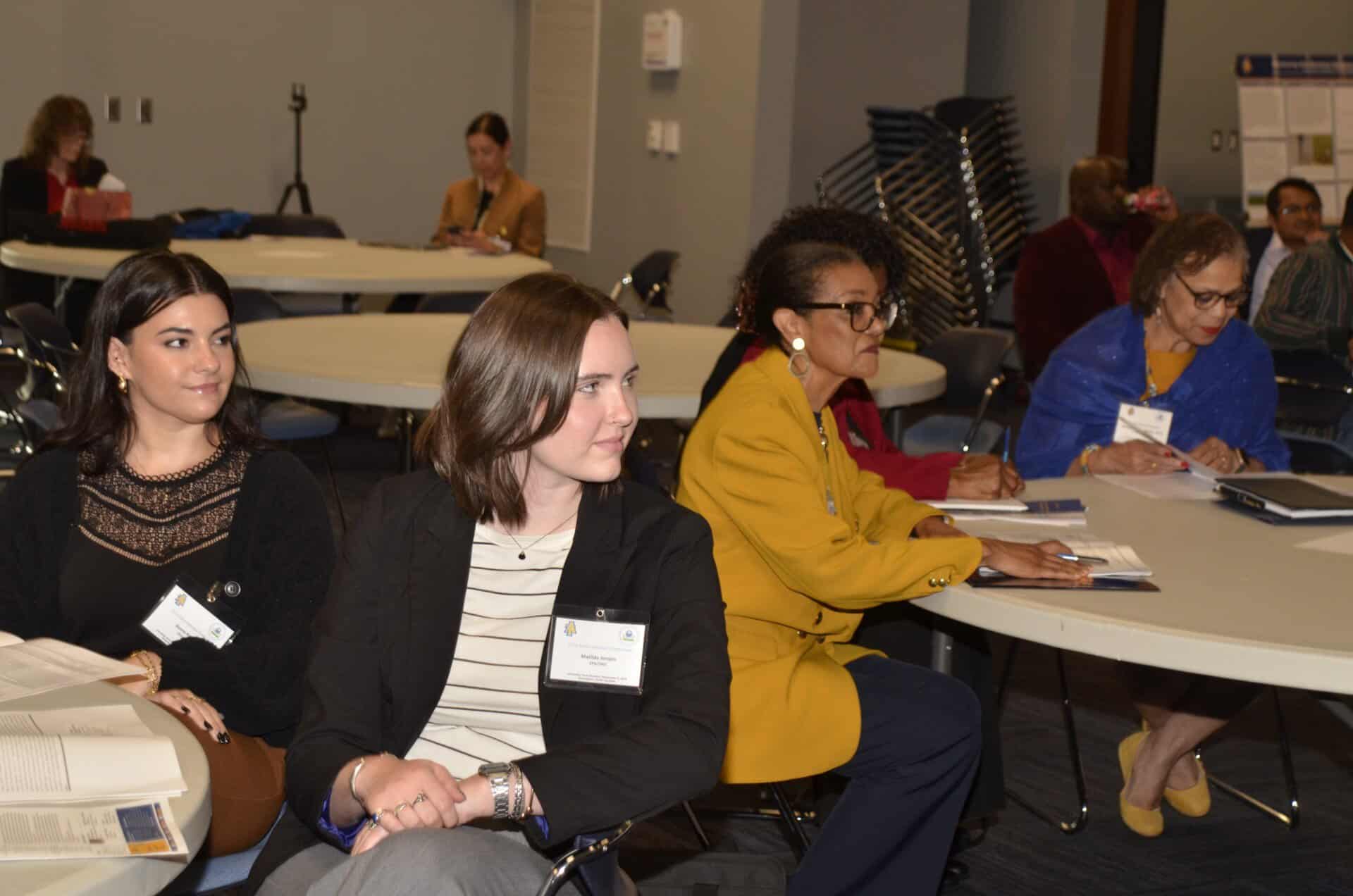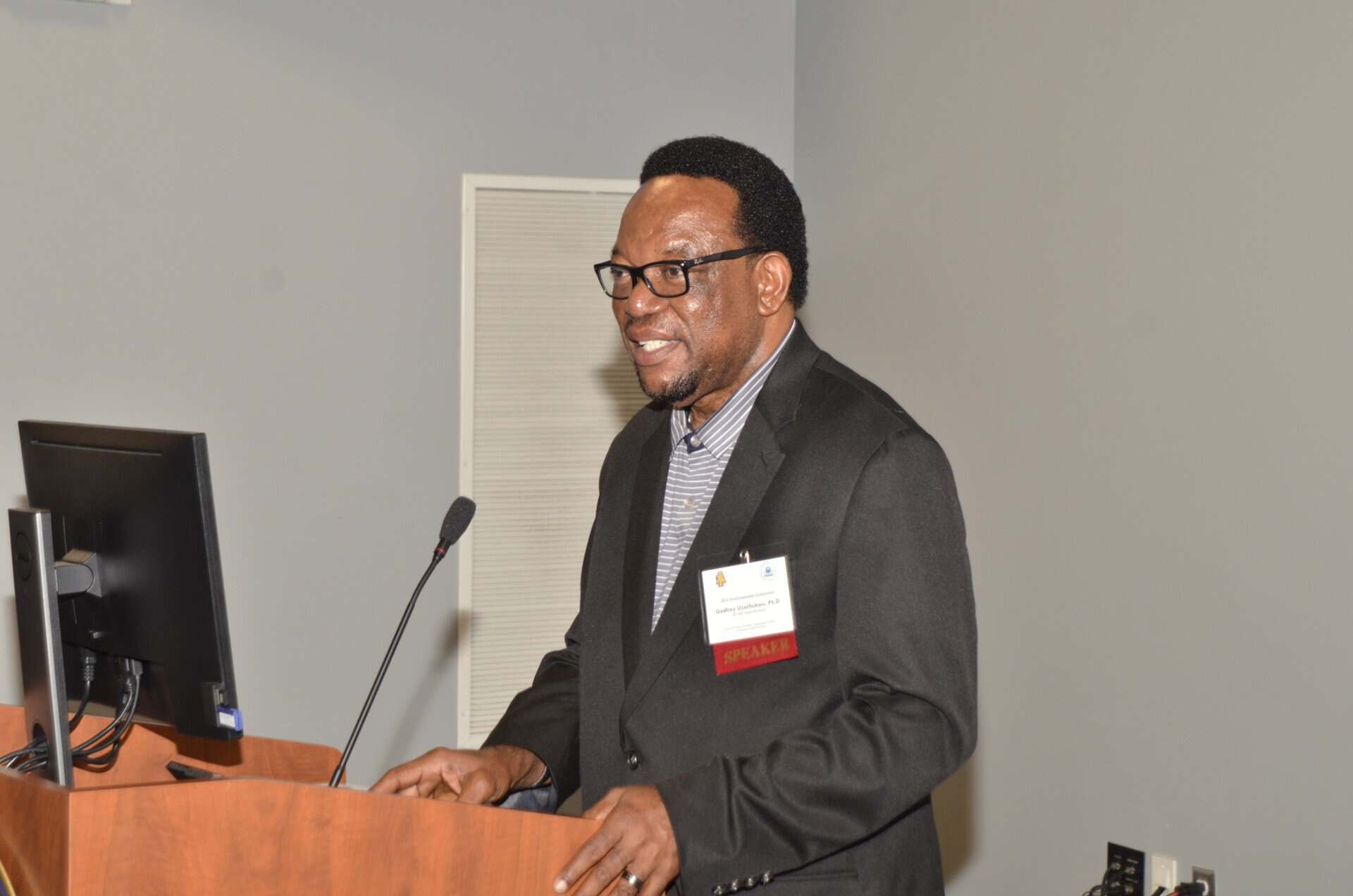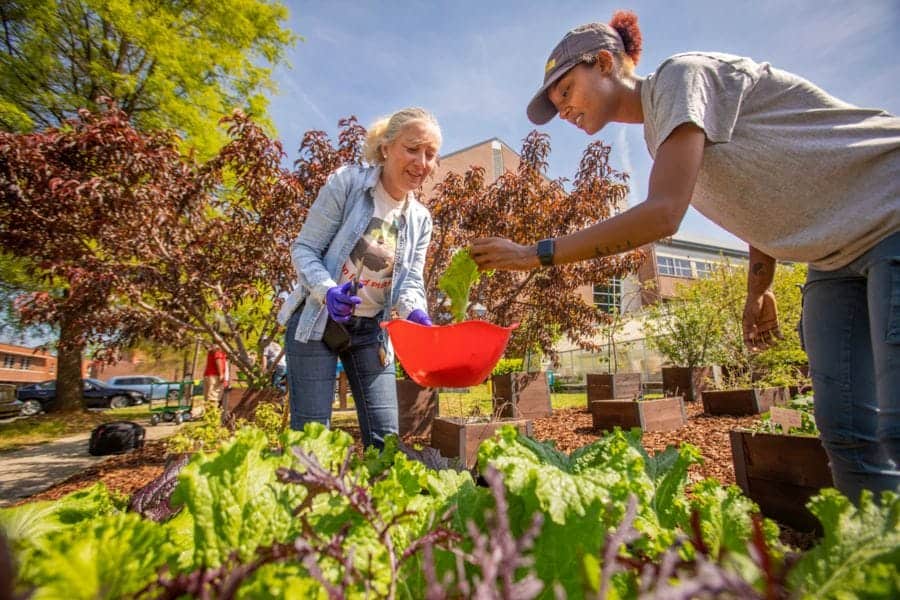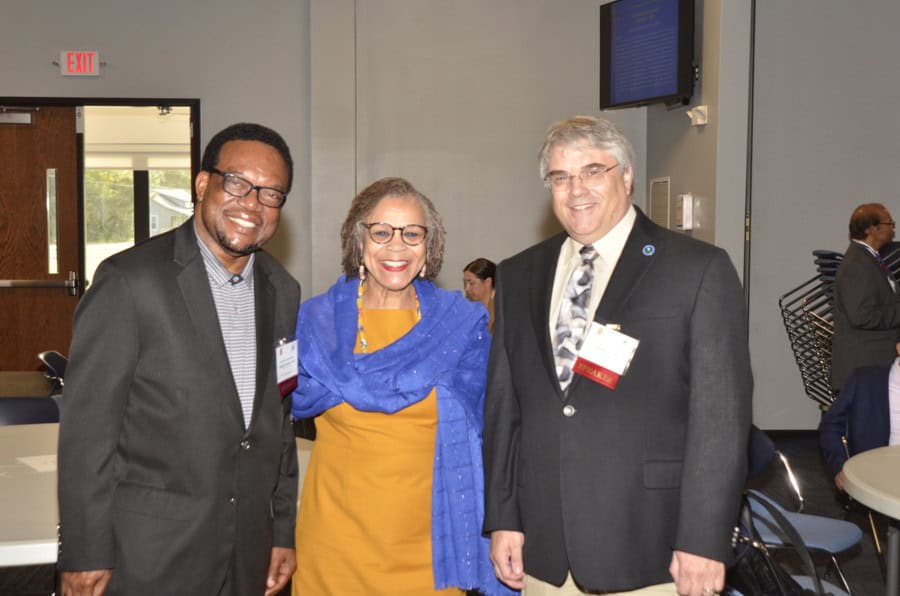
The partnership between N.C. A&T State University and the U.S. Environmental Protection Agency strengthened recently as students, professors and environmental officials mingled at a symposium at the University Farm.
The event celebrated a Memorandum of Understanding signed last December between the university and the EPA that envisions, and could result in, an environmental justice research center on N.C. A&T’s campus. The proposed center would provide meaningful research for disadvantaged neighborhoods and strengthen the university’s environmental justice courses.
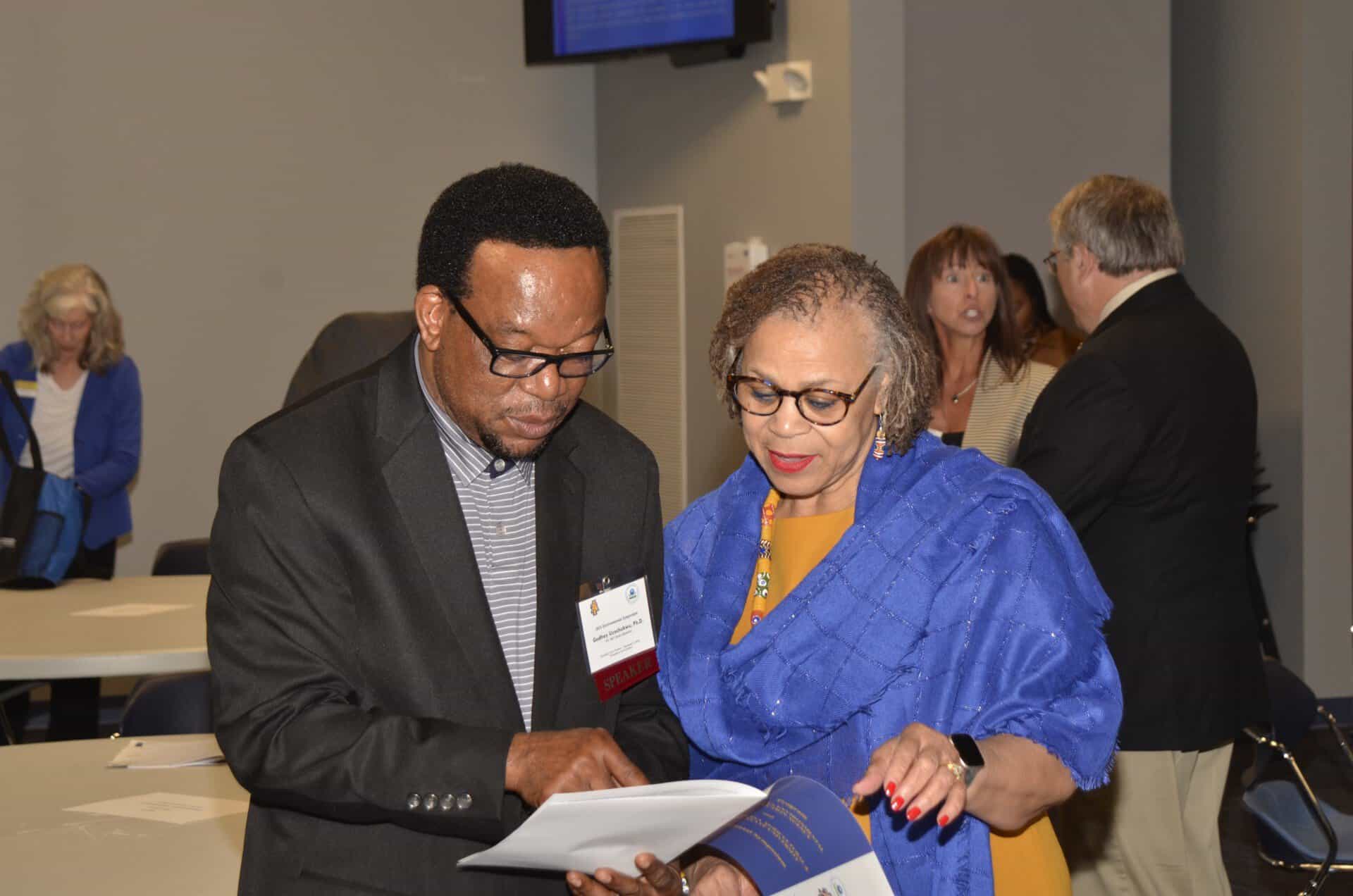
“This Environmental Justice Center of Excellence will be collecting data, both in the past and now, and doing an assessment, and then sharing that information with communities so that they can be safer places,” said Godfrey A. Uzochukwu, Ph.D., a professor in the College of Agriculture and Environmental Sciences.
He cited brownfields – abandoned or underused properties where chemicals were discarded – and other toxic dumps as examples of sites where data would be collected. Uzochukwu is founding director of A&T’s Interdisciplinary Waste Management Institute.
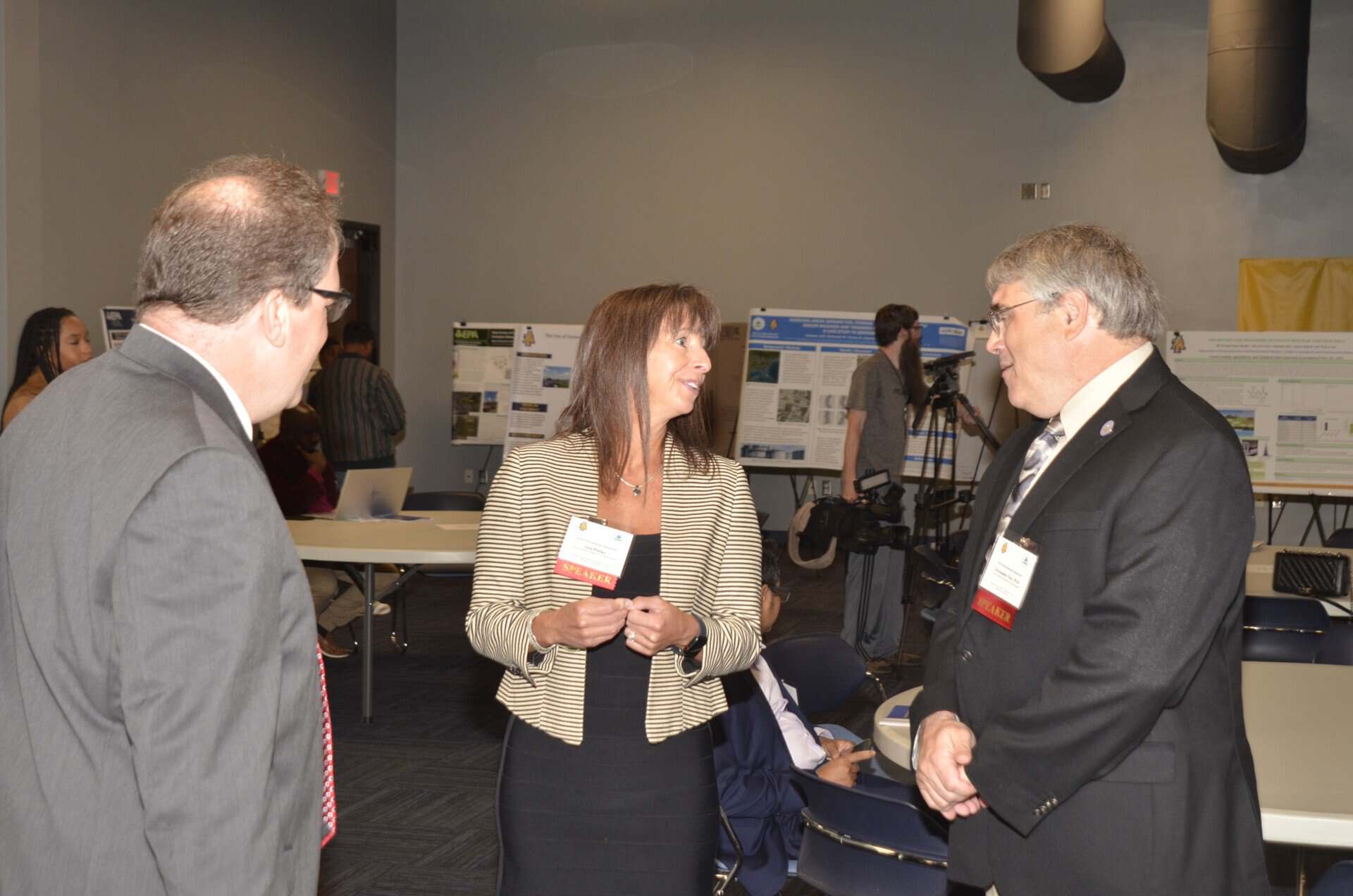
Christopher Frey, Ph.D, the assistant administrator for the EPA’s Office of Research and Development, said the memorandum’s purpose ”is to be a living, breathing relationship – not just a piece of paper – to represent the cooperation between N.C. A&T and the U.S. EPA in areas of mutual interest.”
“Community resiliency relates both to environmental justice and climate change, in that we want communities to have long-term sustainability as healthy places, to promote the health, well-being and quality of life of their members and the changing climate, and to address long standing inequities and advance justice,” Frey said.
“Children's environmental health is also a key priority for the agency and dealing with contaminants of immediate and emerging concern,” he said, citing pollutants such as per- and polyfluoroalkyl substances (PFAS) – long-lasting chemicals found to be harmful to human health.
Interim CAES Dean Shirley Hymon-Parker, Ph.D., cited the college’s mission of research, teaching and outreach as a natural fit for the EPA collaboration.
“We have a key focus on agricultural technology, environmental sustainability, climate-smart agriculture production, and we generated last year more than $46 million in extramural funding to support the research that we're doing within the college,” she said. “So, it is our mission to take that research to the people, meeting them where they are, and providing them with the tools and the information that they need to improve their conditions.”
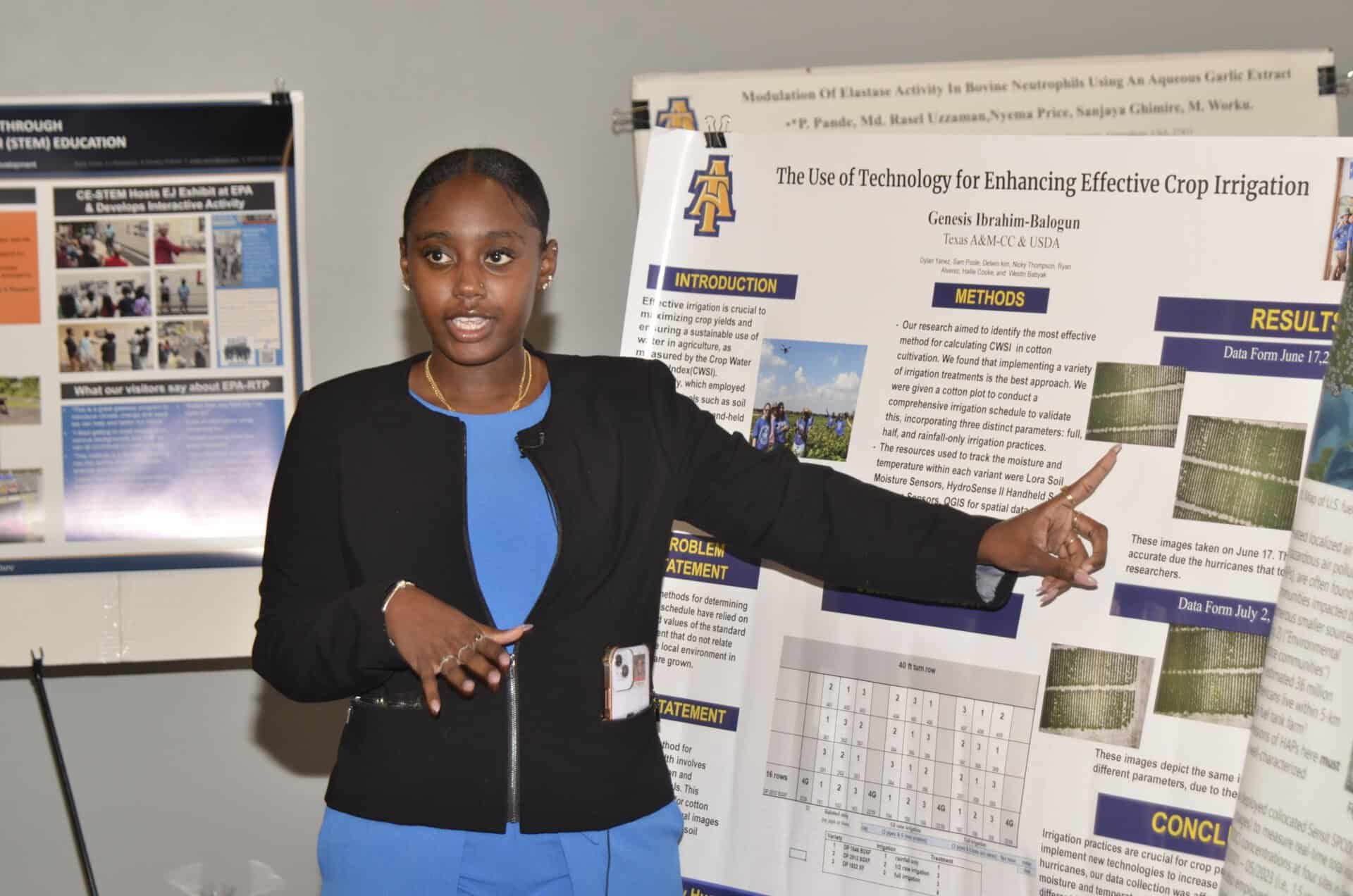
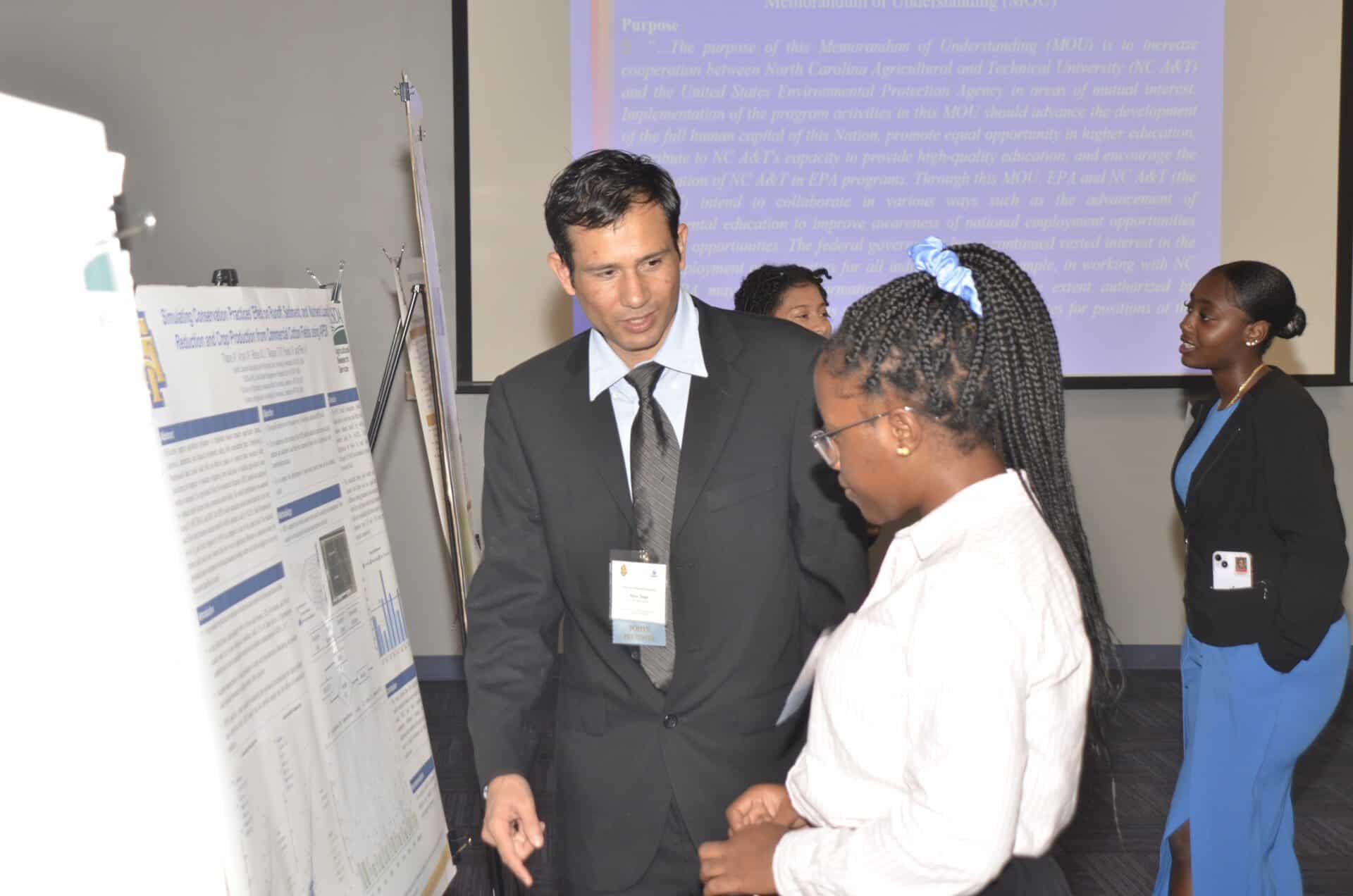
The event featured student poster presentations on topics such using microbes to degrade harmful GenX chemicals in the environment and digital mapping of stormwater infrastructure to find defects in the systems.
“Today has been really important,” said Genesis Ibrahim-Balogun, a junior who over the summer studied using technology to enhance crop irrigation and to remotely farm.
“I always knew I wanted to work for EPA, I just didn’t know there were four different branches, so now I’m able to network and get a lay of the land and see who does what I am most interested in.”
Lawren Caldwell, a graduate student in the Department of Agribusiness, Applied Economics and Agriscience Education, said she was excited at the prospect of the Environmental Justice Center of Excellence.
“There’s so much more we can do,” said Caldwell, who presented a poster on determining how Black Greek-letter organizations influence pro-environmental behavior. “We understand what activism looks like from a civil rights lens, but there’s so much more work that can be done. There’s so many more avenues.”