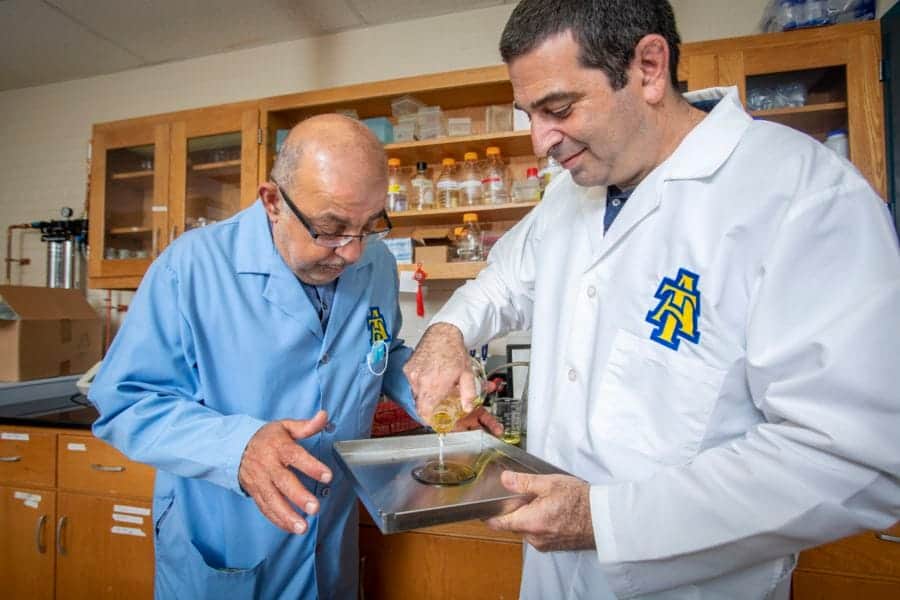
Food and Nutritional Sciences professors Salam Ibrahim, left, and Tahl Zimmerman have earned a $600,000 grant to study the spread of airborne viruses, such as COVID-19, in food processing plants. They will also add curriculum to educate students on the subject.
The virus known as COVID-19 has yielded some of its secrets during its three years in the spotlight. But despite the intense study, some unknowns remain, according to food and nutritional scientist Salam Ibrahim, Ph.D.
Among the aspects of the agile virus yet to be thoroughly understood is its behavior in the food processing environment, a unique climate that mixes high humidity, moisture and close personal contact. One of the sectors hardest hit by the pandemic, the food industry is seeking to rebound with new, improved safety protocols to prevent future disruptions to the supply chain and to worker health.
“COVID-19 revealed some gaps in the industry, things that have been overlooked,” Ibrahim said. “There is a limited understanding of airborne virus dynamics in the context of the food industry, and there’s no literature on the subject. Experience showed that disinfecting surfaces was not very effective against an airborne virus, even though that was what most of the cleaning protocols called for. To mitigate the impact of future pandemics on the food system, a more proactive approach is needed to determine best practices for safety measures.”
Ibrahim and his research collaborator Tahl Zimmerman, Ph.D., both faculty members in the Food and Nutritional Science Program in the Department of Family and Consumer Sciences, are aiming to provide new insight into the old problem of controlling the way viruses spread in food-preparation facilities.
With a $600,000 grant from the USDA’s National Institute of Food and Agriculture, Ibrahim and Zimmerman will work with colleagues from N.C. State University, Clemson and Wake Forest School of Medicine, among others, to establish a “model laboratory” for testing and studying the way airborne viruses can be transmitted in food processing plants, particularly meat packing plants.
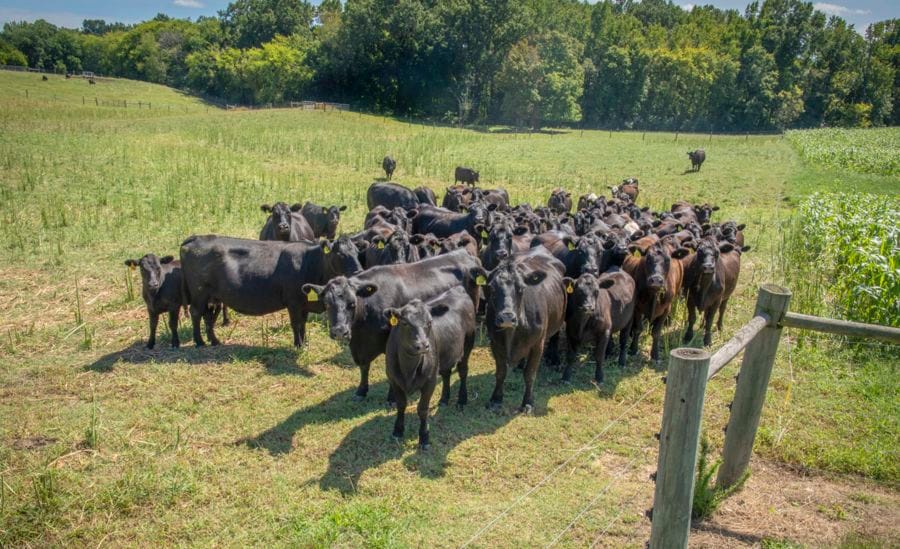
Meat-packing plants have a unique environment that makes them important areas of study, Zimmerman said.
The team’s goals are threefold: To create, and disseminate, best practices for keeping employees safe and plants clean; to educate students in those practices; and to provide training to the public through Cooperative Extension, to spread the word against spreading germs.
“Food safety is a core subject in the Food and Nutritional Sciences program at N.C. A&T, and so, a clear understanding of how airborne viruses relate to food safety is necessary for our students to become food science professionals,” Zimmerman said. “No existing food science program deals with the study of airborne viruses. This will be novel research.”
Work has already begun on setting up the research model facility, built to mimic conditions in a processing plant, Ibrahim said. Testing began this fall.
Curriculum for the educational component will be included in existing Food and Nutritional Sciences classes on such topics as risk assessment, food protection and defense, food microbiology, and food safety and sanitation. In addition, the department has added a certificate in food safety and quality that will include the new curriculum. The certificate will be available starting in fall 2023.
“Ultimately, we want to provide research-based evidence that the industry can use for oversight regulations, but just as important is training the students,” Ibrahim said. “First, we’ll build the research program. Then, we’ll build the teaching program.”