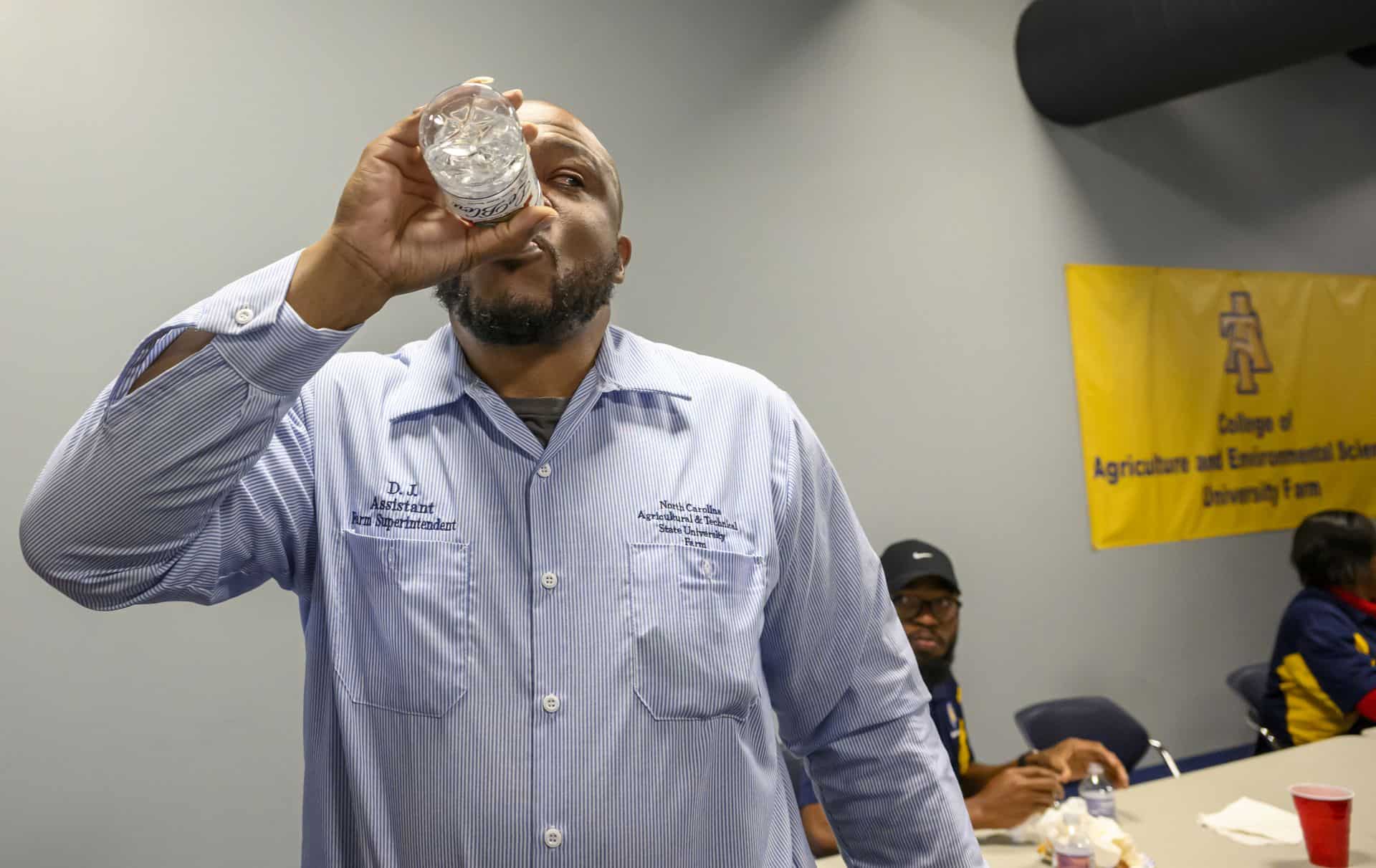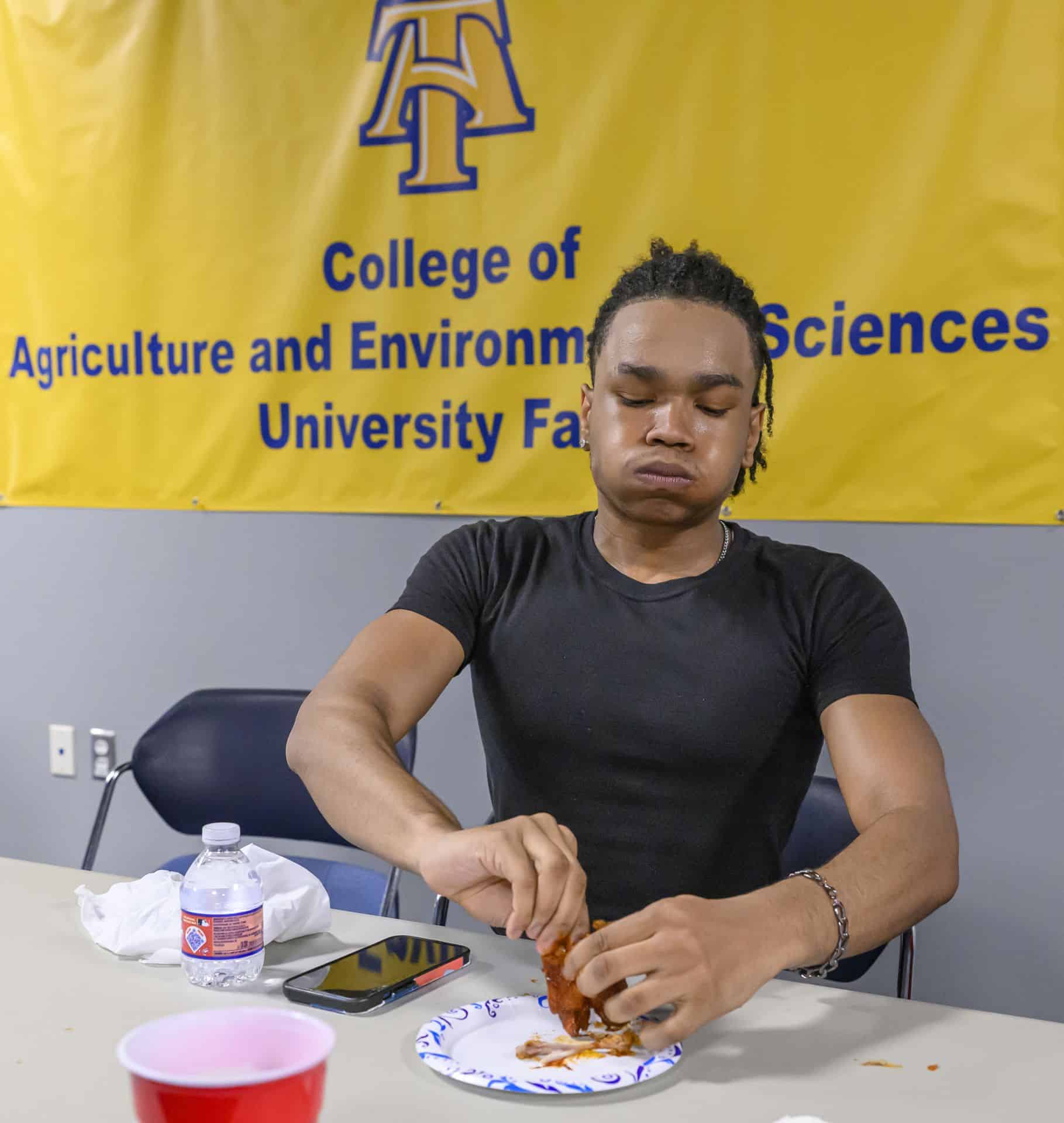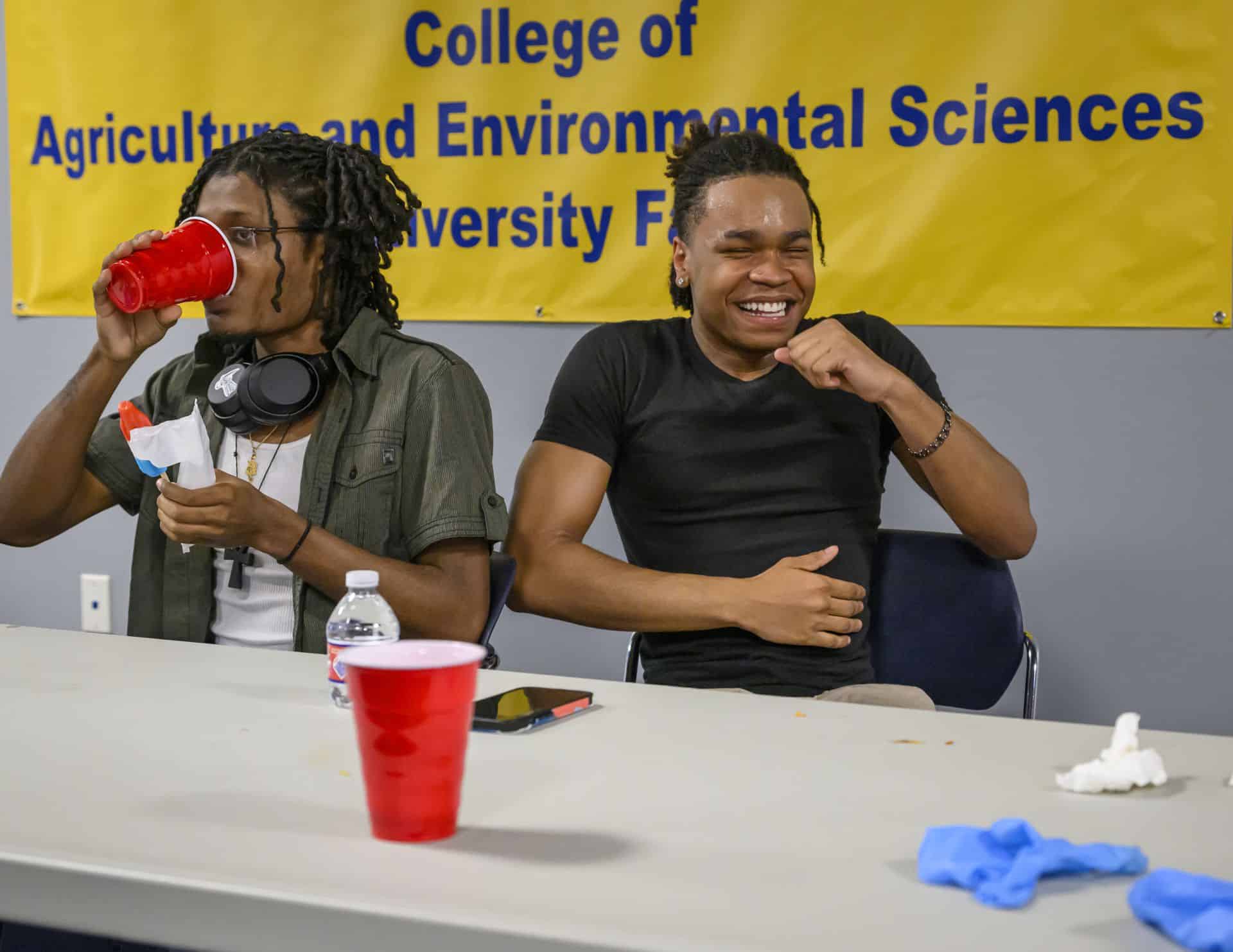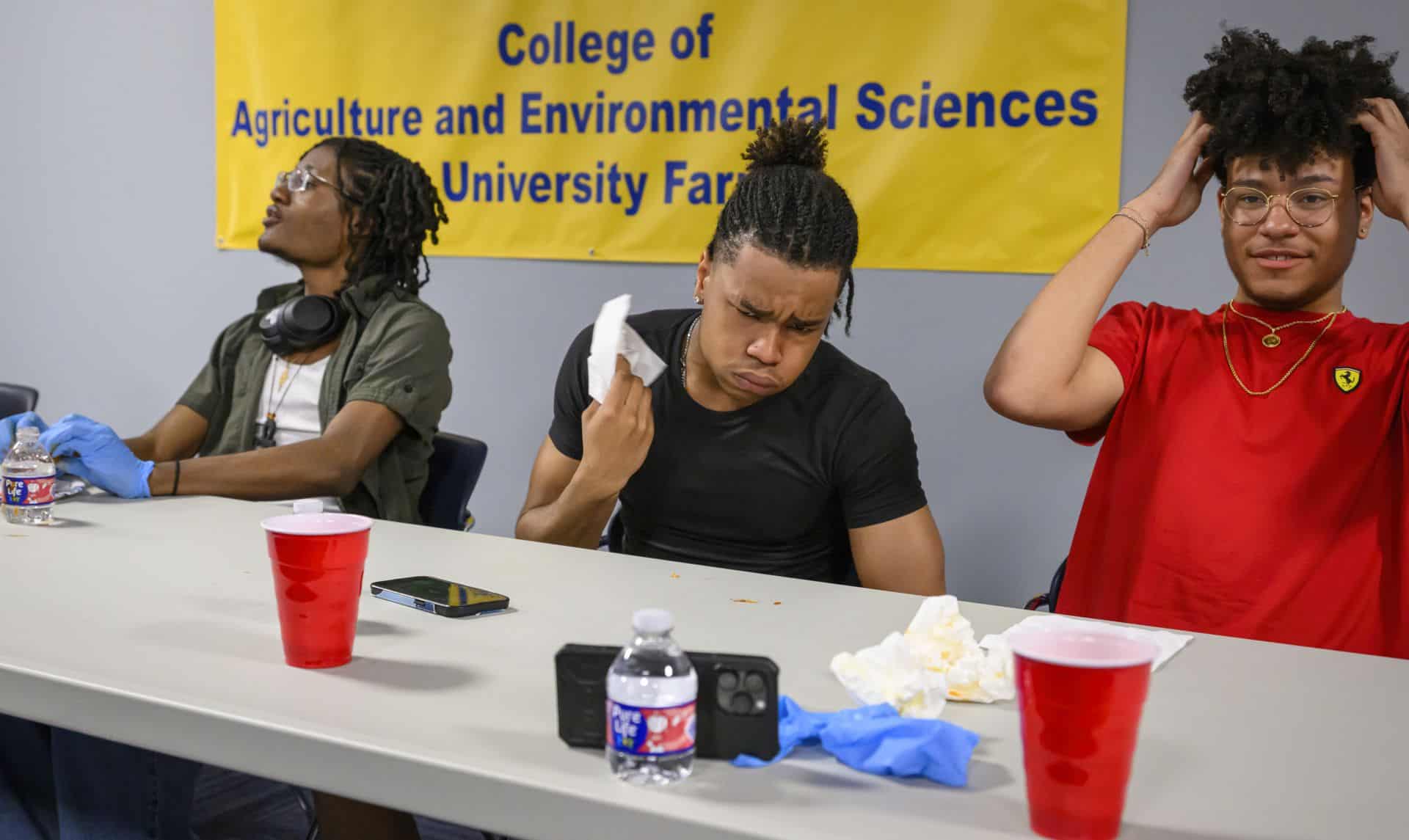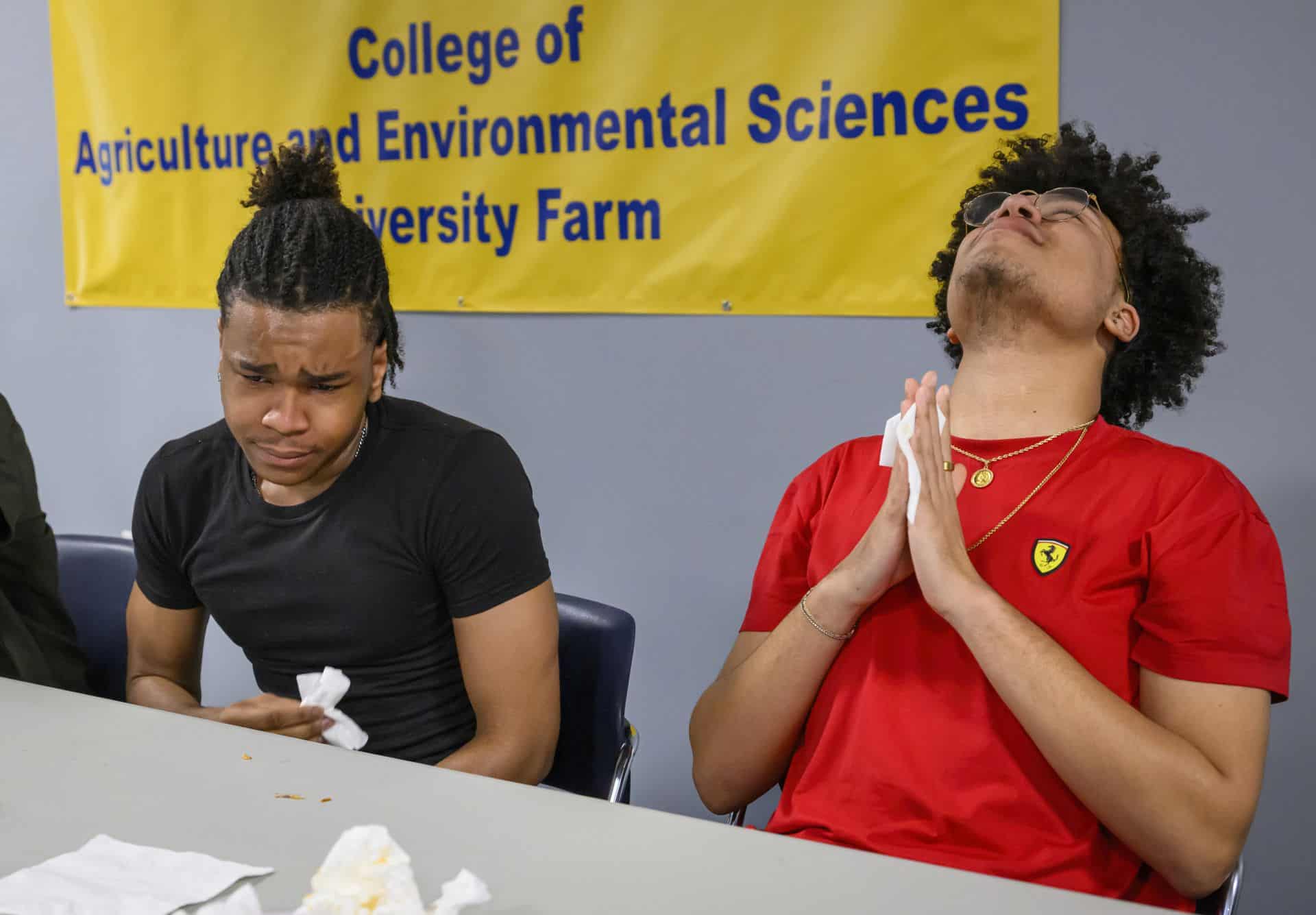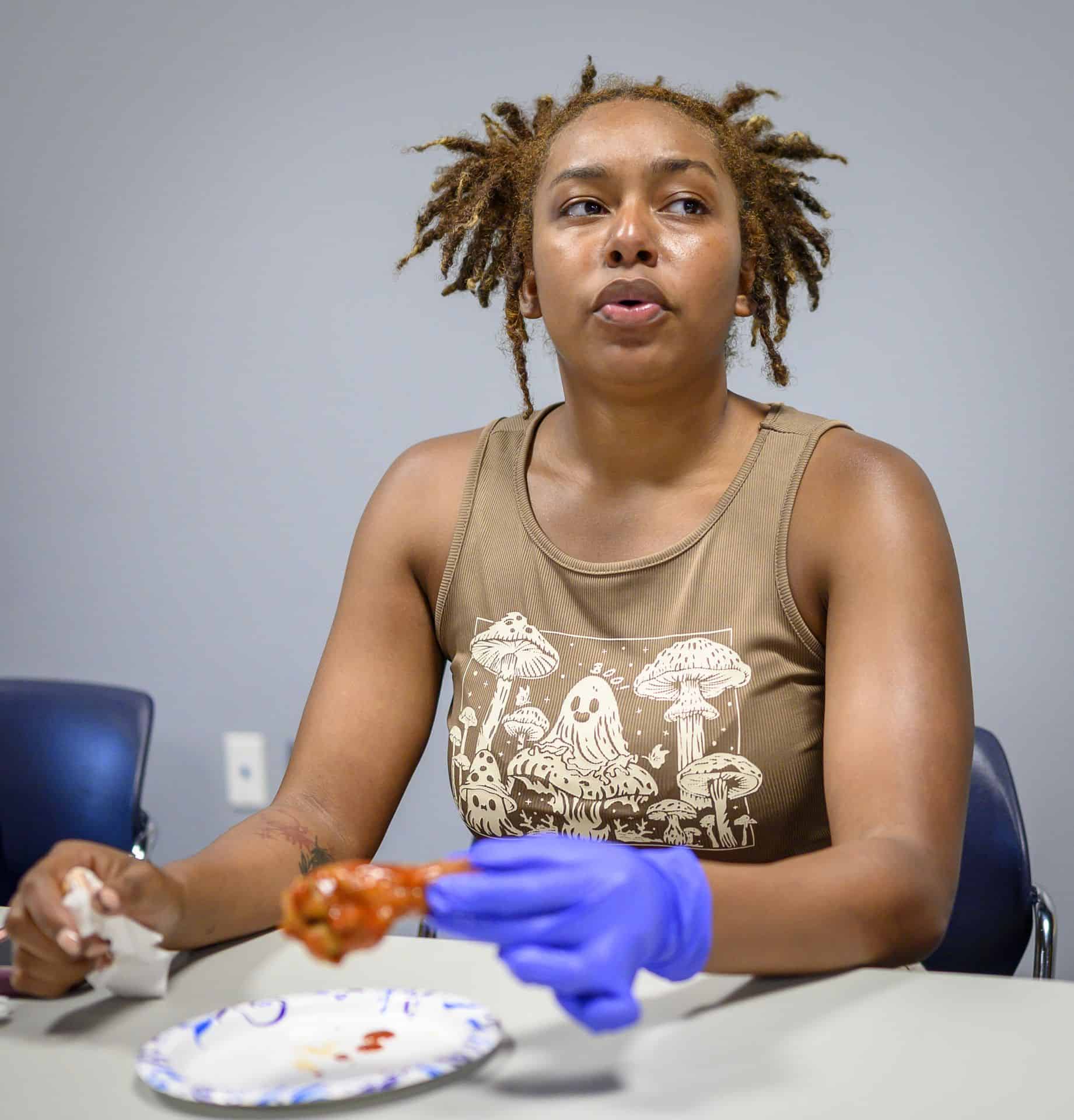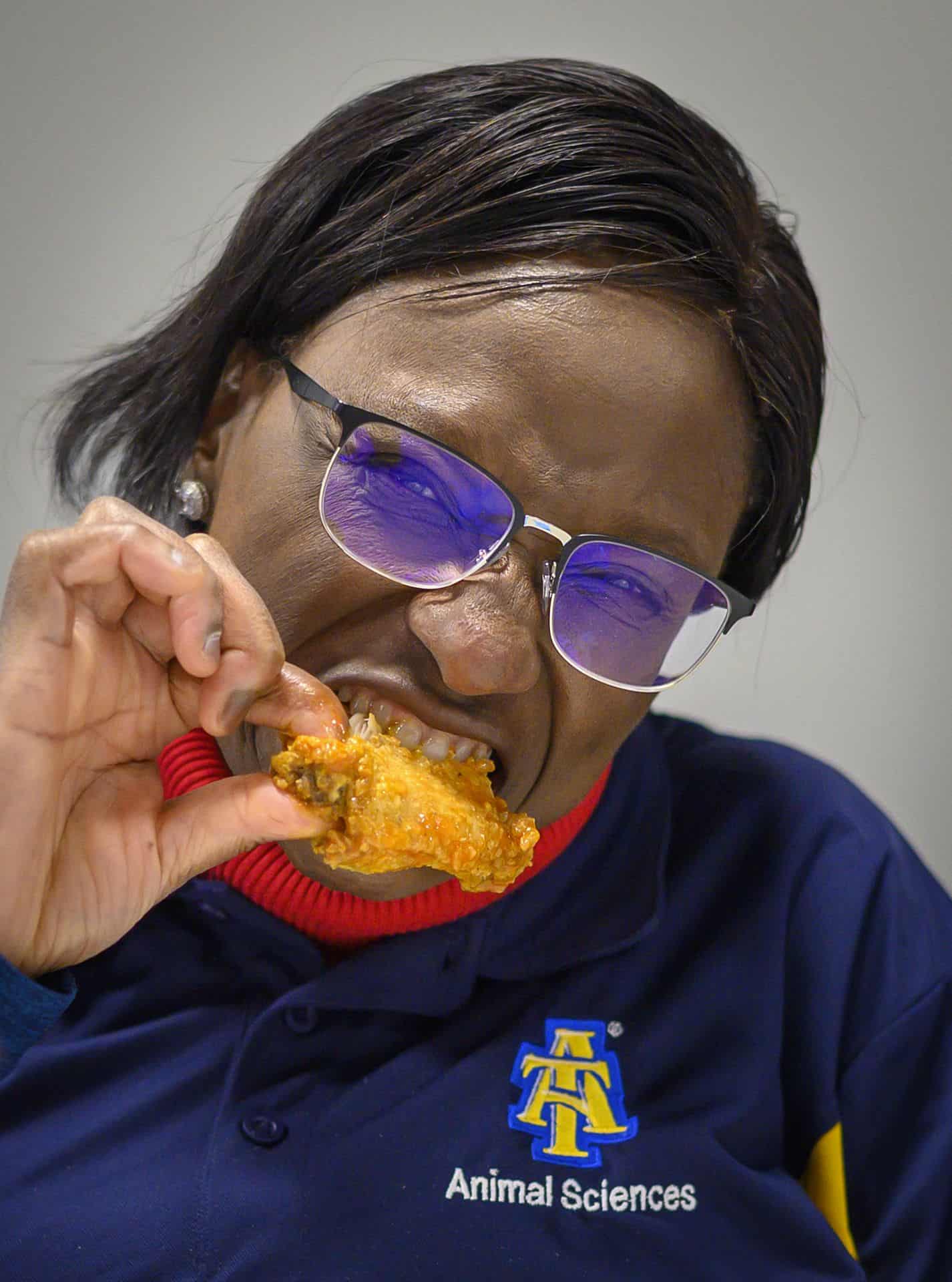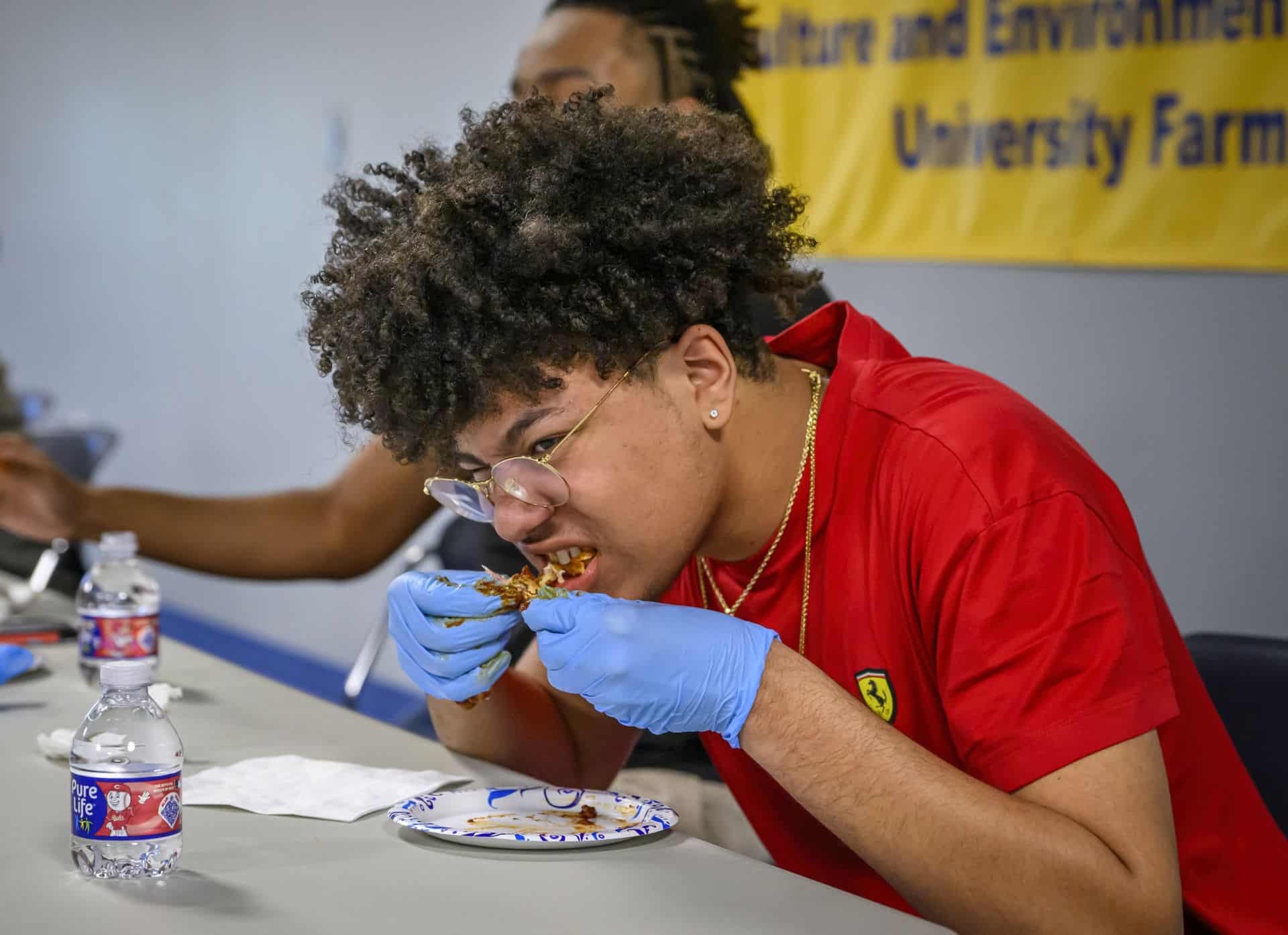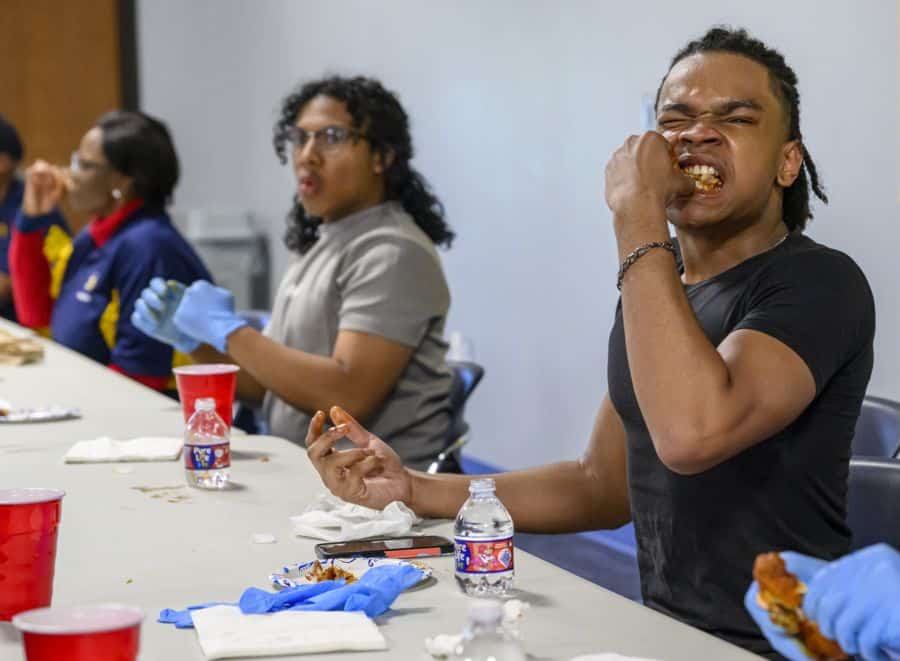
The heat was on for nine competitors, and one iron-stomached student took home $50 as champion, during the Poultry Science Club’s annual Hot Wing Challenge on March 28.
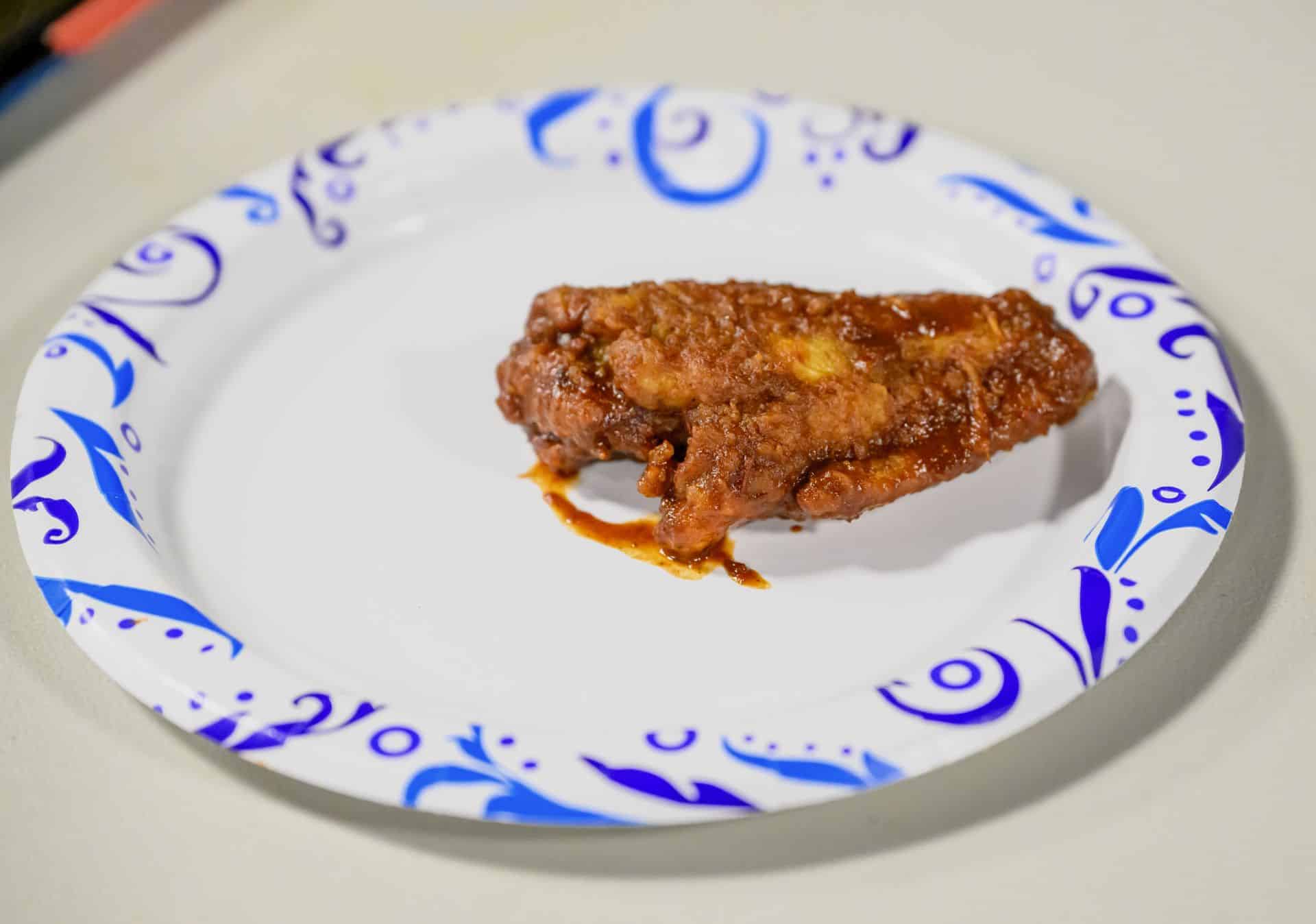
Part wing-eating competition, part endurance test and part trivia game, the contest follows a similar format to the long-running “Hot Ones” YouTube talk show hosted by Sean Evans: Competitors chat with Evans while eating chicken wings drenched in sauce that grows progressively hotter on the Scoville Heat Unit rating, the measurement for spiciness in chili peppers and other substances.
It even has a spin-off series, “Hot Ones: The Game Show,” in which contestants can win a grand prize of $25,000.
A&T’s winner gets the prize and bragging rights for a year.
“We have various hot sauces that increase in Scoville units, and we ask them questions so they’ll suffer rather than sit in silence,” said club president Aniyah Jeter, jokingly.
The first level's sauce, from the Hot Ones website, simmered on the tongue at a relatively mild 2,000 units. But Level 3 sizzled in at 35,000 units with Da Bomb Hot Sauce, a big increase in burn potential.
"The hottest we have, Level 9, is 5 million Scoville units for a sauce called Odin’s Wrath by Ragnarok,” Jeter said.
To advance to the next level, competitors must eat each wing in its entirety without drinking the milk or orange juice provided for them at the table – nothing to cool the burn.
“You can drink as much water as you want, but the water will only intensify the heat,” said club vice president Jahbez Roach, emcee for the contest. “The second you touch your milk or orange juice, you are disqualified.”
Like “Hot Ones”, Roach asked each competitor random questions at the top of each level to test their focus, including poultry trivia and personal anecdotes, such as “What is the weirdest food combination you’ve ever tried but actually enjoyed?”
“Milk, peanuts, and cassava flakes,” answered animal science associate professor Yewande Fasina, between wings.

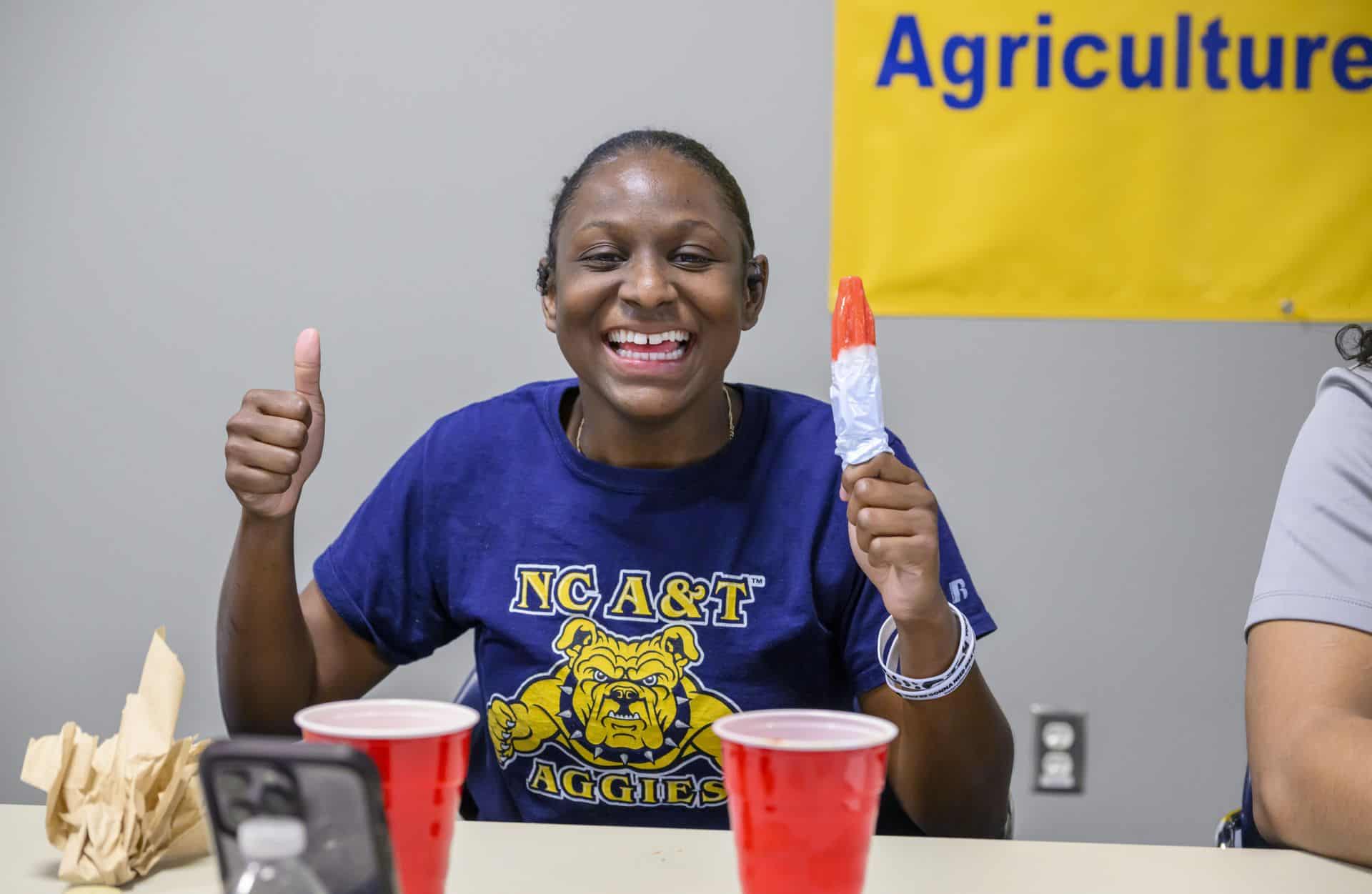
Janaia Madden tries to cool off with a frozen treat after withdrawing from the competition at the Poultry Science Club’s Hot Wings Challenge at the N.C. A&T Farm Pavilion.
Contestants dropped out as the spice level rose, cooling off with their beverage, ample amounts of water, and popsicles.
Only one student - this year’s winner, animal science major Mikel Hackett – wasn’t too fazed by the increasing burn.
“I have this sauce at my house,” he joked. “Winning feels great. As a college student, you do a lot of things for money.”
Hackett reached the seventh level (Karma Sauce’s Scorpio Disco at 649,000 SHU) before his runners-up – Fasina and last year’s winner, animal science Associate Professor Kingsley Ekwemalor – forfeited by default.
“As poultry faculty, I was excited to be able to compete and help make this a fun event,” Fasina said.
“I decided, as defending champion, that I was going to let Mikel win,” Ekwemalor said with a smile. “It’s an honor to be passing the baton to Mikel.”