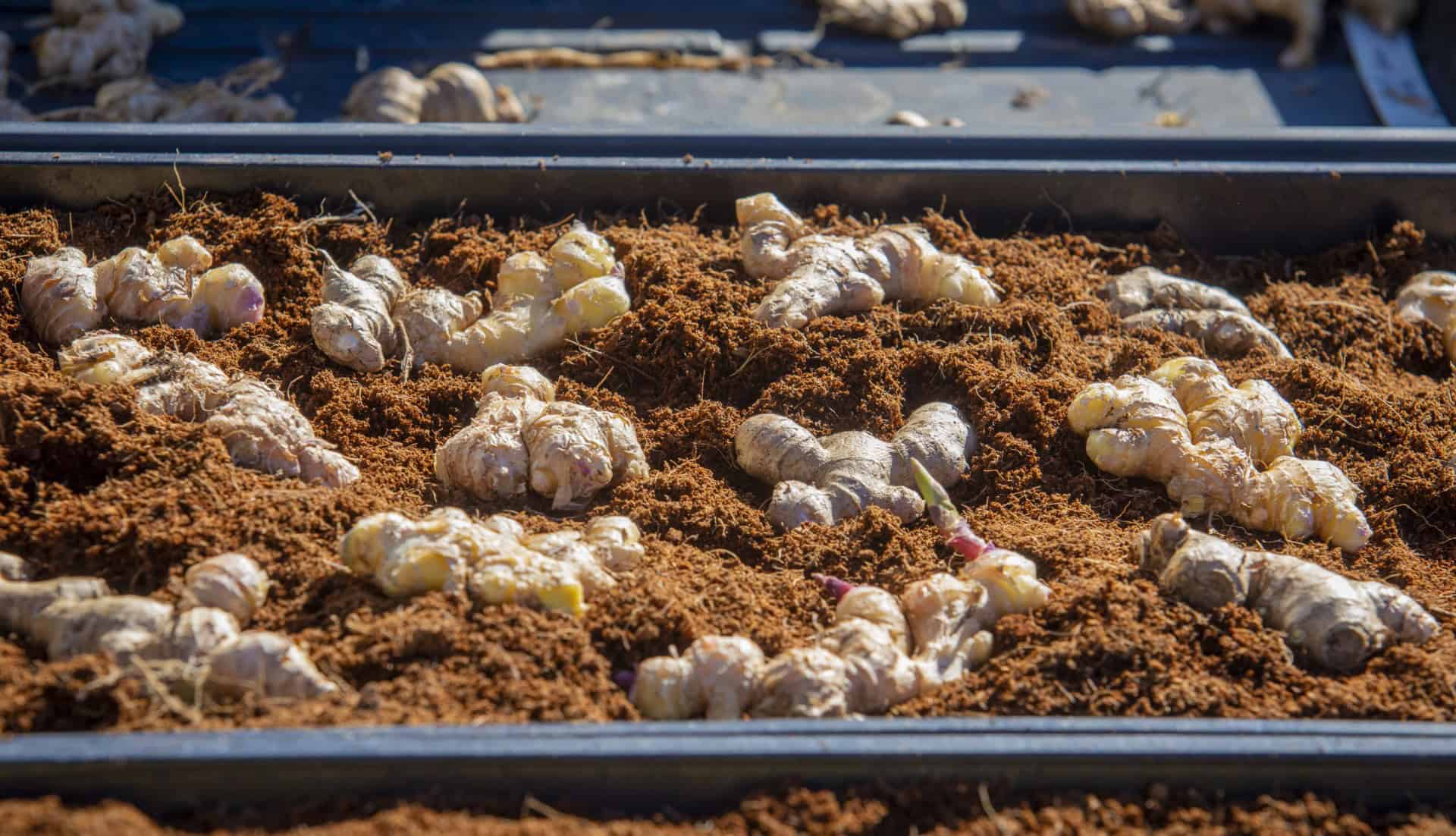
Growing ginger as a commodity crop can be profitable and possible in North Carolina soil.
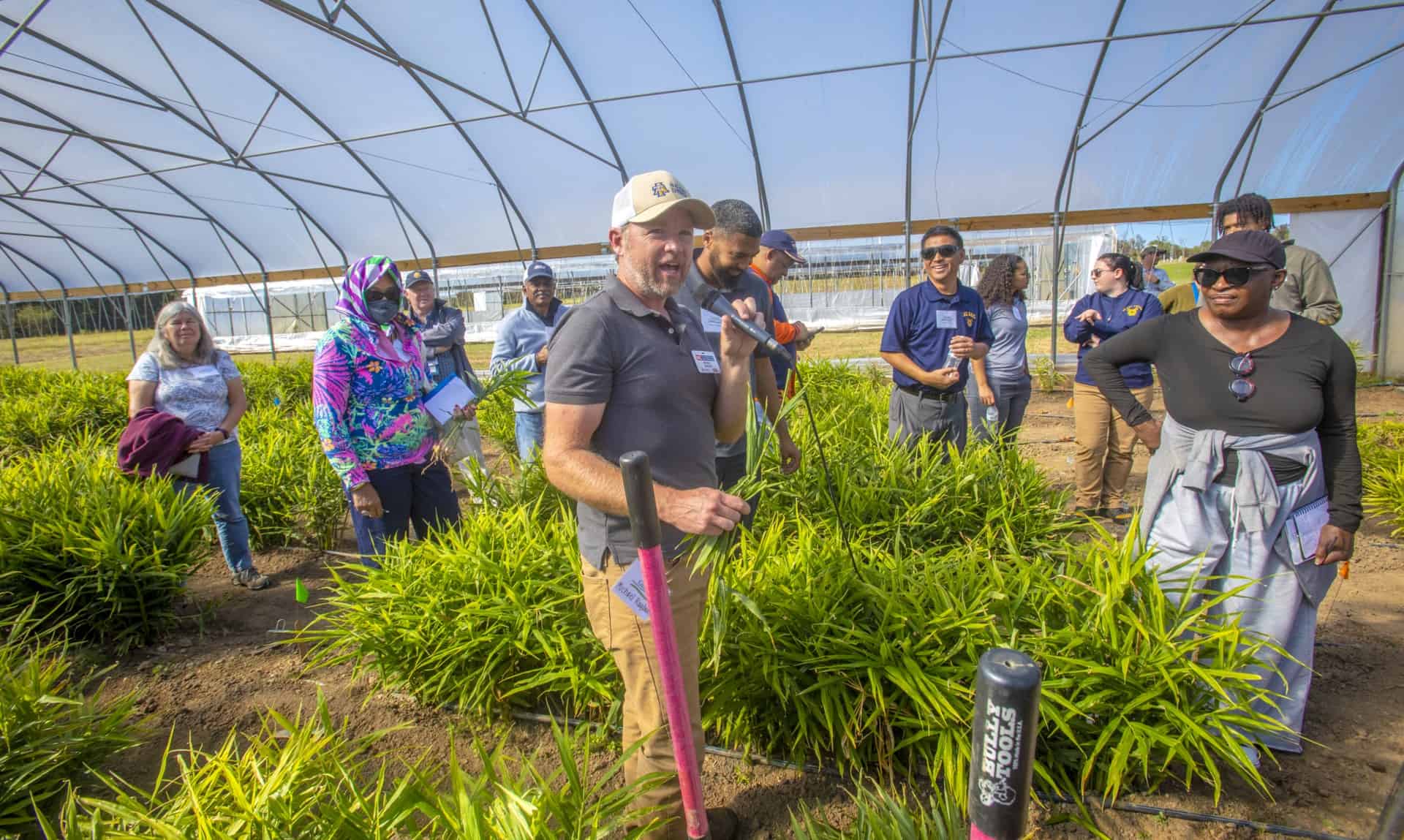
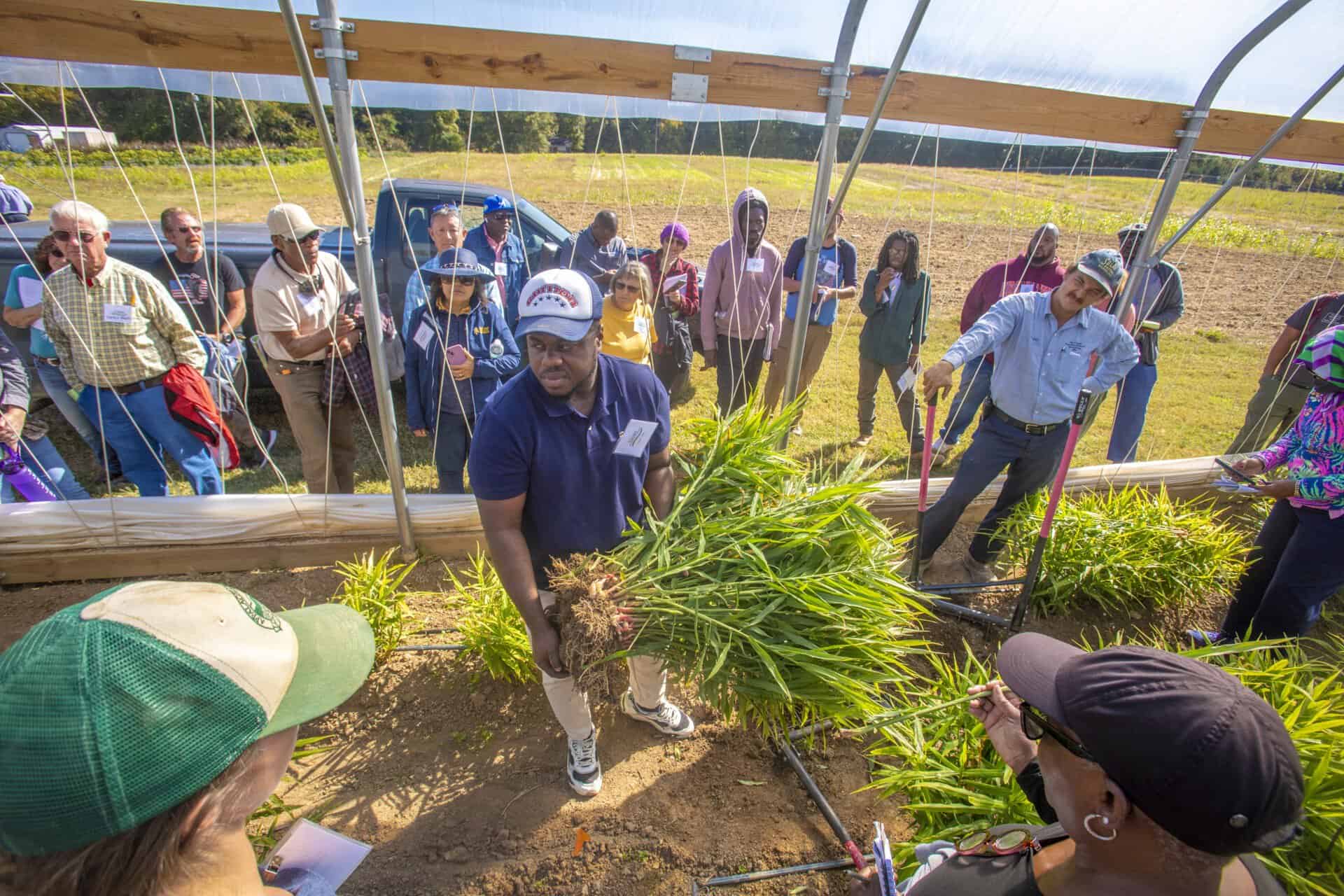
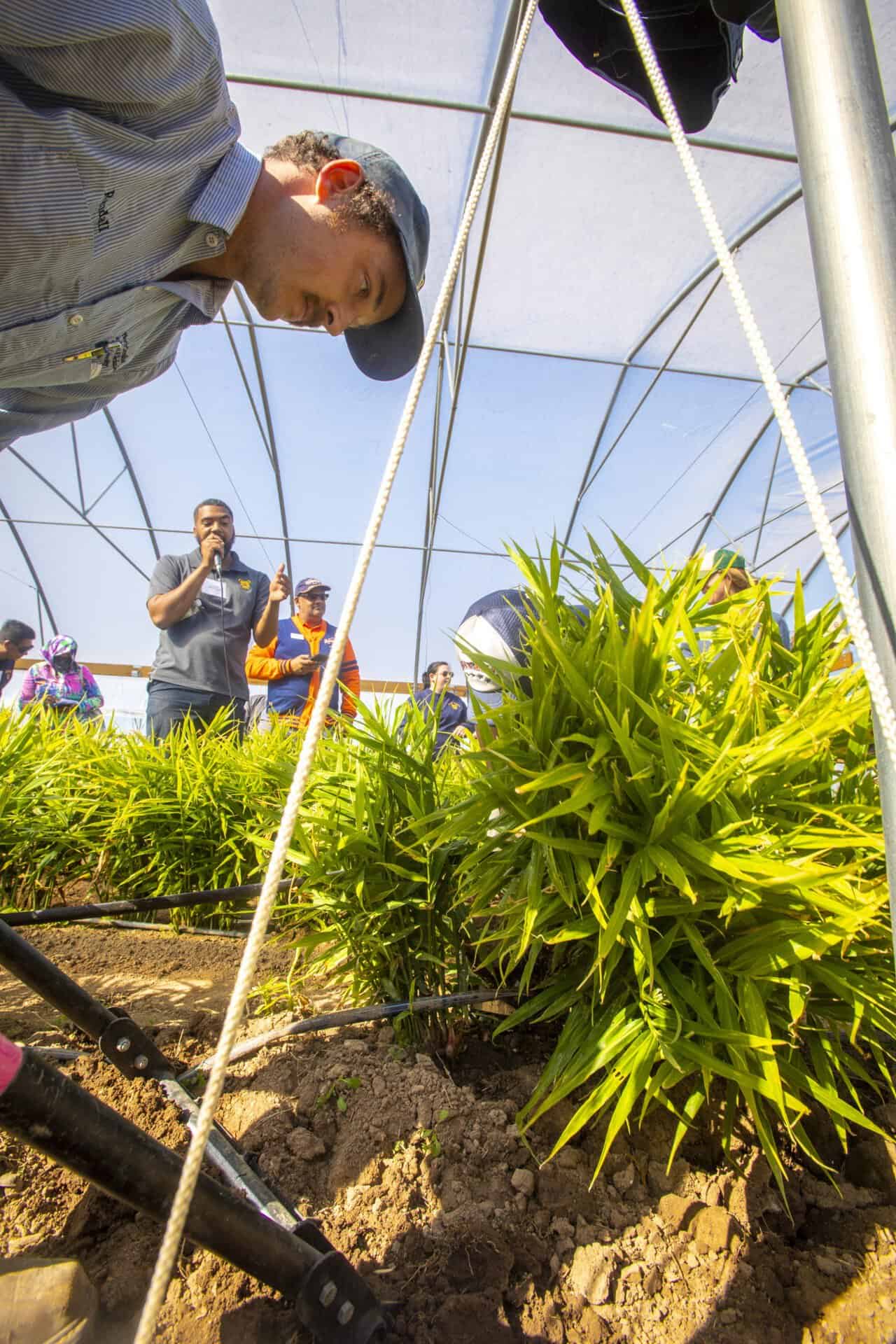
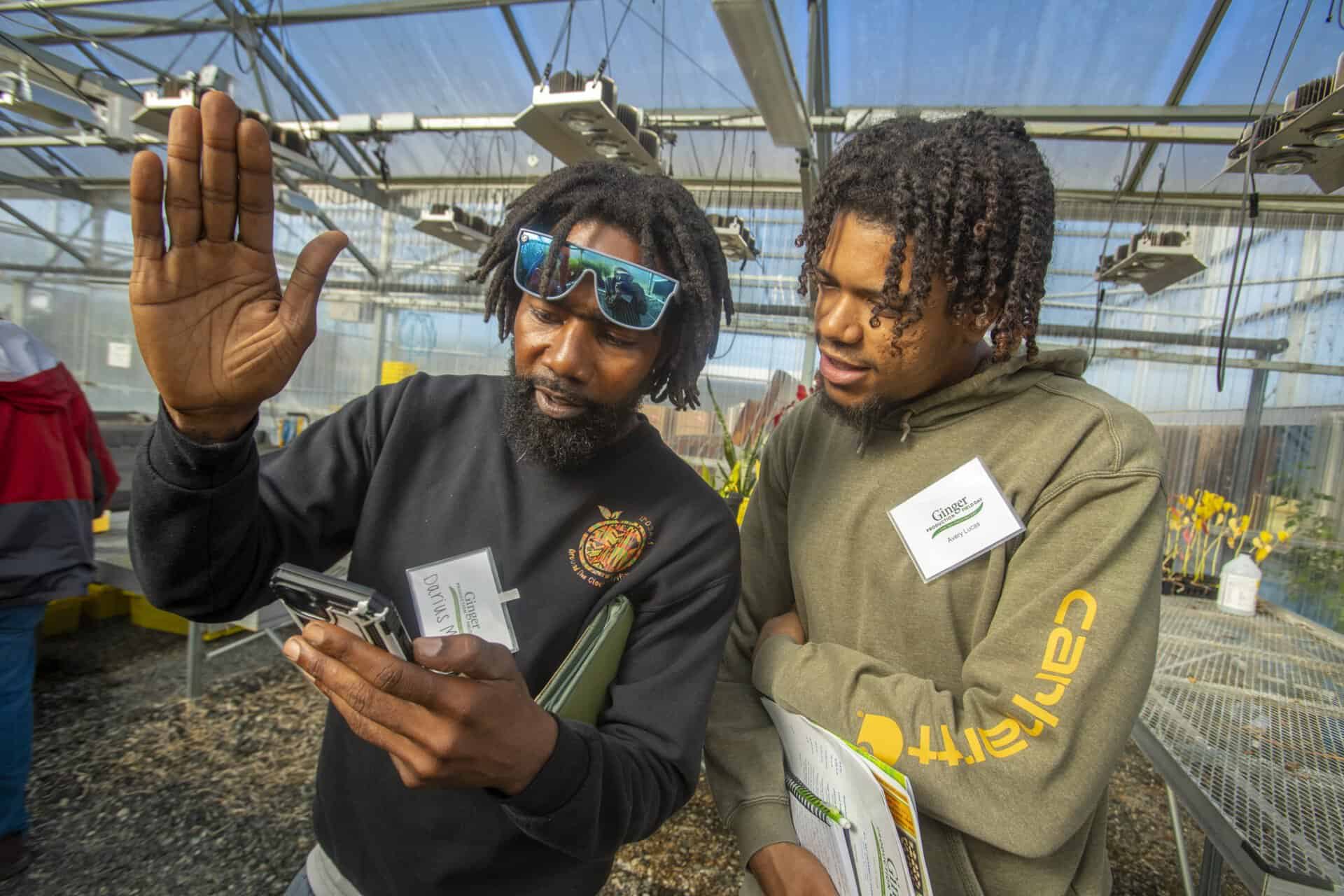
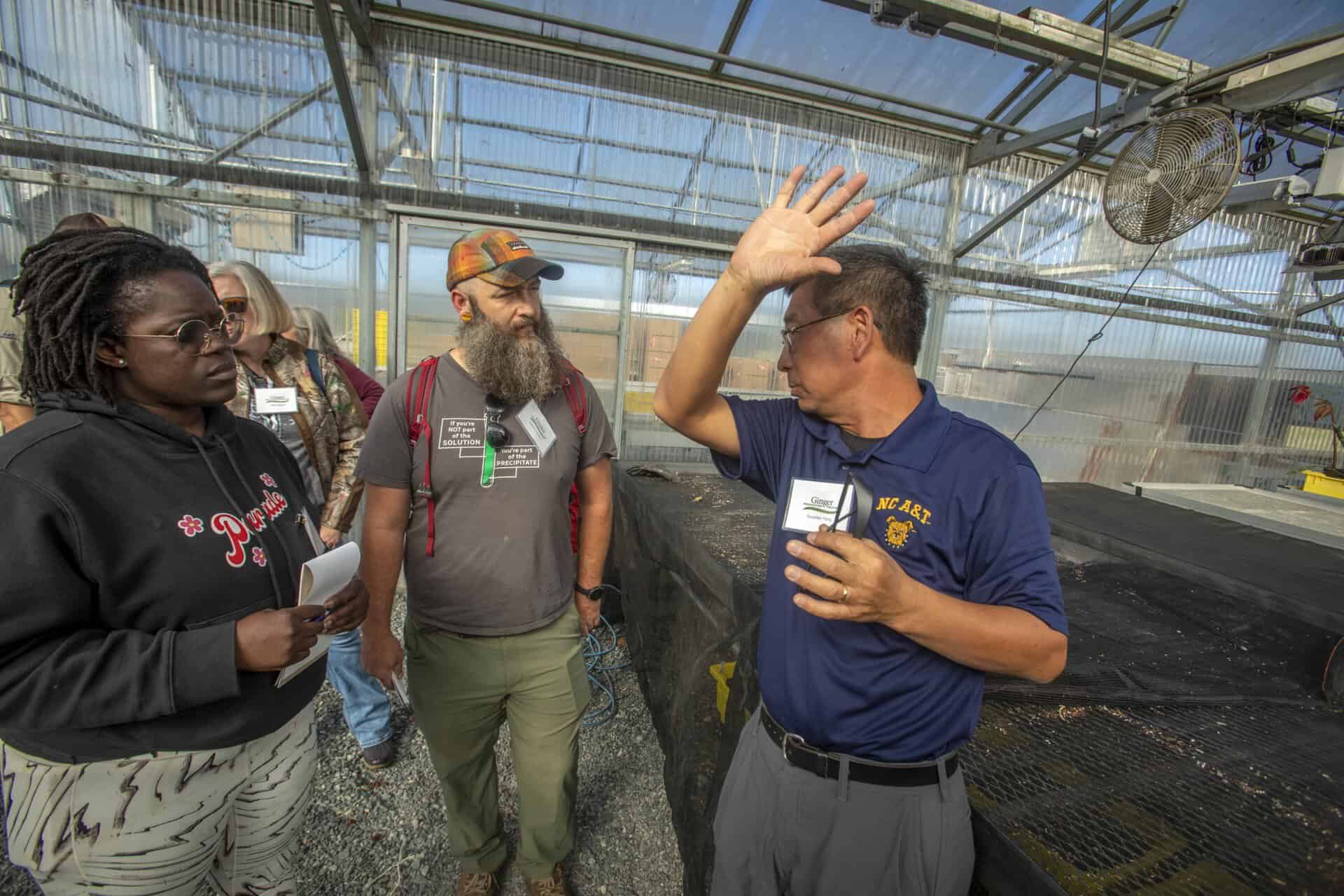
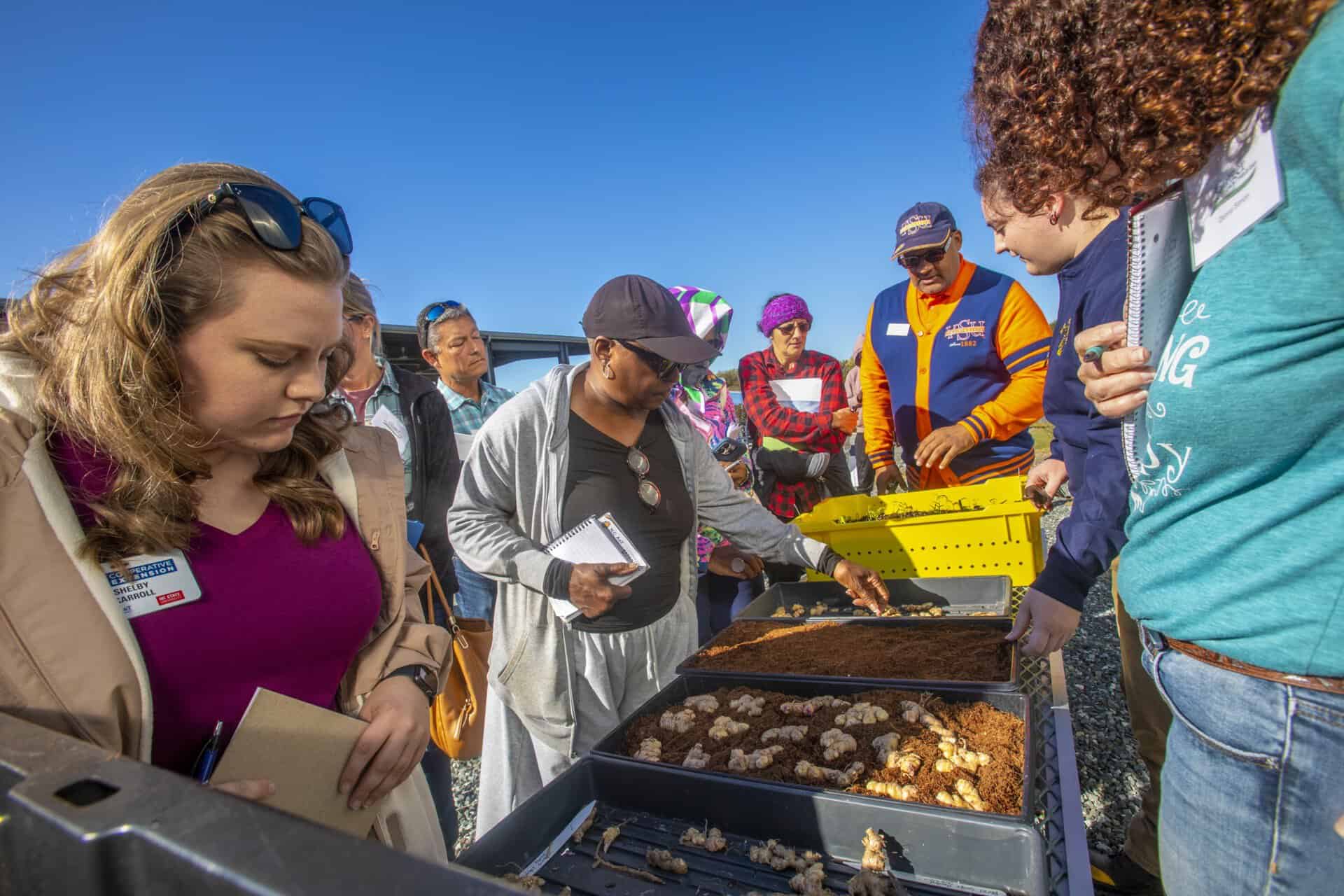
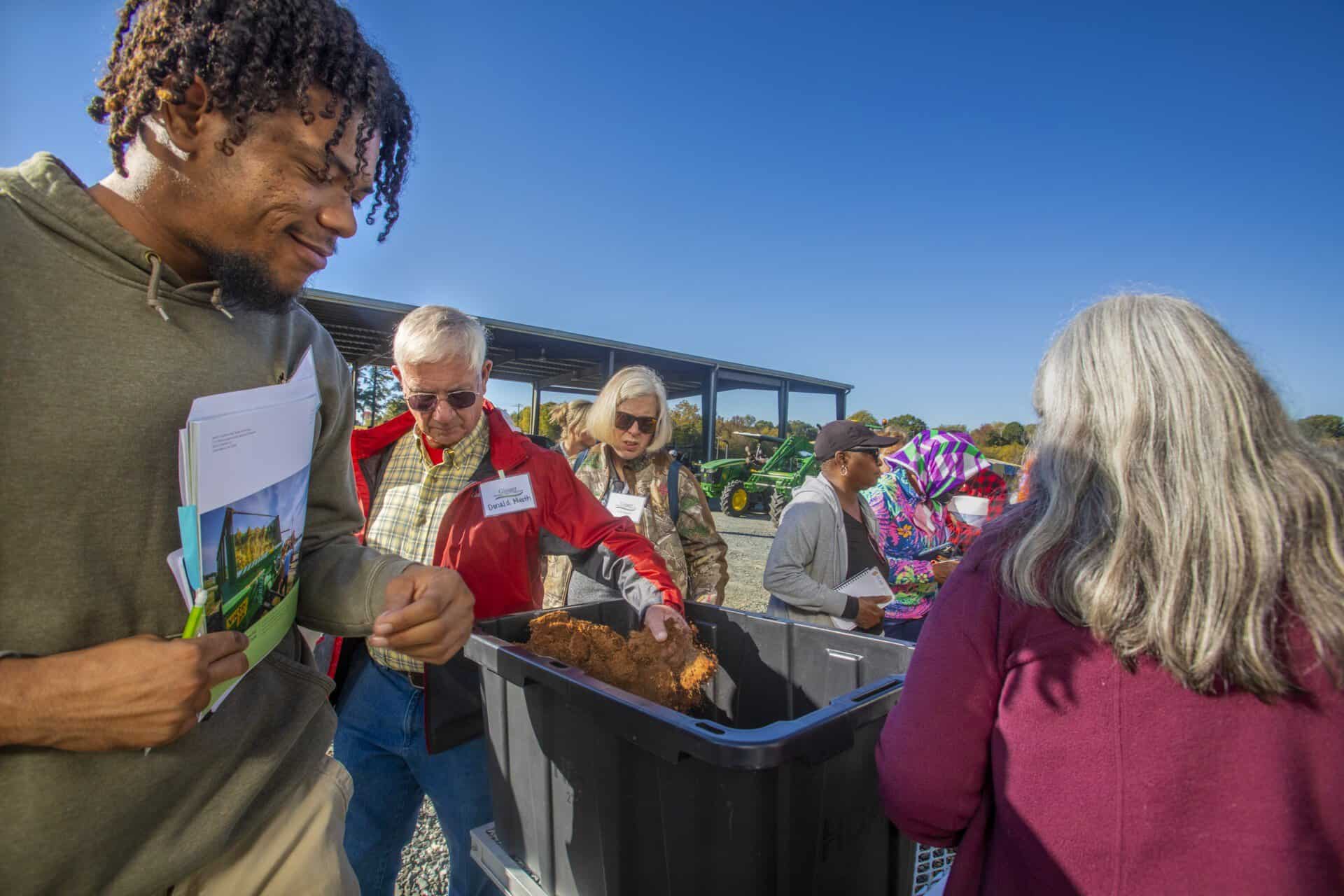
That’s the message researchers in the College of Agriculture and Environmental Sciences and Cooperative Extension at N.C. A&T offered small-scale producers during the first annual Ginger Production Field Day on Oct. 21, along with growing tips and market opportunities.
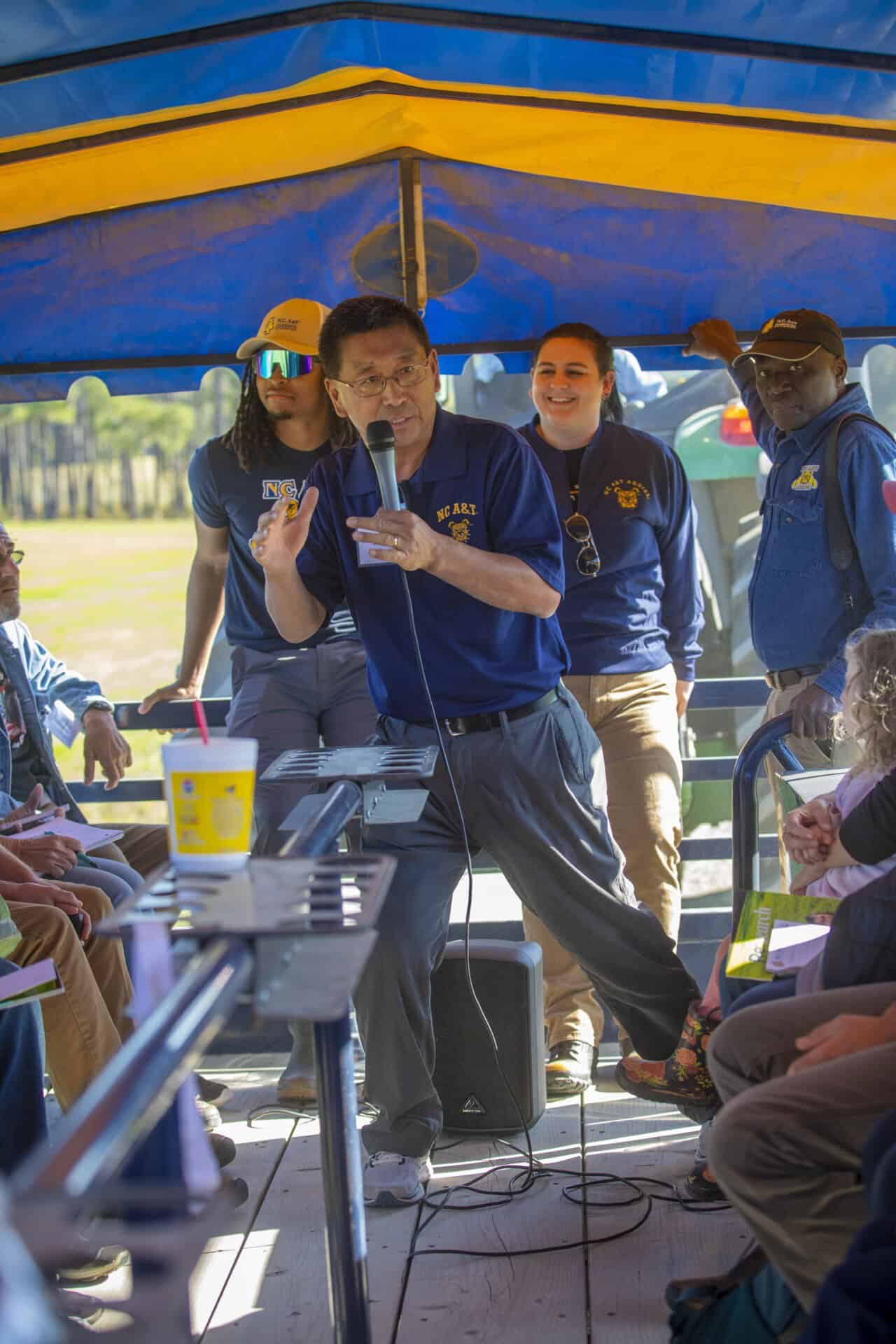
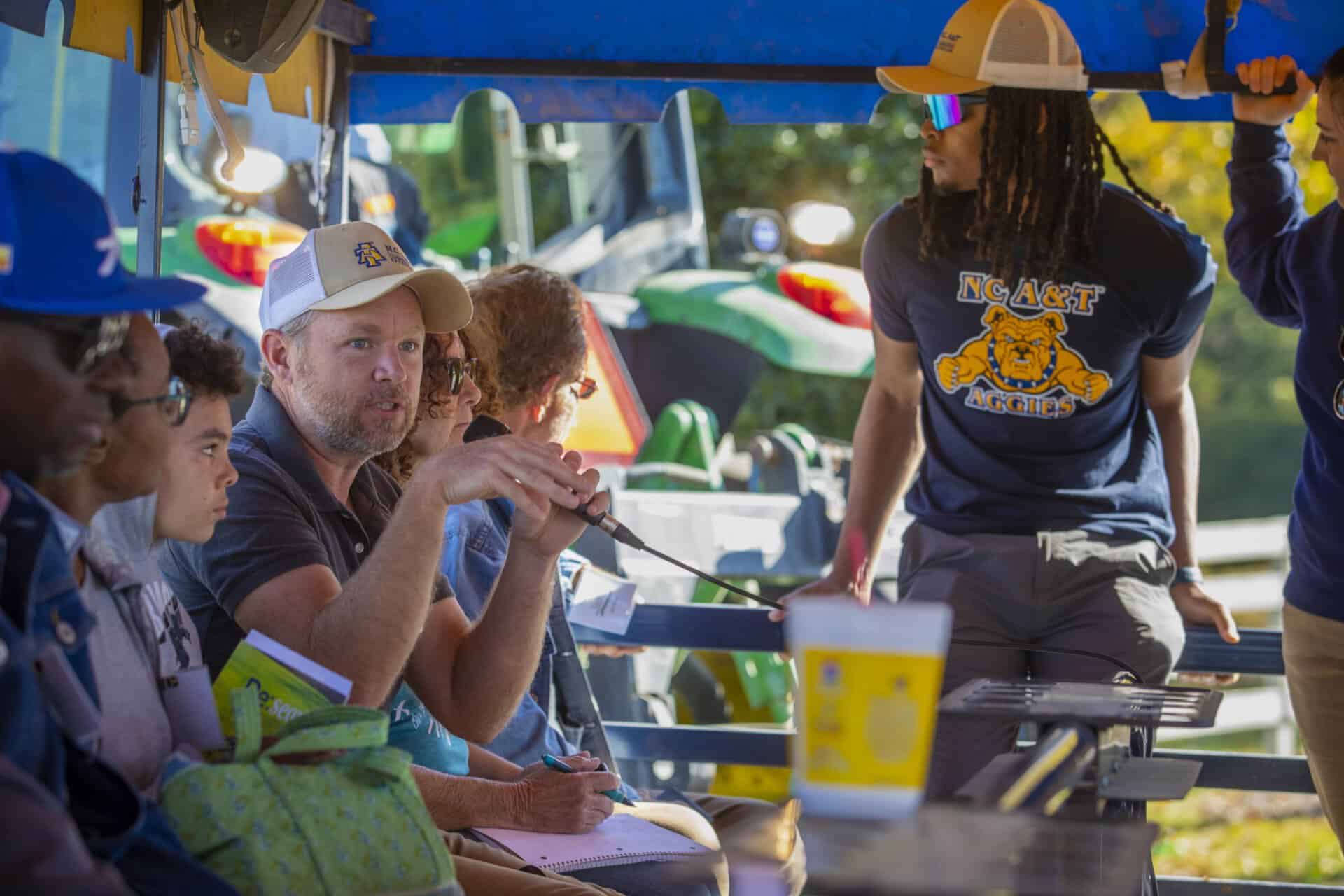
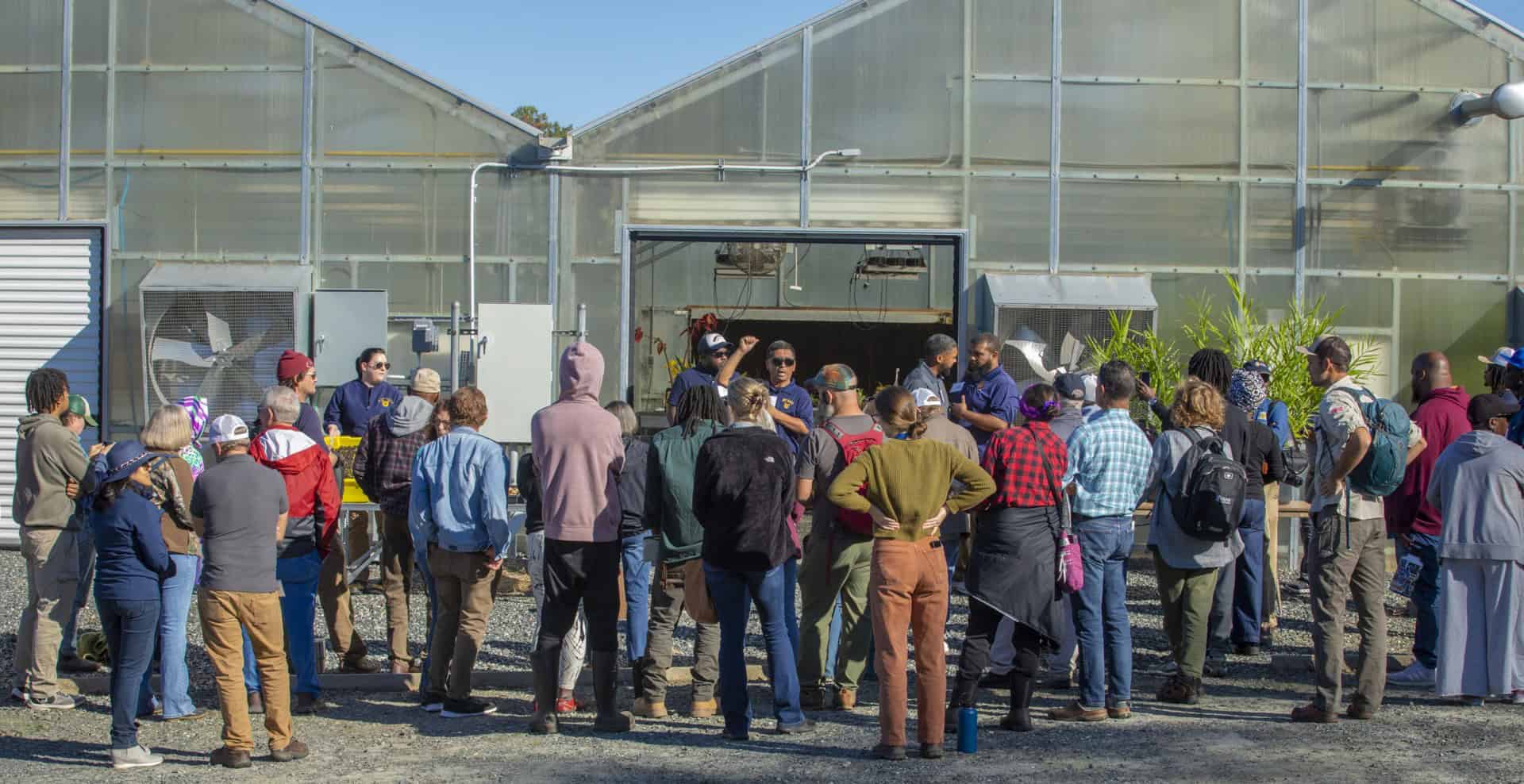
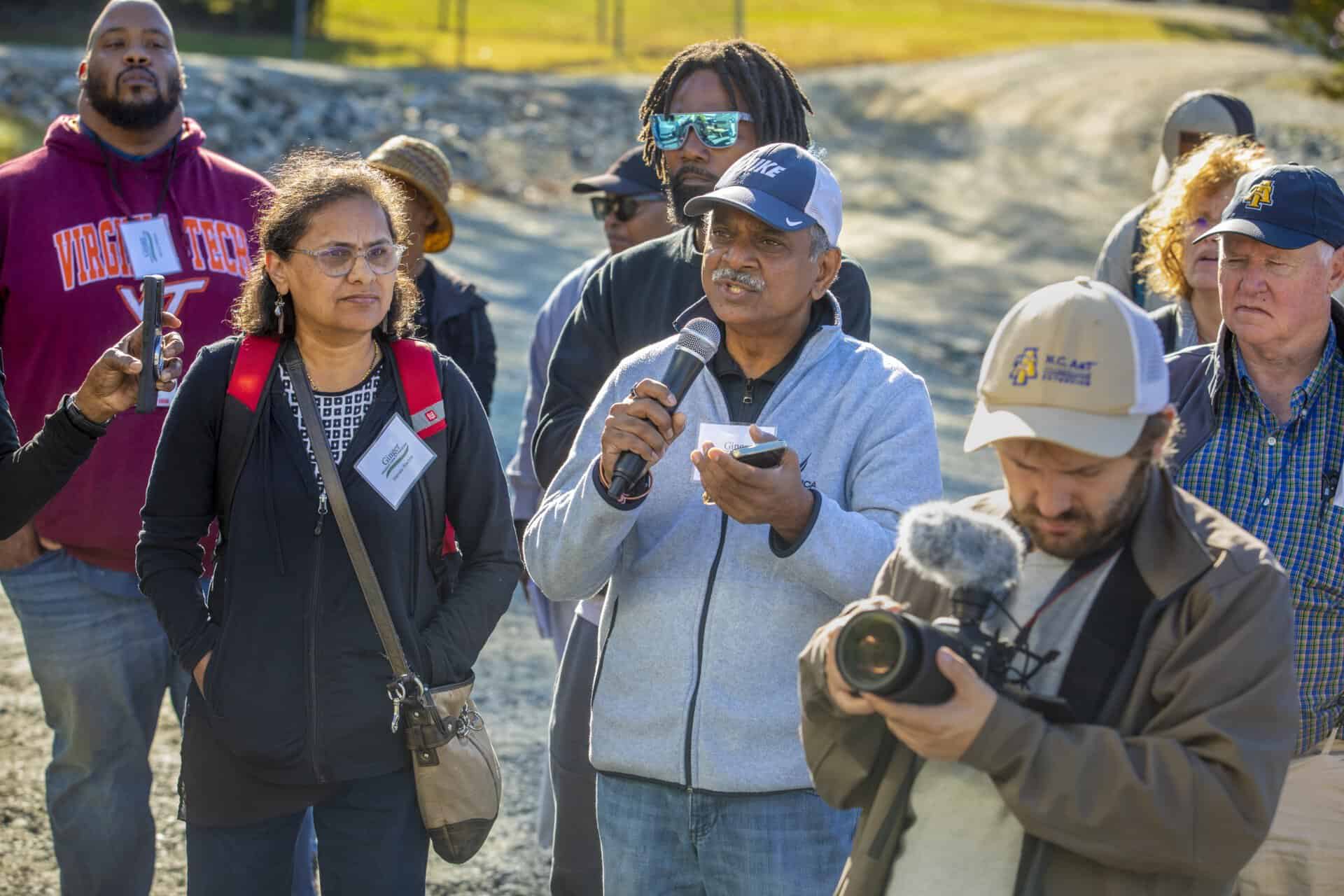
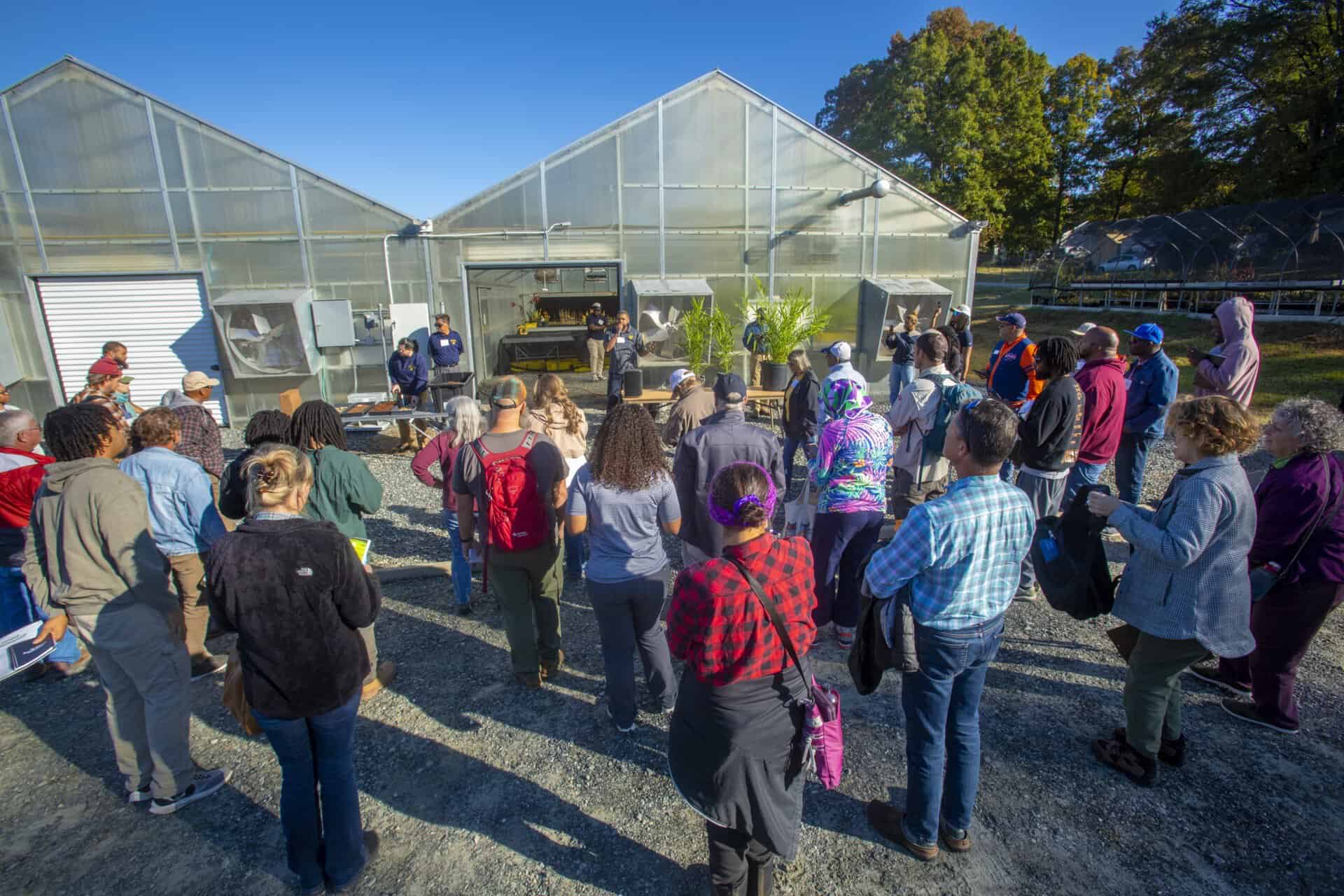
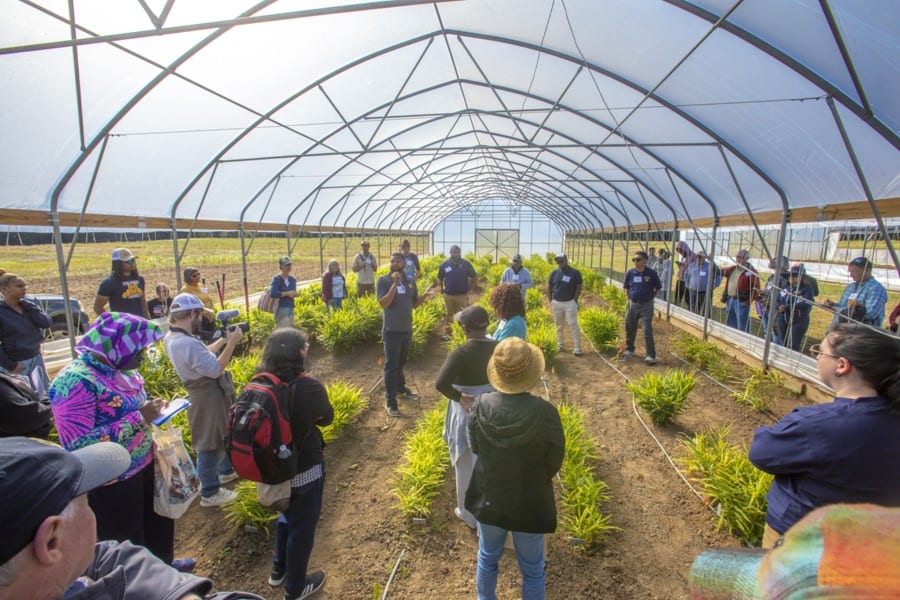
The event, held at the college’s University Farm, drew more than 60 interested farmers and Cooperative Extension specialists.
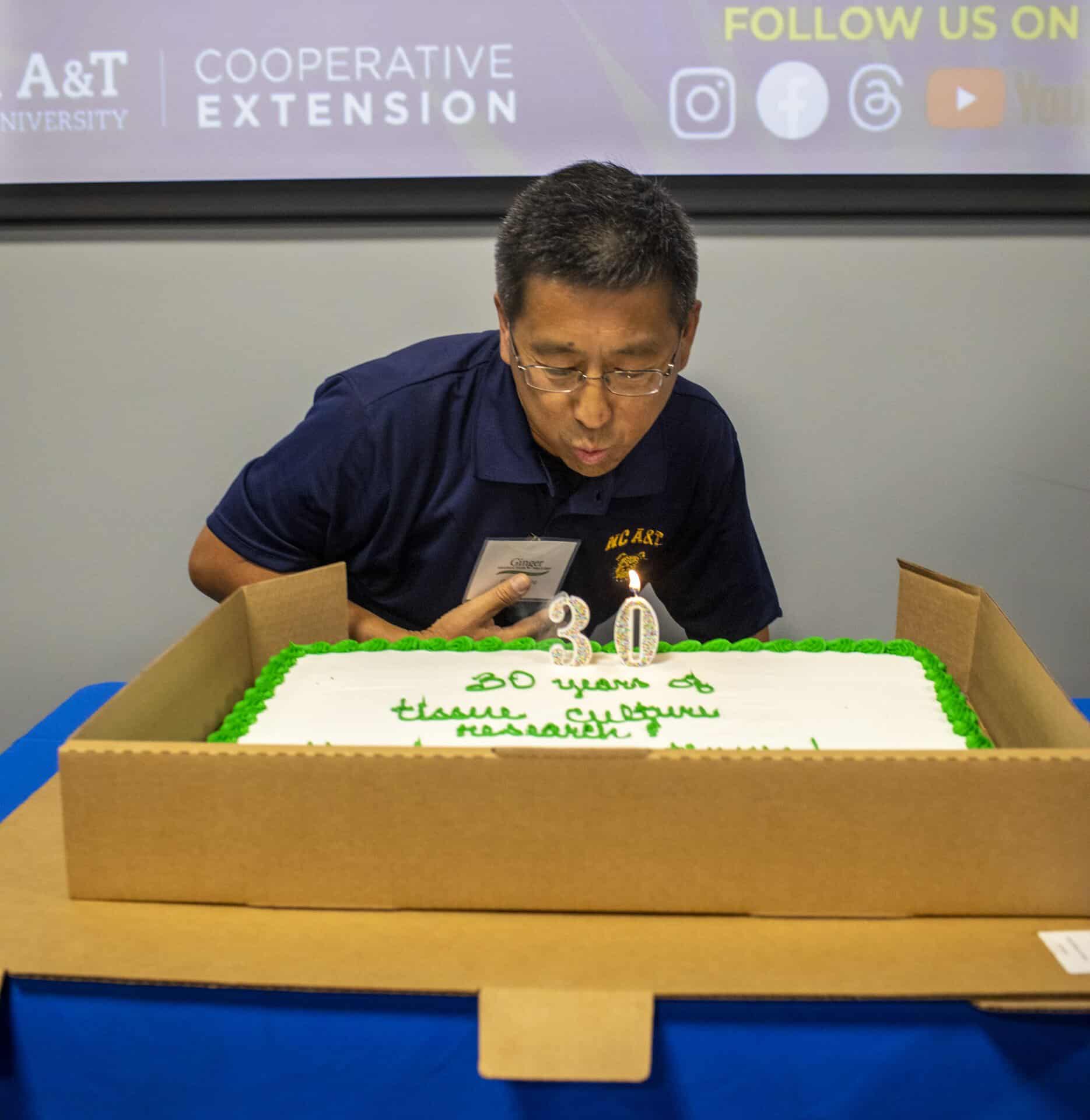
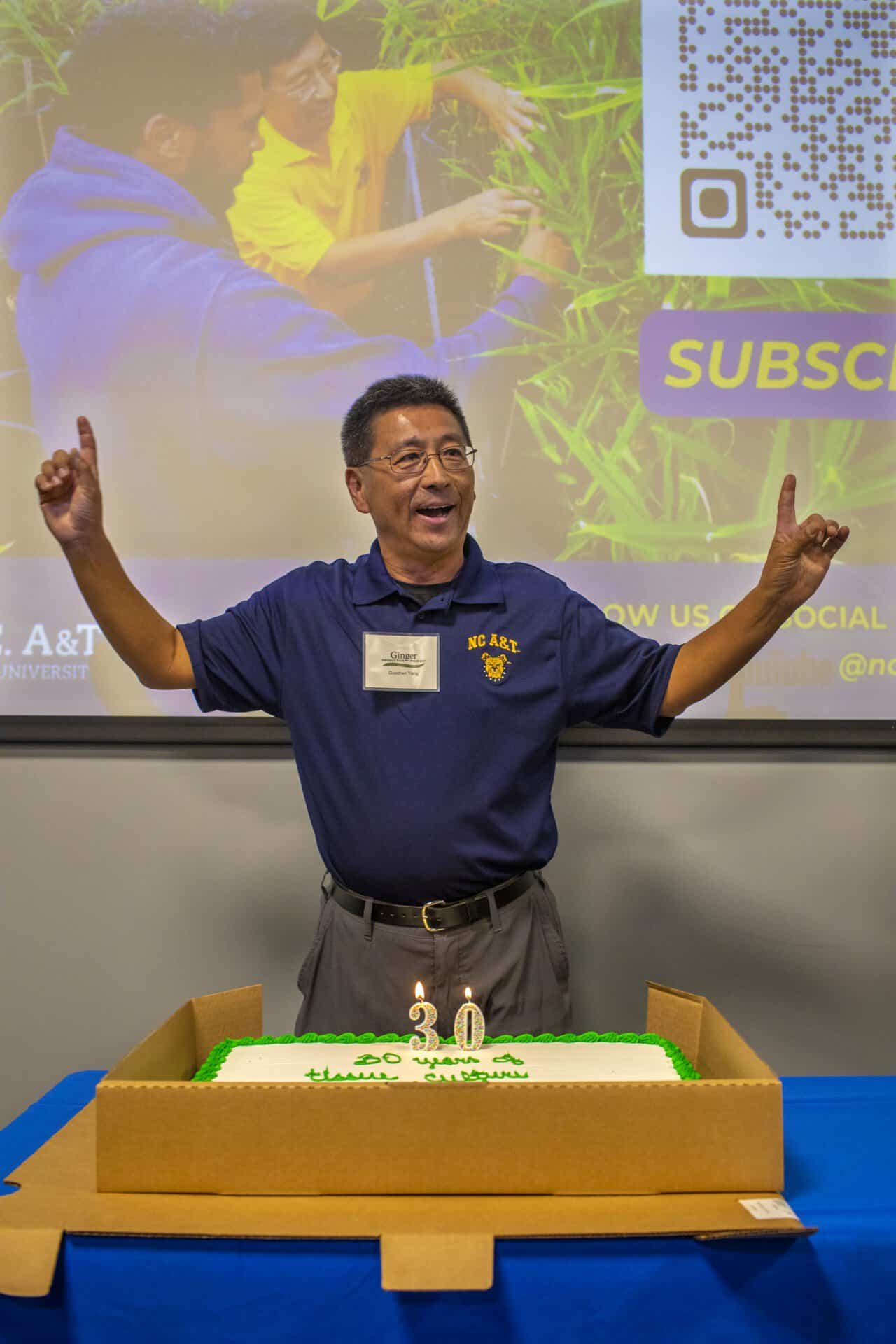
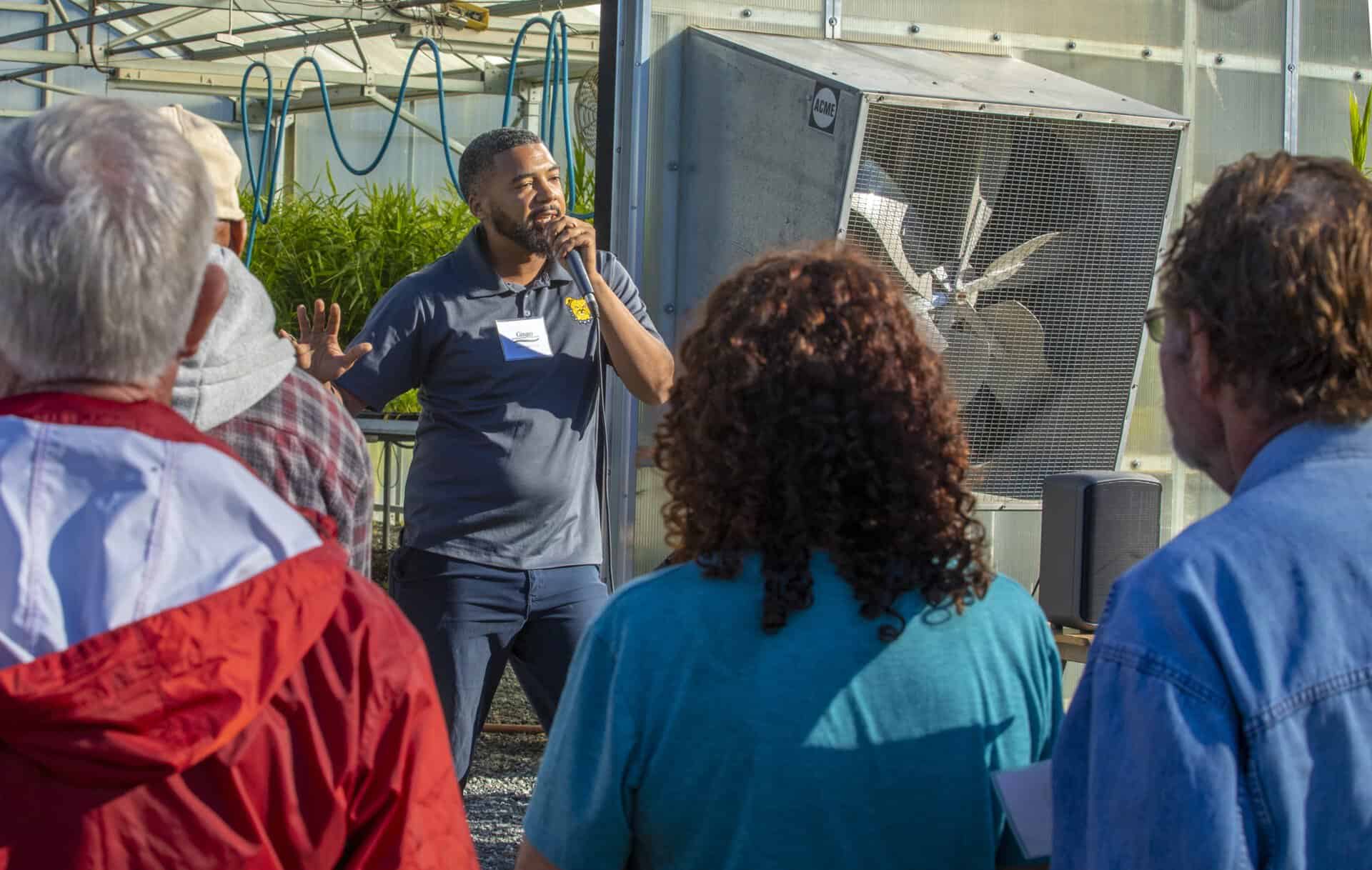
“We planned this event with you, our stakeholders, in mind,” said Guochen Yang, Ph.D., a horticulture professor in the Dept. of Natural Resources and Environmental Design. “A collaborative, team effort has allowed this day to happen.”
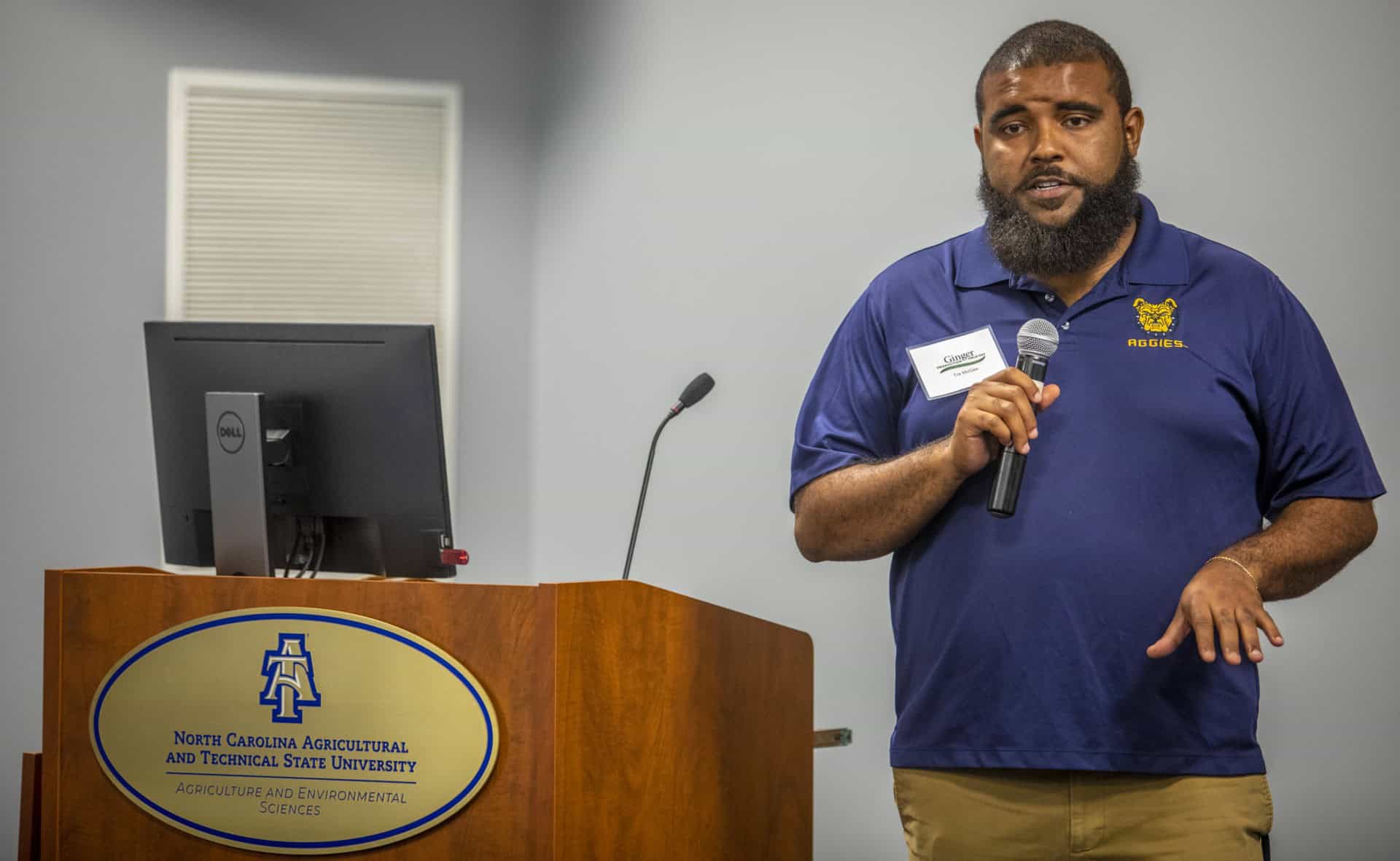
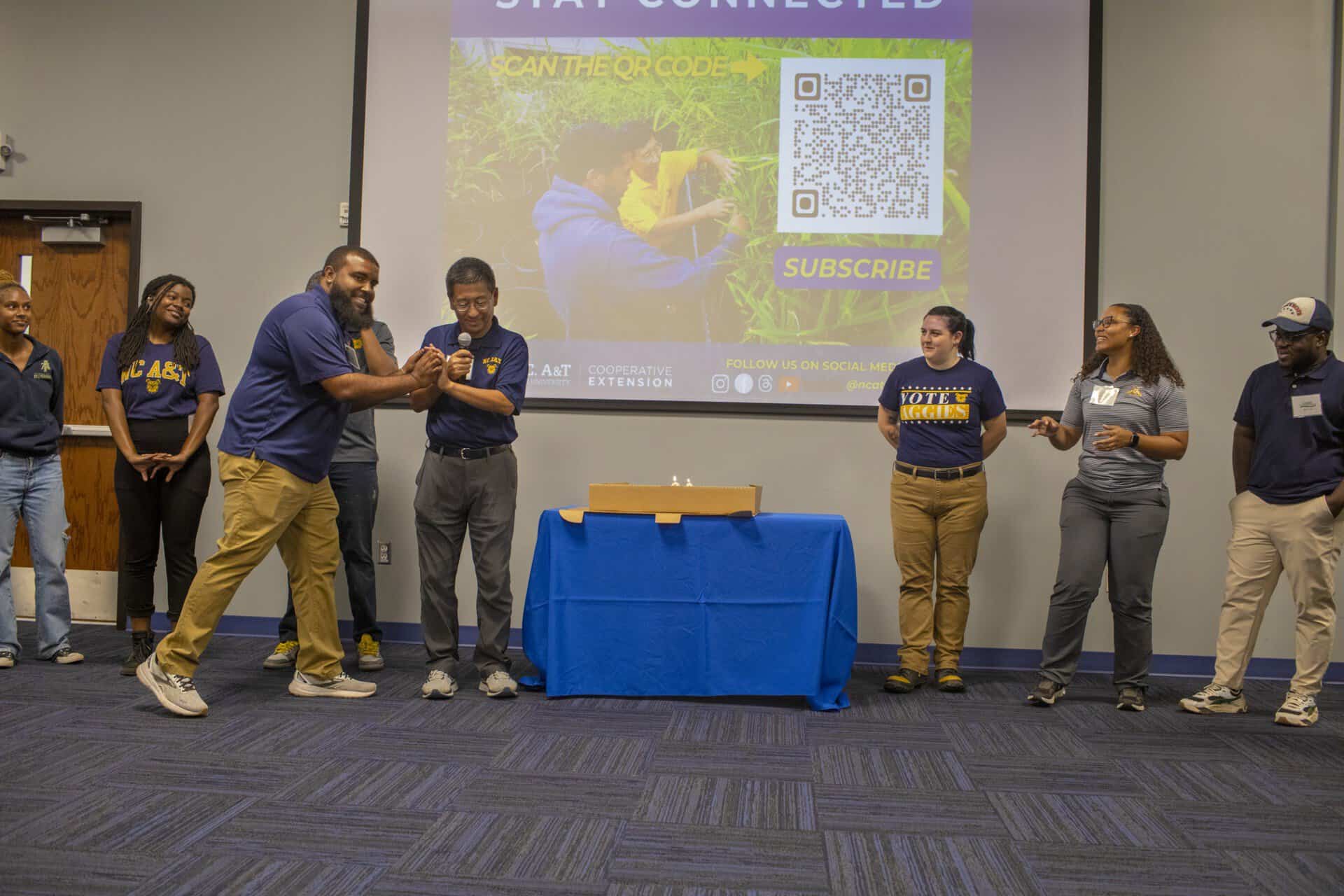
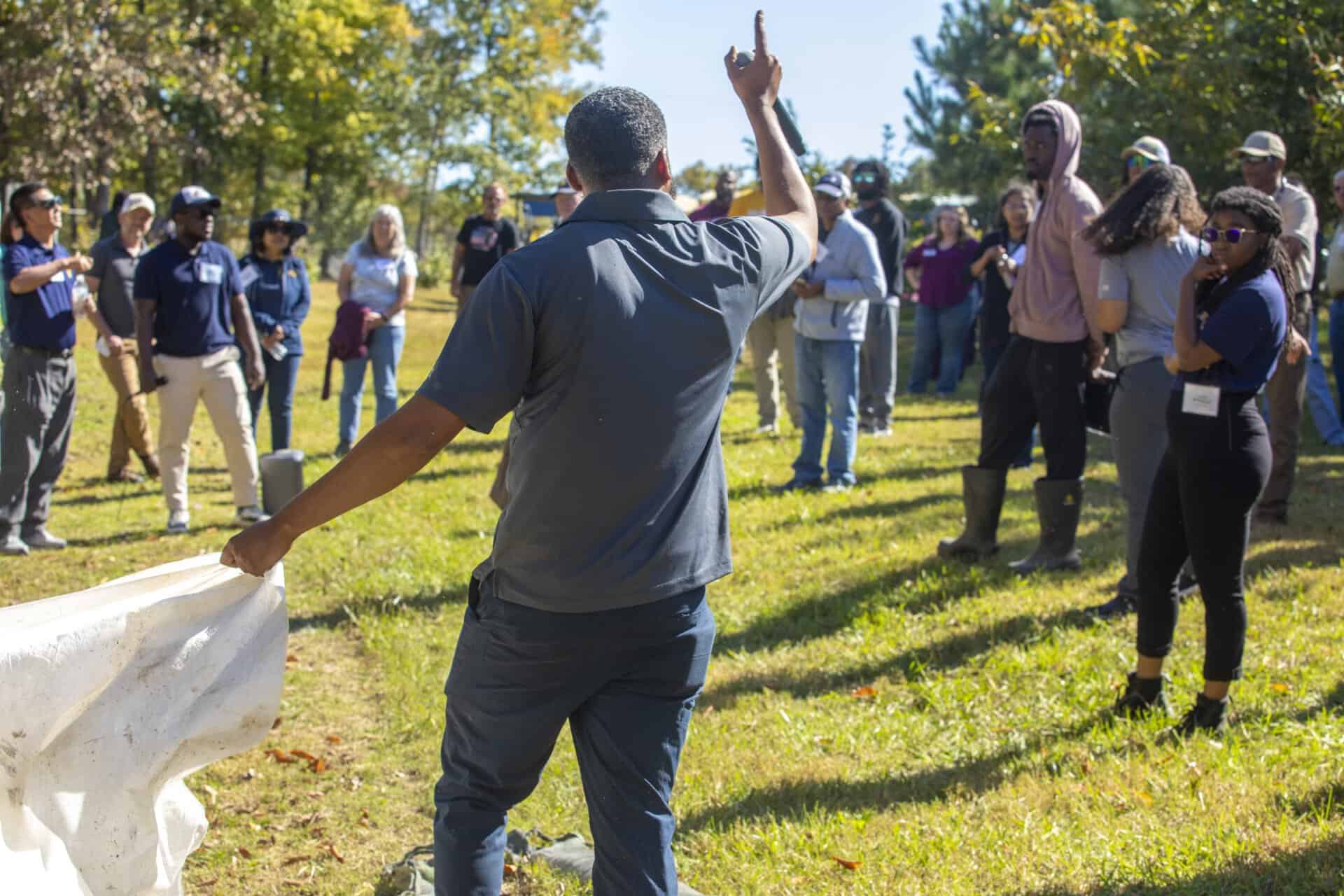
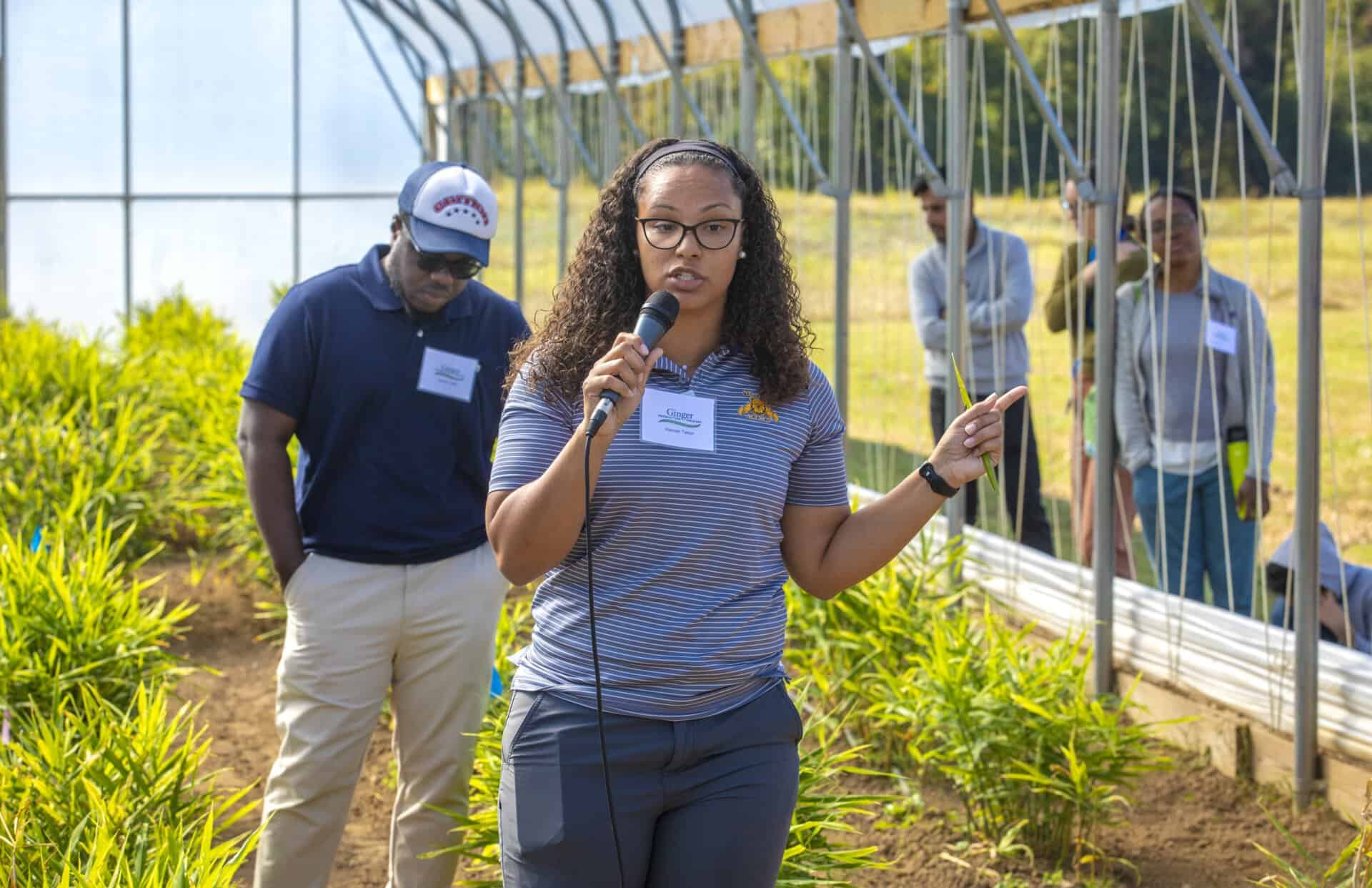
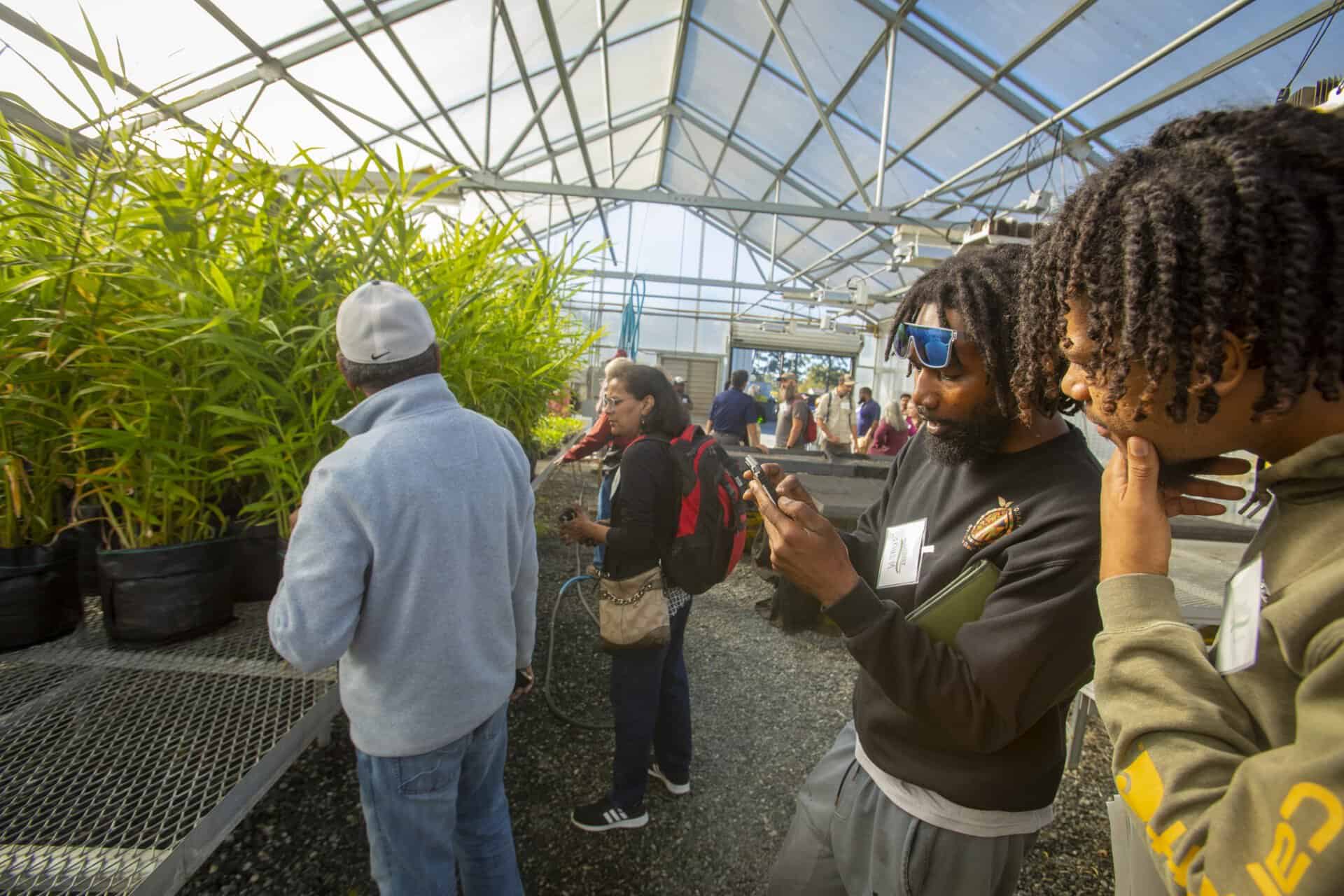
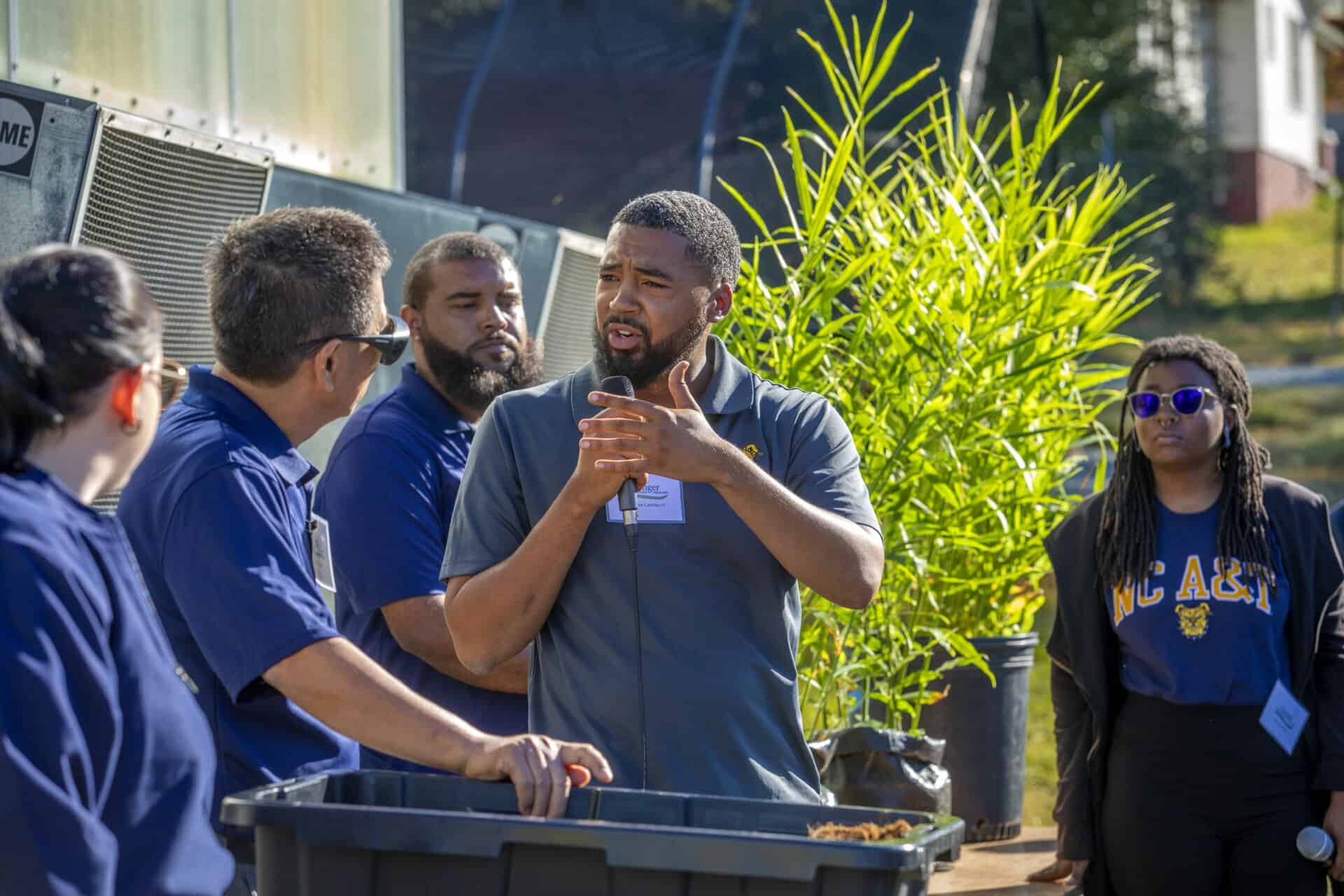
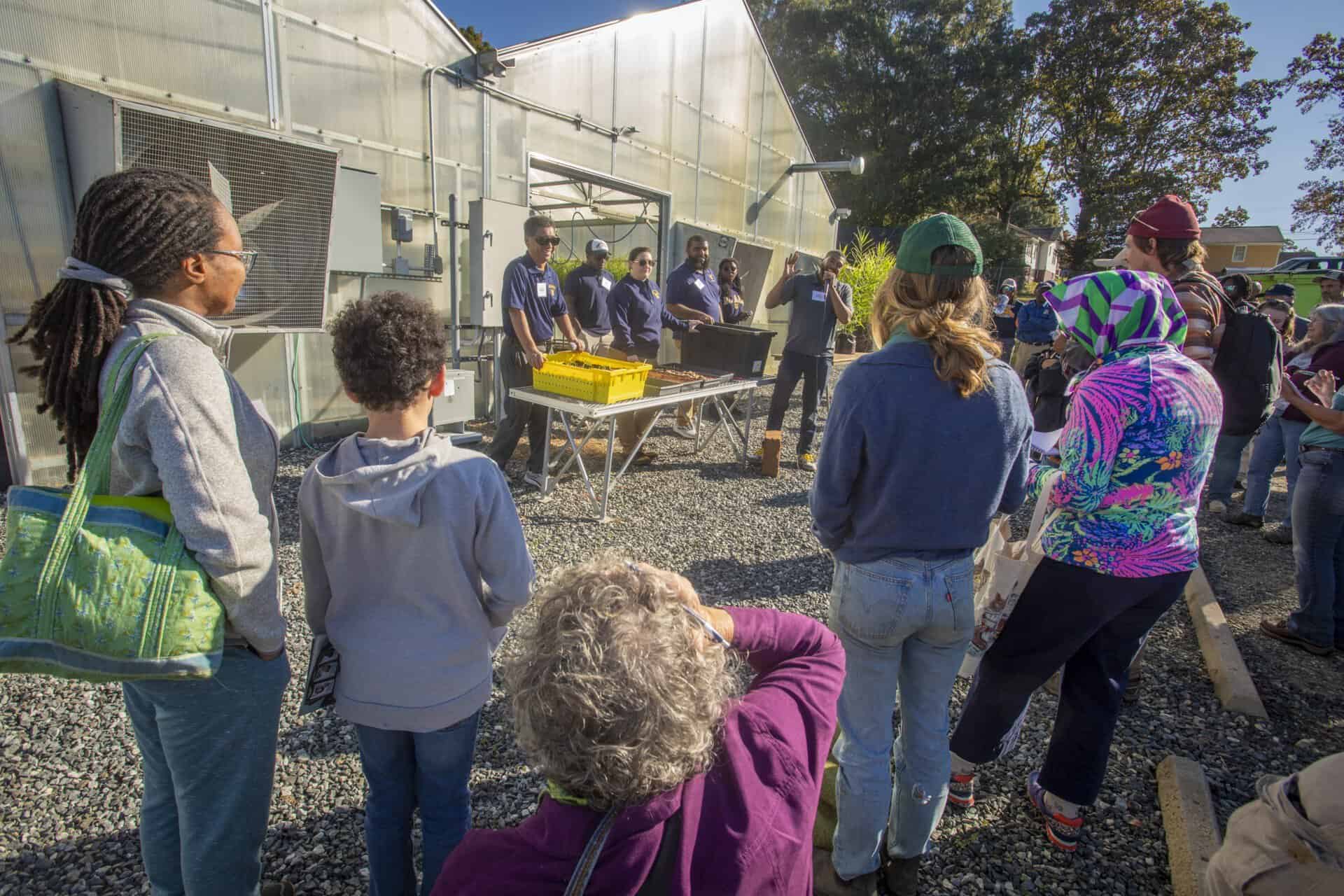
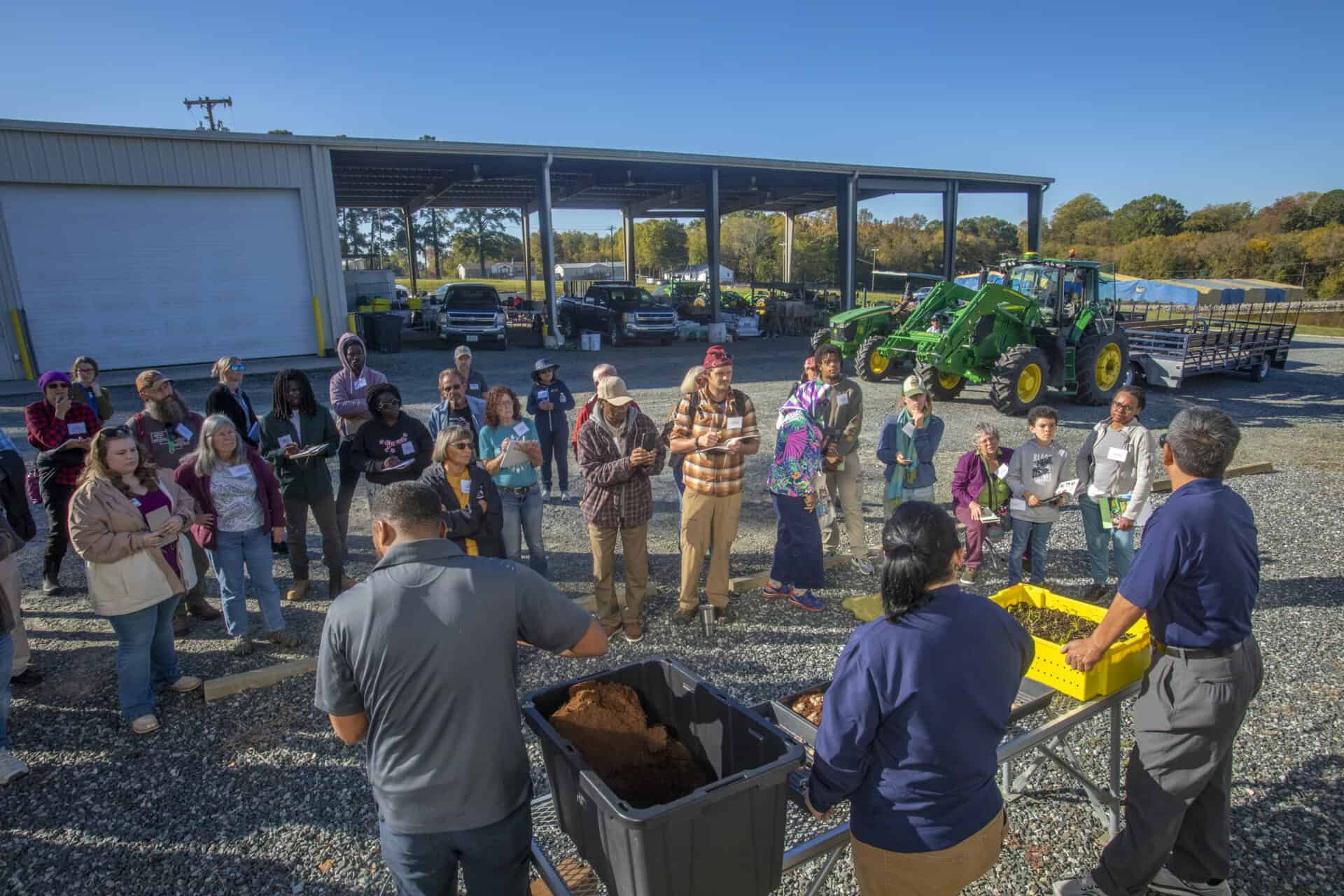
Yang; his research assistants Will Lashley and Julia Robinson; assistant professor and horticulture specialist Trequan McGee, Ph.D.; and assistant professor and extension plant pathology specialist Hannah Talton, DPM, gave guests a tour of the multiple greenhouses, high tunnels and wooded areas on the University Farm, where the team is currently performing ginger research.
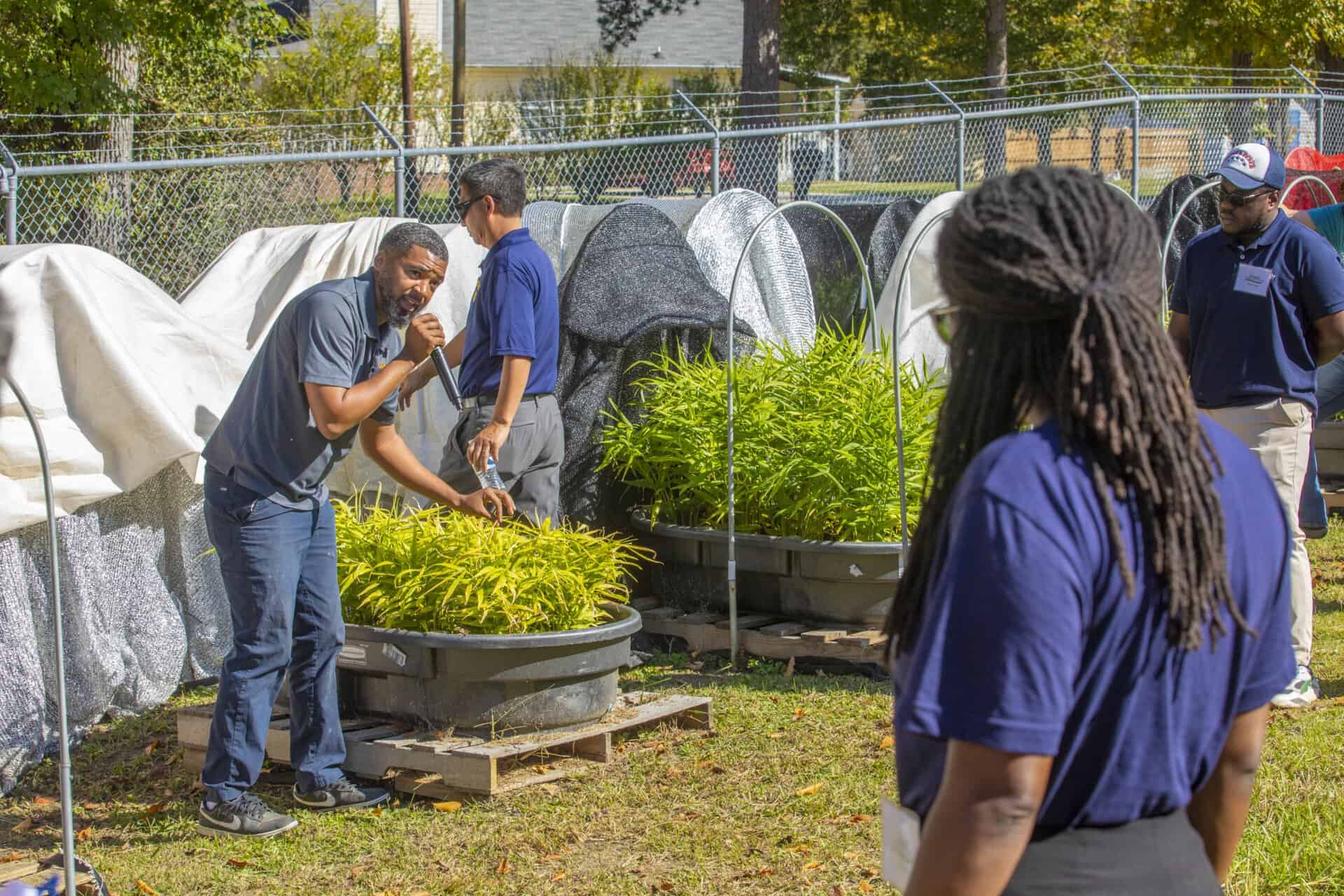
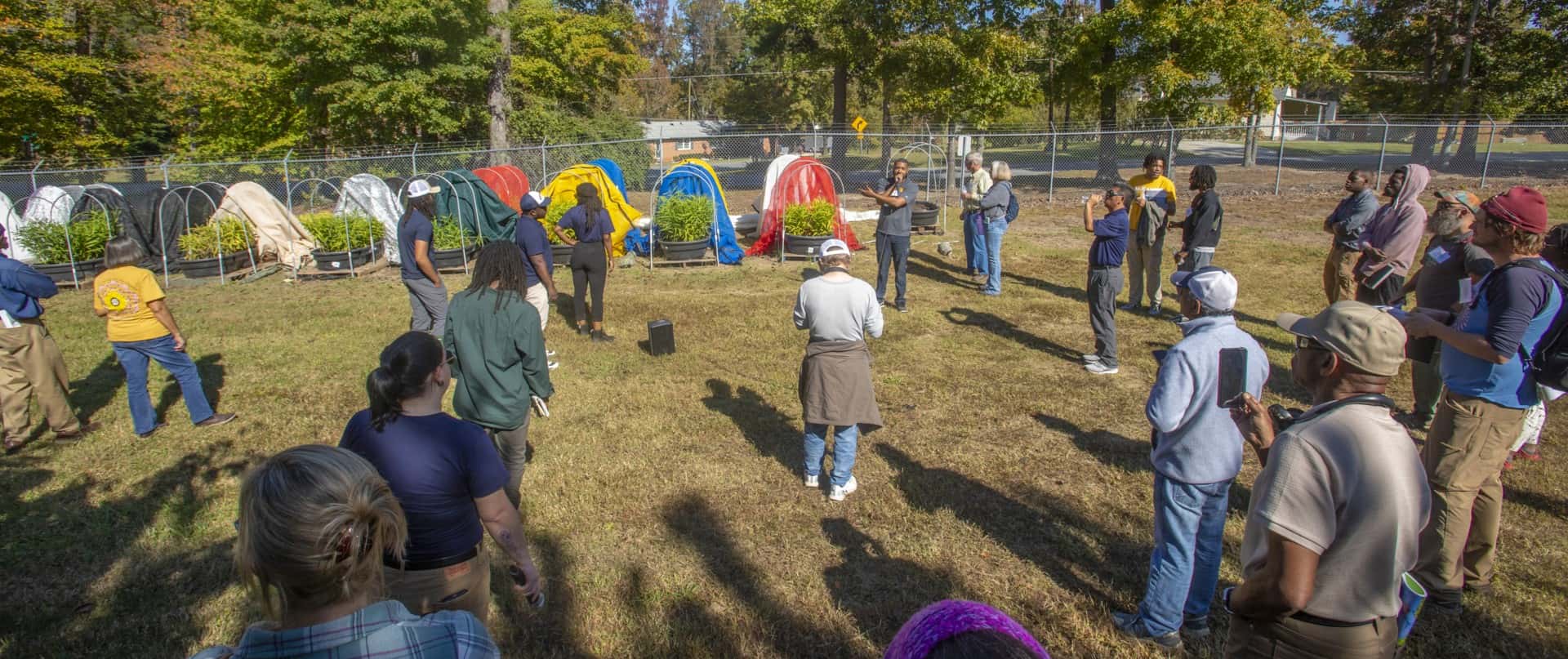
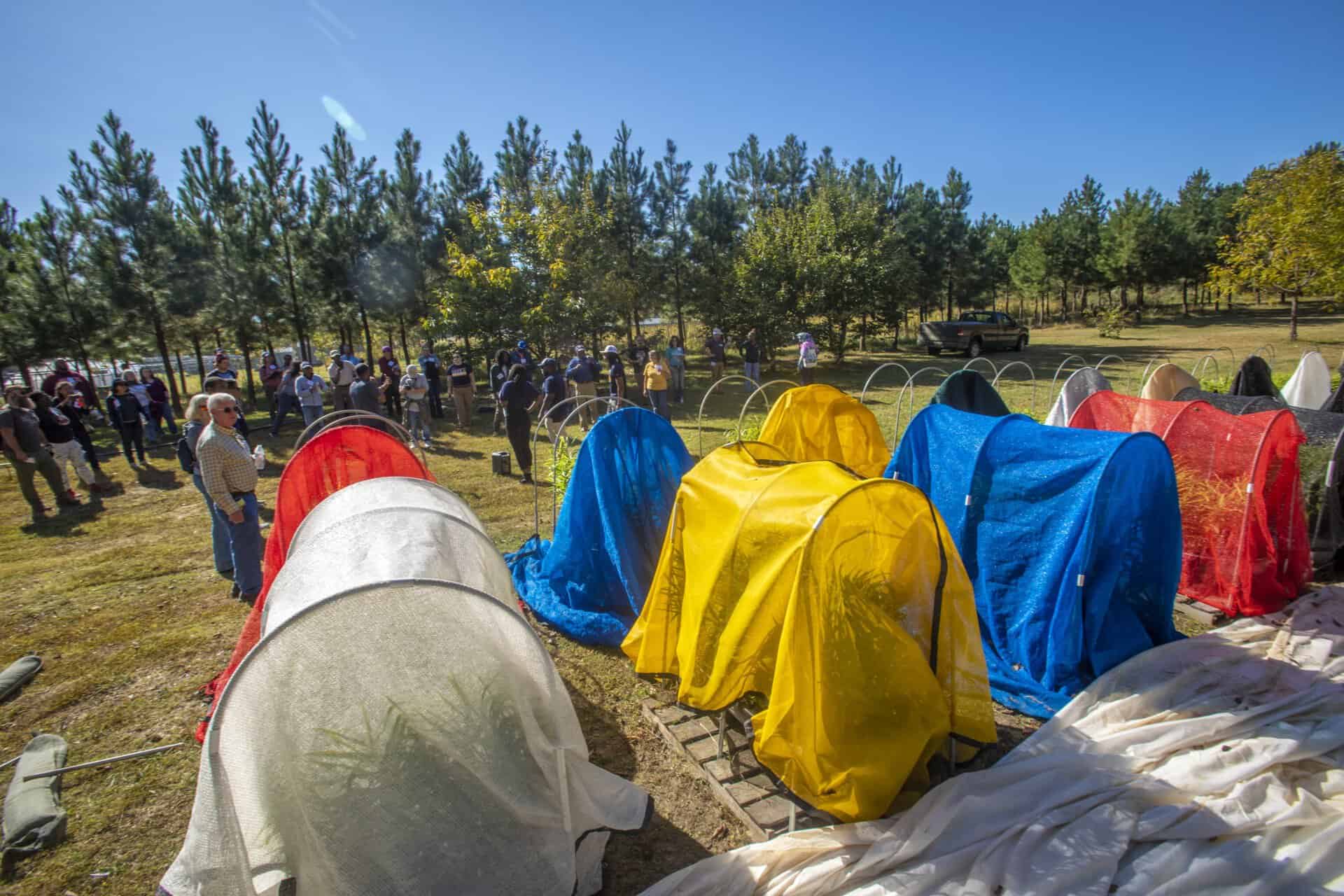
In one location, several water troughs full of growing ginger were covered in various colors of shaded cloth.
“We’re testing red, blue, yellow, green, silver, black, brown, and white coverings in various amounts of shading, from 30 to 70 percent,” Lashley said. “The color you see is the color that’s being reflected off. A trough with a red cloth, for example, receives every spectrum of light except for red light.”
According to Lashley, preliminary studies have shown that lighter color shades, such as white, silver variants, brown variants and zero-percent shading have resulted in higher yields, while black, blue and yellow coverings have provided the best quality. More concrete results are pending.
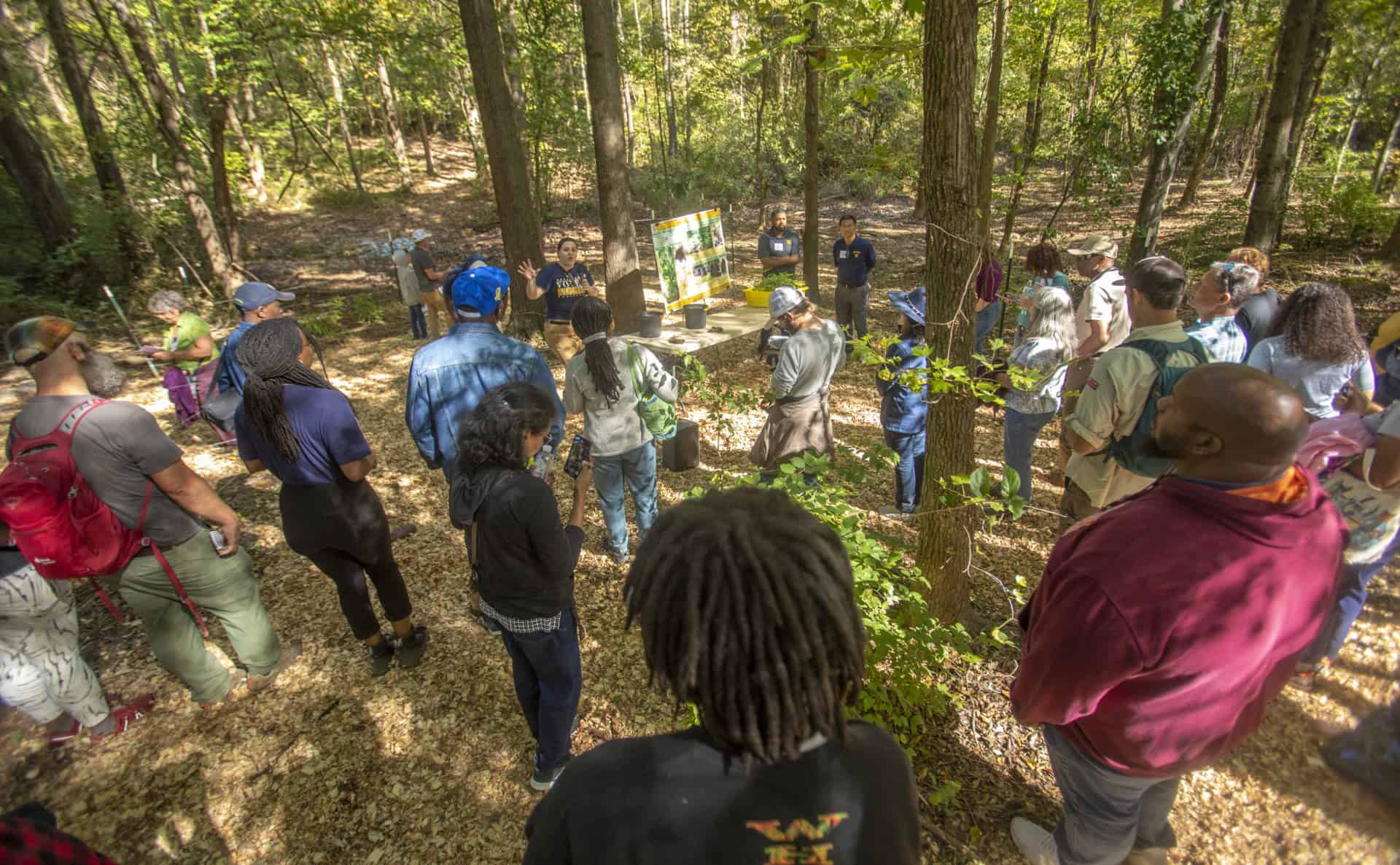
By contrast, in the wooded area, Robinson explained how a concurrent project -- growing black cohosh, a medicinal rhizome-type plant native to the east coast that is harvested similarly to ginger – can be used to predict the growing conditions for ginger in mountainous regions of the state.
Ginger Part 1: Traditional vs Tissue Culture
Ginger Part 2: High Tunnel Production
Ginger Part 3: Artificial Color Shade
Ginger Part 4: Wooded Area Shade
“We’re using a lot of the strategies that we would use to grow black cohosh to grow ginger in native, shaded areas,” Robinson said. “Can we grow it in the ground underneath natural areas? Can we grow it in tubs under natural areas? These are things we’re looking at. A lot of farmers have a lot of these naturally wooded areas and, unless you’re into agroforestry, are sometimes unsure of what to do with them.”
Robinson said the key factors to consider growing under natural shade are location, specifically areas not densely populated with trees so ginger rhizomes aren’t competing with tree roots; using rainfall as a water source in lieu of irrigation; and sunlight spots.
“We’re going to get more spotty sunlight growing under trees, but it’s important that you’re trying to pick good areas that allow for direct sun that allows for better growth,” said Robinson.
In the farm’s Pavilion, guest speaker Michael Rayburn, Buncombe County urban agricultural extension agent and co-owner of Rayburn Farms in Barnardsville, gave the farmers insight on value-added product opportunities with ginger, including teas, infused sugar and hot cocoa mixes.
“There’s a lot that you could do and a lot that you can make with your crop,” said Rayburn. “Making your own tea blends is a very popular thing to do, but you don’t need to do exclusively that. Hot cocoa is popular. Right now, those value-added products make up 90 percent of our current revenue.”
Rayburn’s home county includes hard-hit Asheville and surrounding areas decimated by Hurricane Helene in September. Despite the difficulties, Cooperative Extension came through, he said.
“A lot of our programming was halted, but we coalesced really well,” he said. “We made sure that we went out to the places that we were needed and, through other state partners, were able to bring in feed, hay, fencing materials to the various communities that requested it.
“We’ve been hands on the ground, unloading trucks, organizing, and our transition now is helping connect all of the community centers together in order help support one another with things they may need in large supply.”