As the importance of producing, selling and using renewable resources grows, experts want to ensure that even small farms are involved.
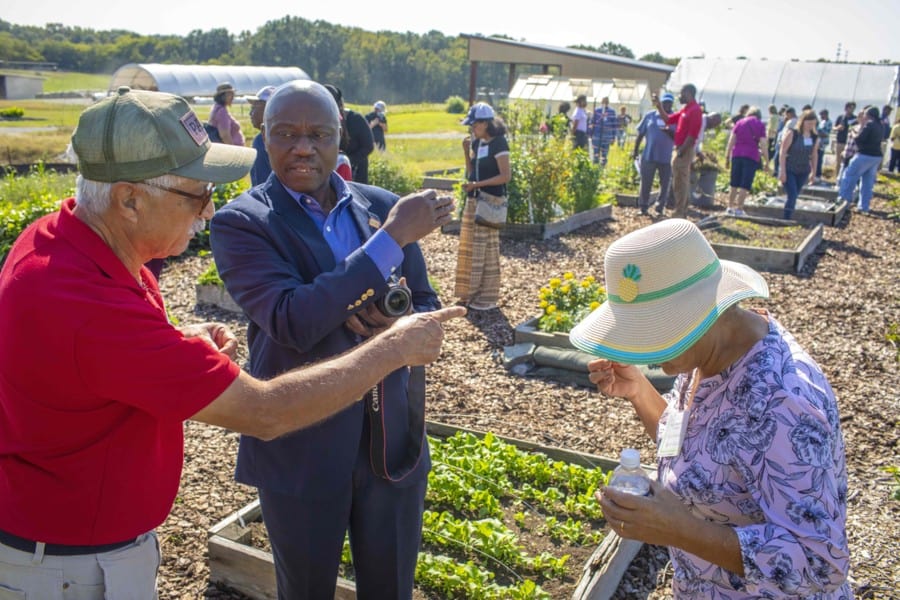
With that in mind, federal and state agriculture and economics experts joined professors and farmers at N.C. A&T on Thursday to talk about how to facilitate this participation. It is the second year of the conference, which was hosted at the University Farm Pavilion.
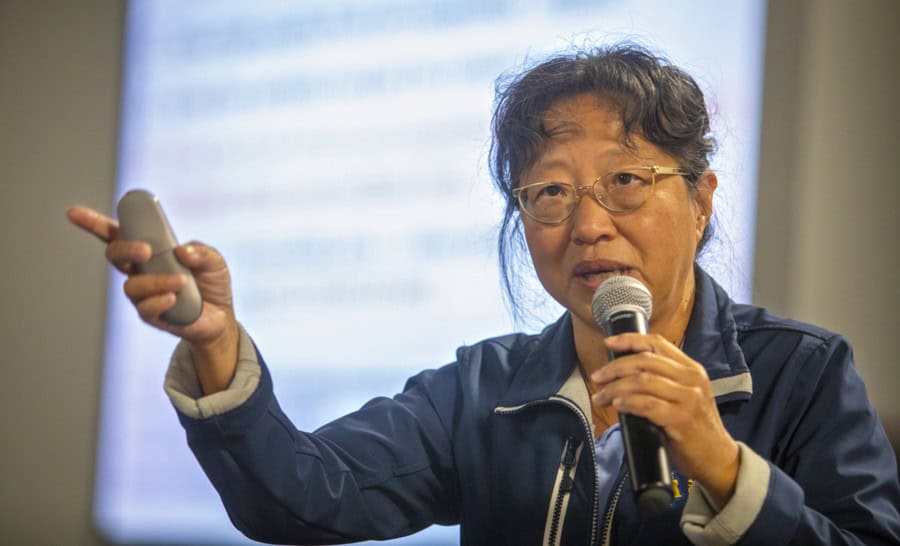
Conference organizer Kathleen Liang, Ph.D., said, ““We are cultivating a new generation of farmers. The biggest challenge is teaching the younger generation.”
“The highlight of today's event is to enhance the understanding of what bioeconomy is and what we could do to help small and underrepresented farmers to work in this domain,” said Chyi Lyi “Kathleen” Liang, Ph.D., the W.K. Kellogg Distinguished Professor of Sustainable Agriculture in the College of Agriculture and Environmental Sciences.
David Zilberman, Ph.D., distinguished professor with the Department of Agriculture and Resource Economics at the University of California at Berkley, said bioeconomy primarily means using natural resources, agriculture and modern technology to produce more than food.
“You need to work with engineering technology,” he said. This technology will improve production, allowing farmers to convert some of their acreage from food production to other products.
“You can produce fuel and replace nonrenewable resources like oil with renewable resources,” said Zilberman, a Wolf Prize laureate.
Finding viable markets for those products also is important. “If you have a new product, you need to think in terms of finding market,” Zilberman said.
“The key element in some of these activities is to identify the small activities that can be very profitable for a small number of people and, at the same time, have some bioeconomy activities of large scale, for example, biofuel.
Jimo G. Ibrahim, Ph.D, assistant professor and agriculture health and safety specialist at A&T, said there are many nontraditional crops that can be grown successfully in North Carolina.
“You can add value to what you grow,” he said. “For example, hibiscus – you can get jelly out of it, you can make drinks out of it.” The flowering plant also can be used as a nontoxic dye for coloring crayons and fabric.
Other alternative plants suited for North Carolina include ginger, dragon fruit, passion fruit and guava.
“We are cultivating a new generation of farmers,” Liang said. “The biggest challenge is teaching the younger generation.”
Calvin Ingram, a Salisbury farmer who currently grows peppers, cucumbers and hemp on 1.2 acres, said the seminar taught him that he doesn’t need to grow traditional crops.
“We can specialize in something that people don’t have here,” he said. “We are still trying small things, like the ginger, that might be something good for us.
Ingram, 30, wondered how he could use his hemp stalks in the growing process. “Maybe we could grind down the hemp stalks (as a mulch) and cultivate mushrooms,” he said.
“It’s a lot of different things we’re thinking right now, so that’s why we’re here.”