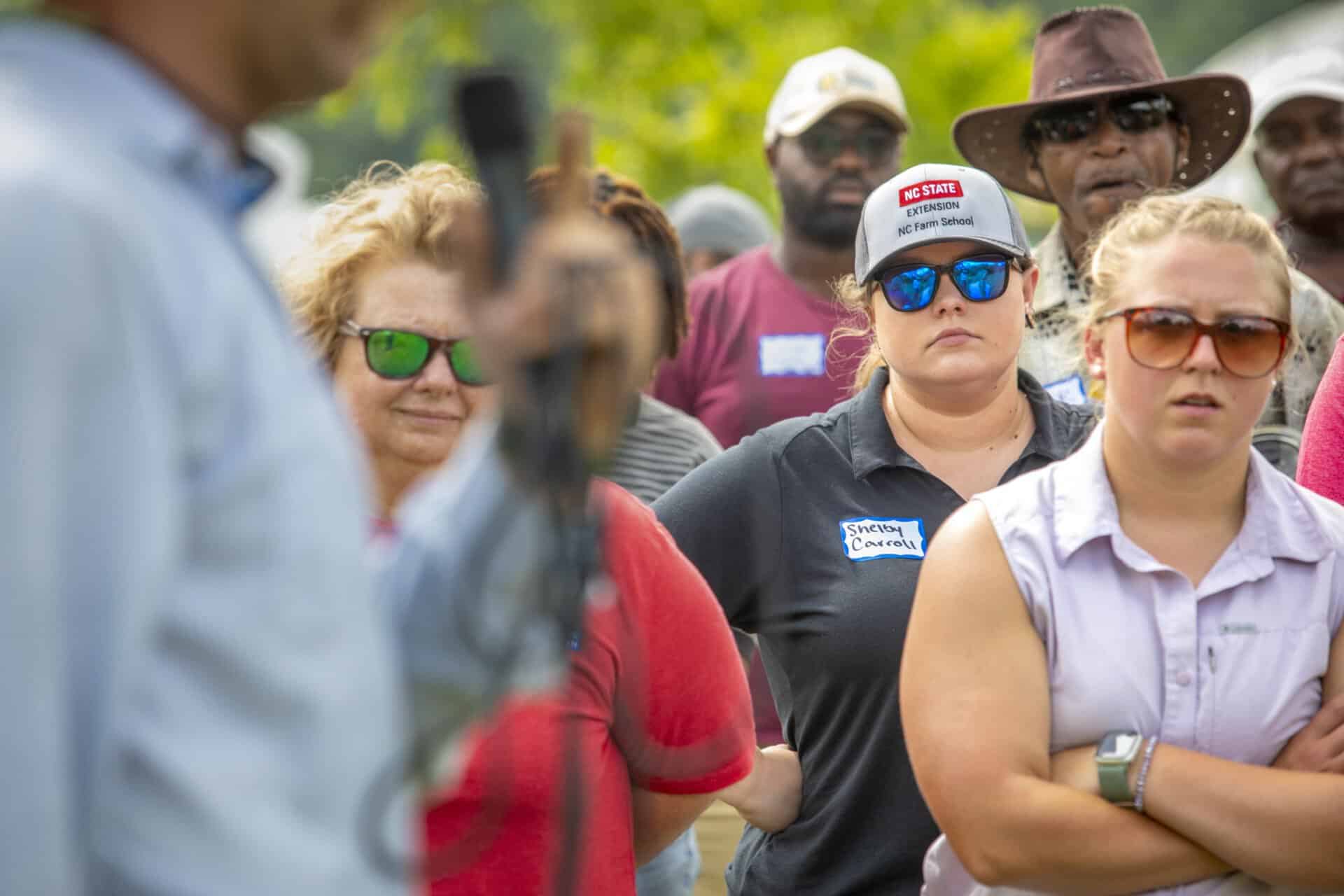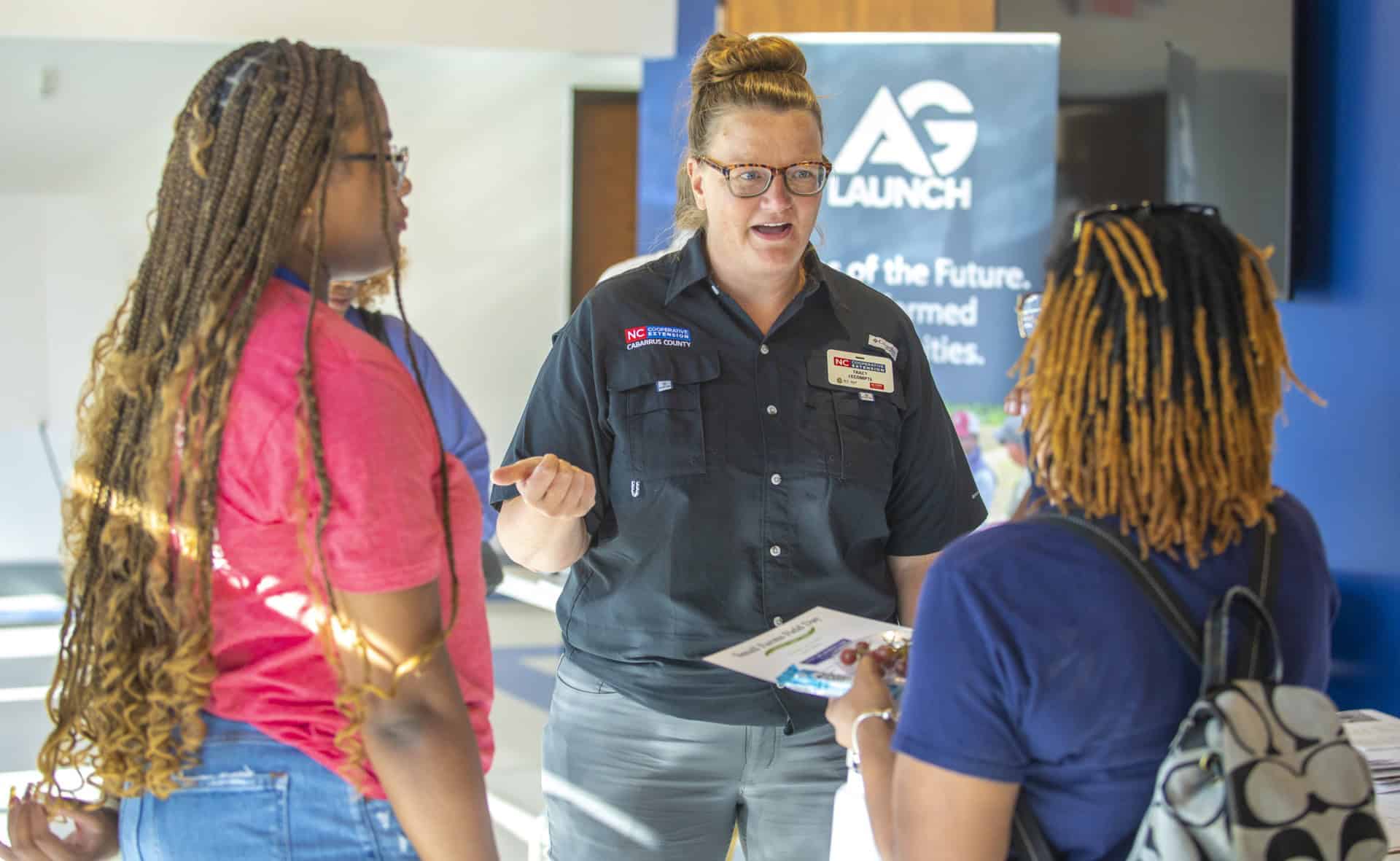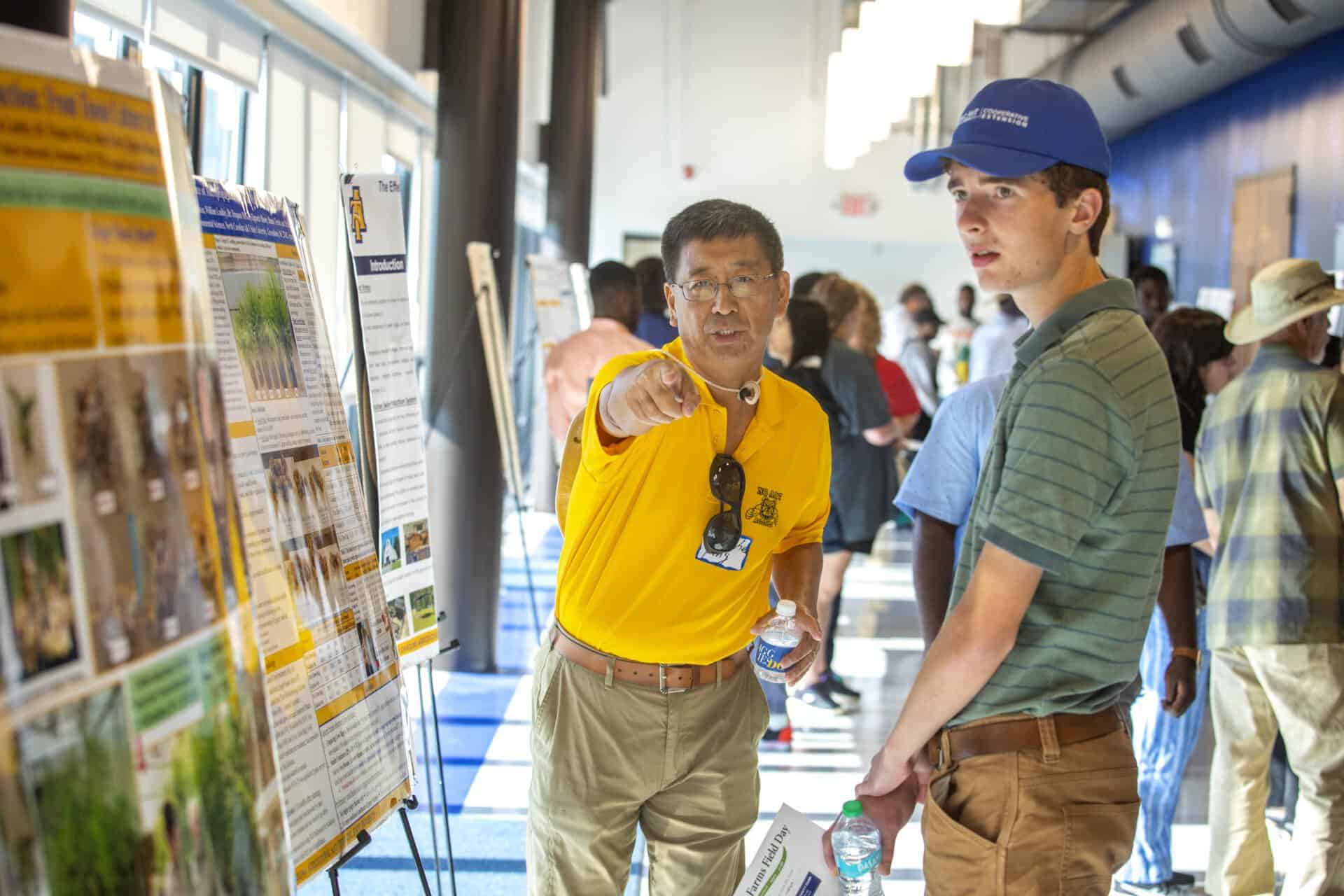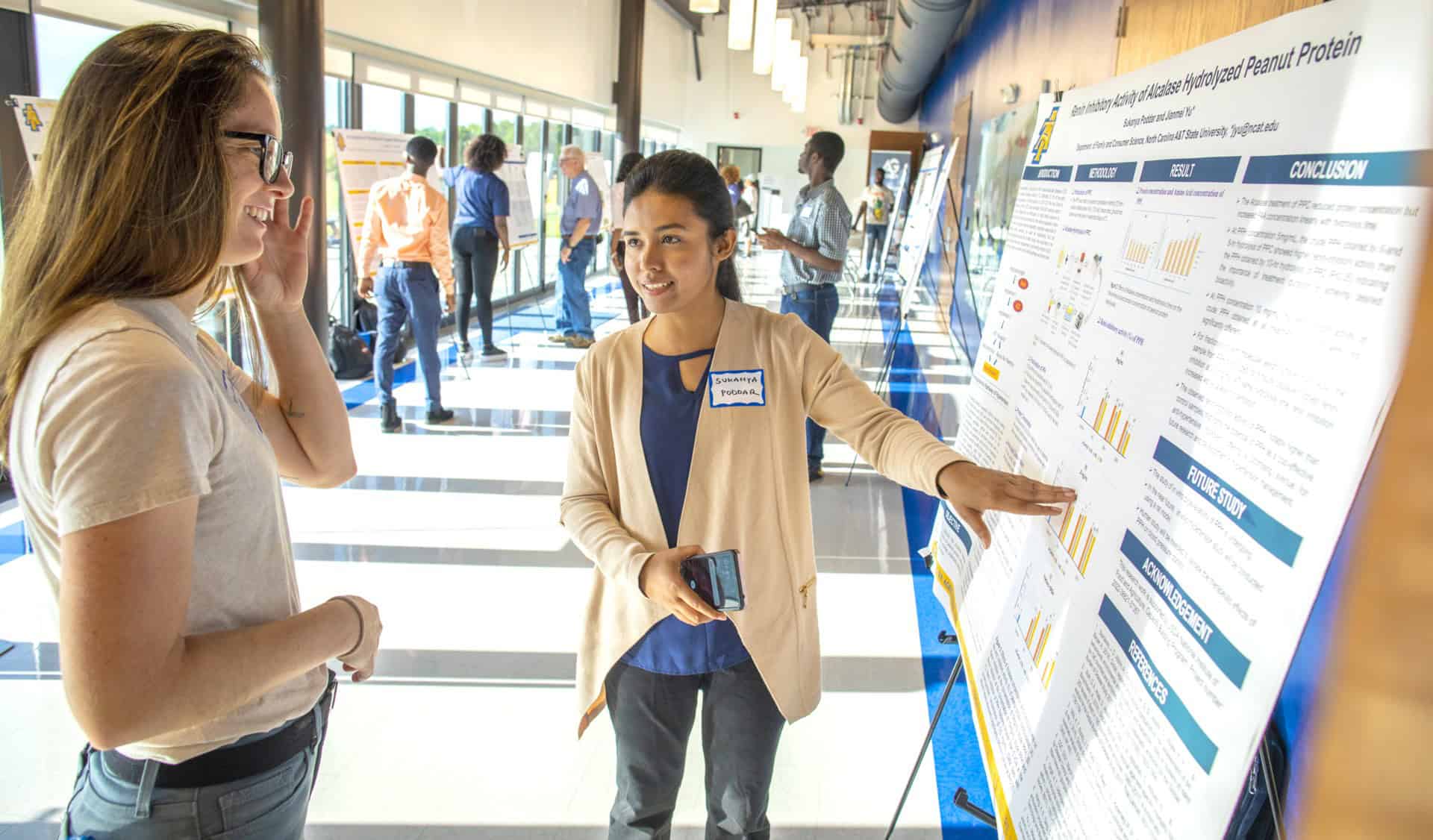
Small-scale farmers and researchers across North Carolina learned the essentials of pork and ginger production, plasticulture, and climate-smart practices during this year’s Small Farms Field Day.
The annual event, hosted by Cooperative Extension at N.C. A&T, gives growers and statewide farmers the opportunity to see some of the latest advancements and projects in CAES’ agricultural, environmental and animal science research.
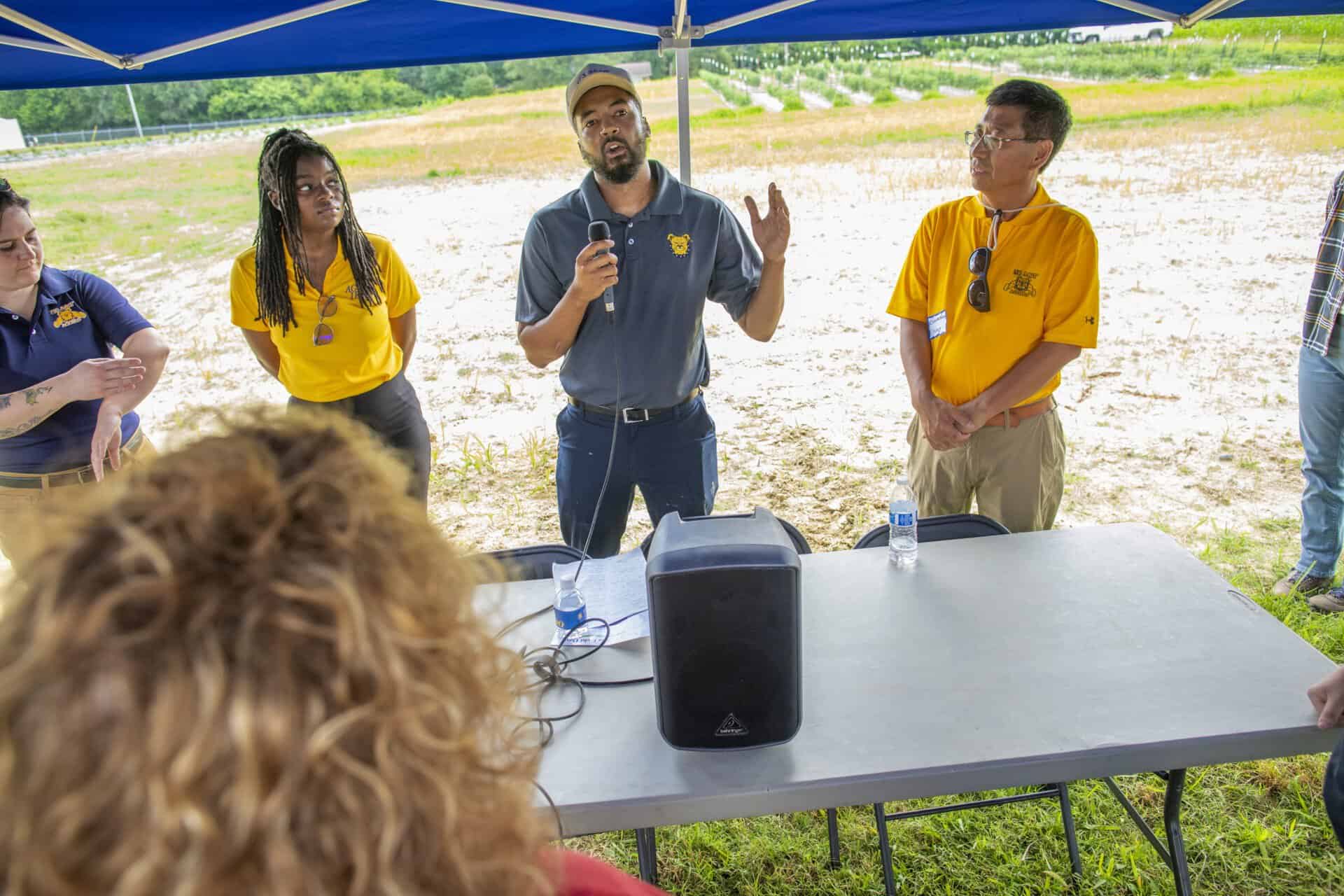
“I consider you all to be our state’s greatest assets: our agricultural entrepreneurs,” said Claudette Smith, Ph.D., associate administrator of Cooperative Extension at N.C. A&T. “I hope that what you take away from today will help spark a new idea, help you improve your production, increase profits, have new products for your consumers, and overall help you be proud stewards of the land that is really the heartbeat of what you do.”
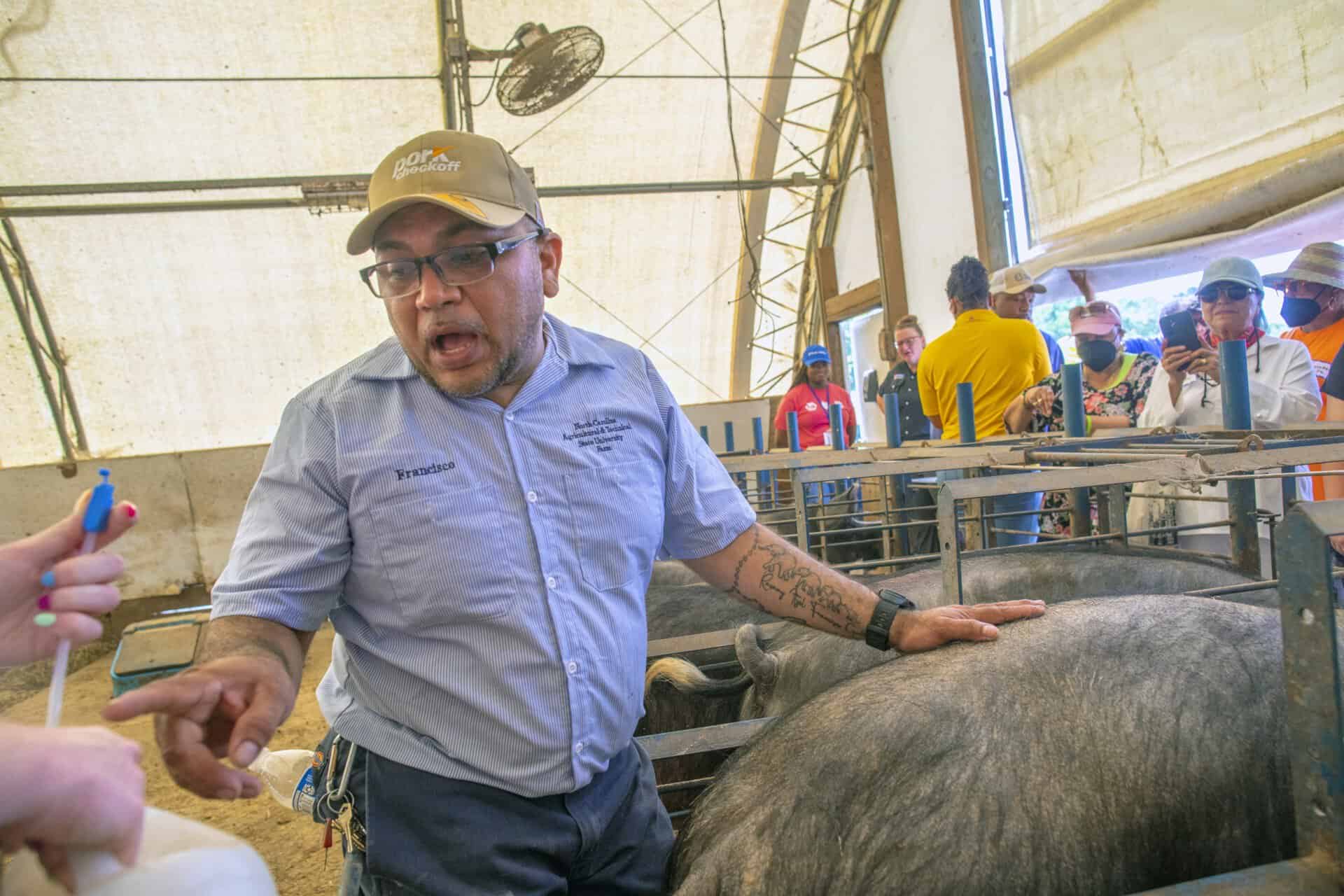
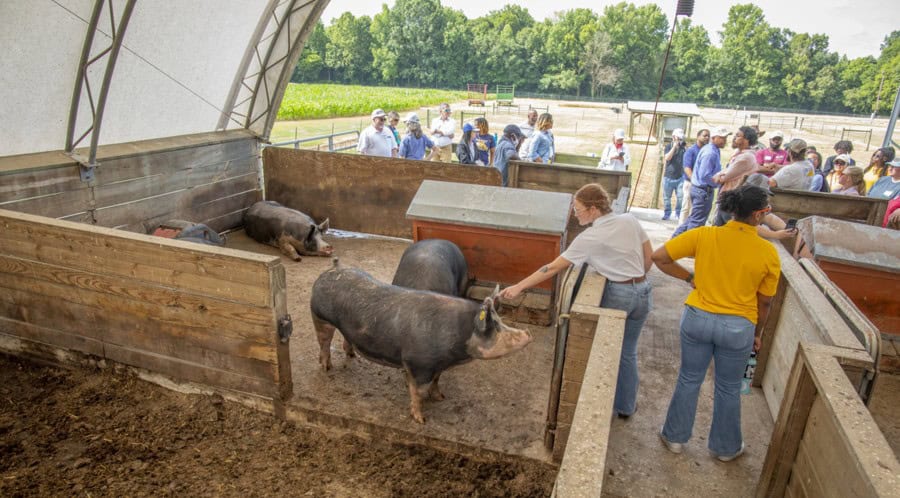
During the 2024 field day, held June 20 at the University Farm, Douglas Jones, swine unit coordinator and assistant farm superintendent, and animal geneticist Derrick Coble, Ph.D., offered the pros and cons of hoop-house structures for pork production.
“Hoop house structures were originated in Canada at the turn of the century,” said Coble. “Inside the hoop house, you can see the deep-bedded system with hay, sawdust or anything fibrous that’s going to soak up urine or feces…the structure also has in-walls that can be pulled down and can be managed as a cold barn during wintertime.”
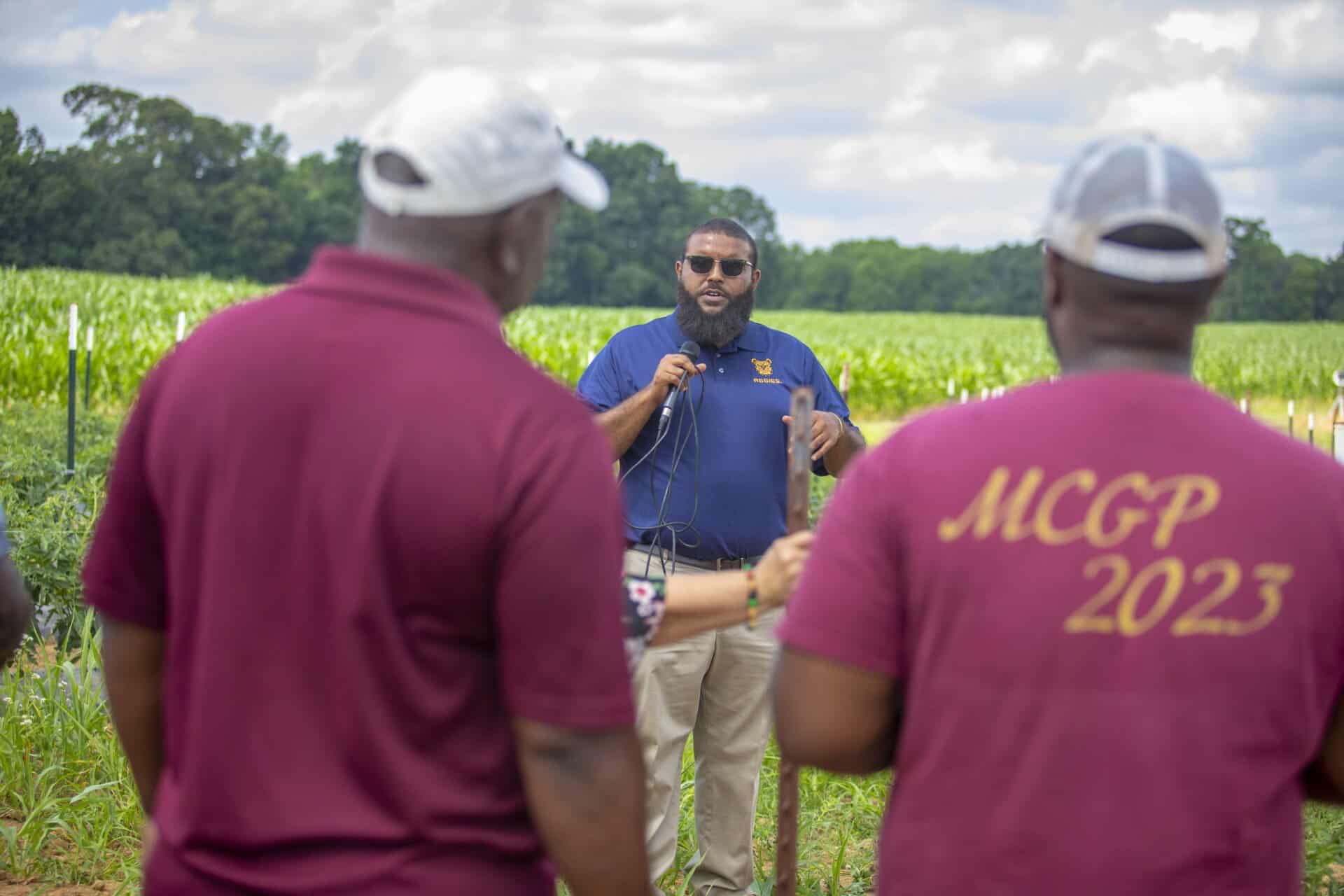
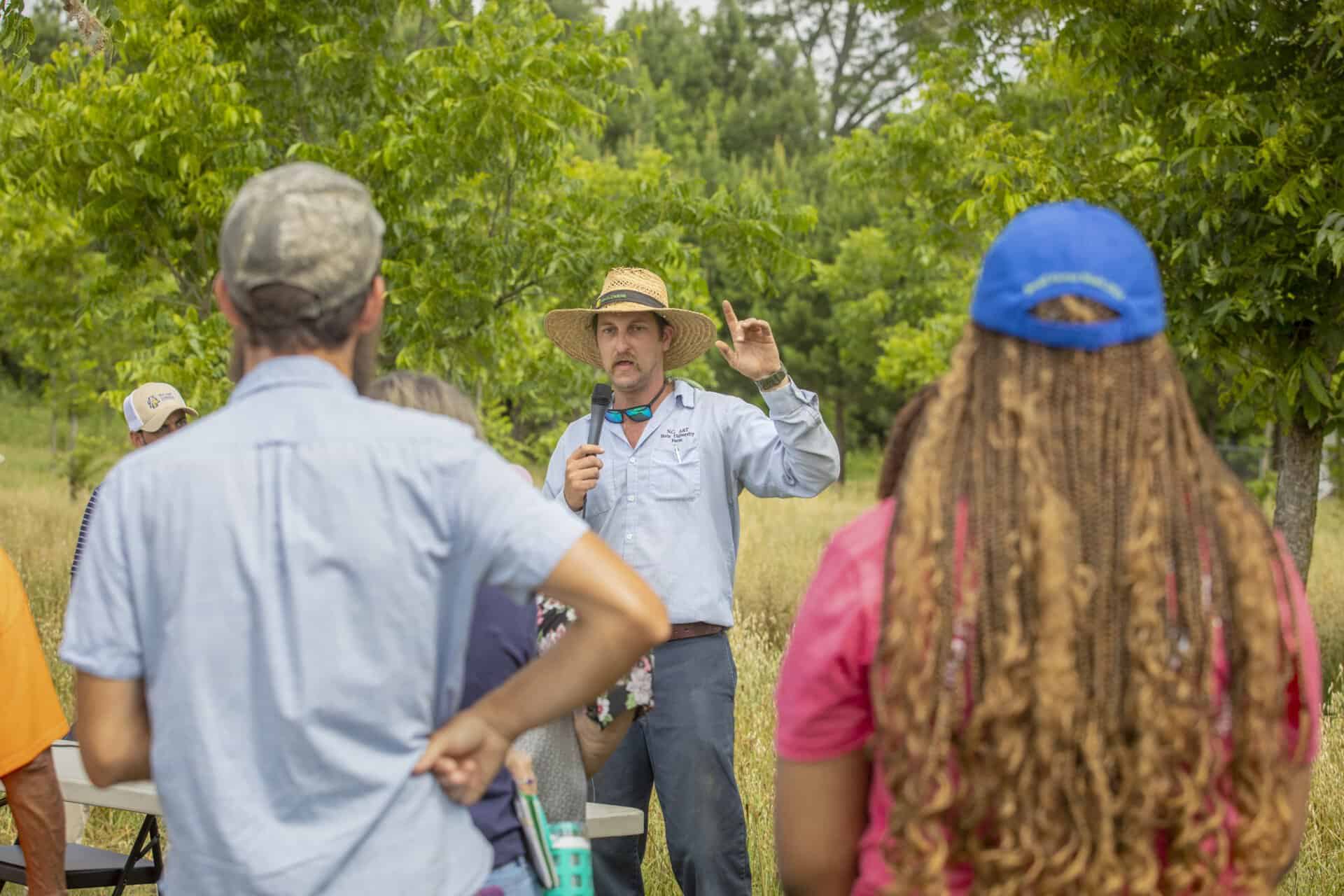
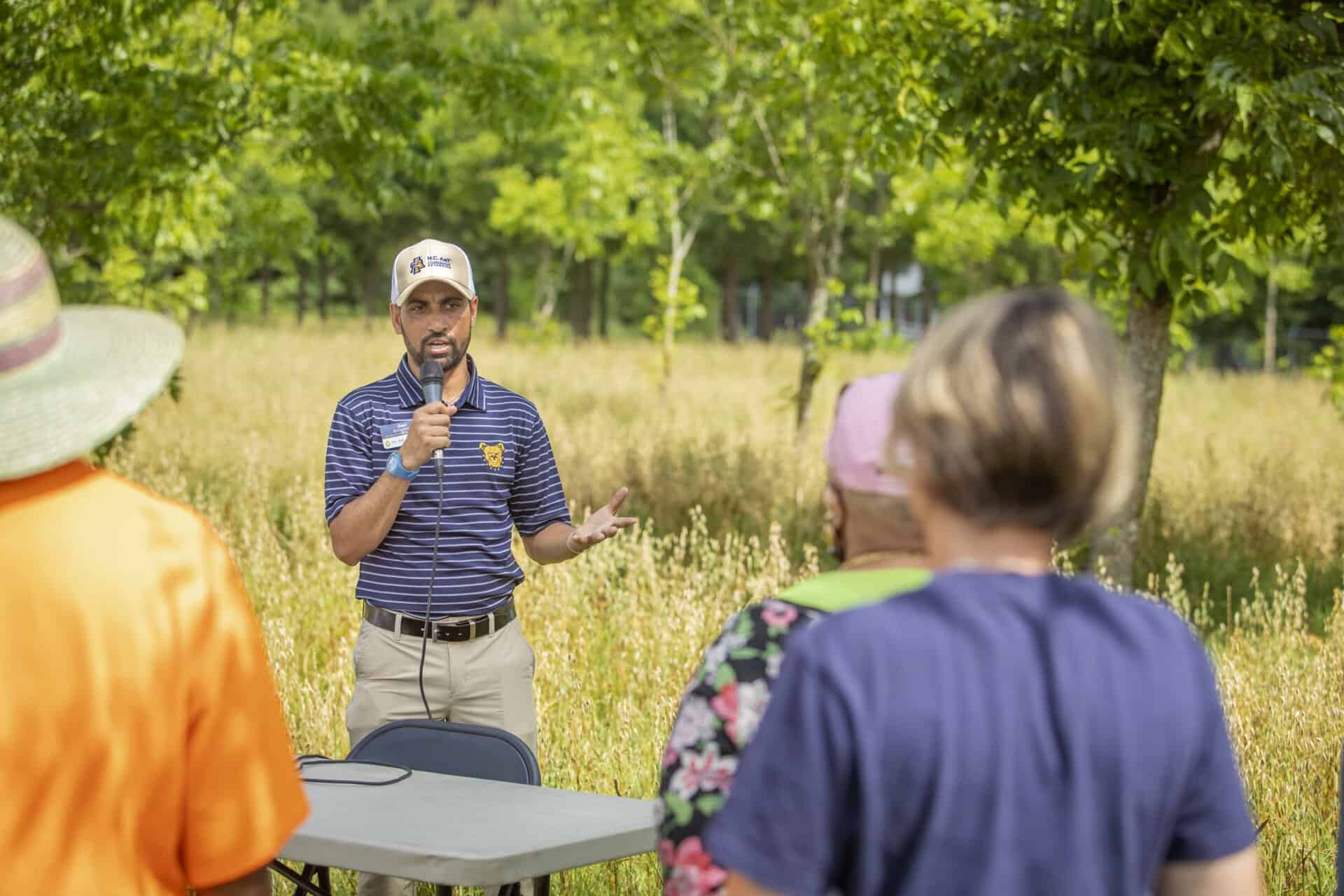
Across the farm, assistant professor and natural resource specialist Biswanath Dari, Ph.D., and ANR Horticulture Farm Manager John Kimes discussed climate-smart practices – such as cover crops, crop rotation, no tillage, and adding soil amendment – that farmers could take on their farm to increase soil health and profitability.
Find more videos on Cooperative Extension's YouTube Channel
“’Climate-smart’ means anything having to do with farm sustainability,” said Dari. “Within this, you do grow crops, or animals, or any integrated farming system in a way that will have less input costs in terms of water, fertilizer, or other resources. But the main goal is to give the oil health a boost for long-term productivity.”
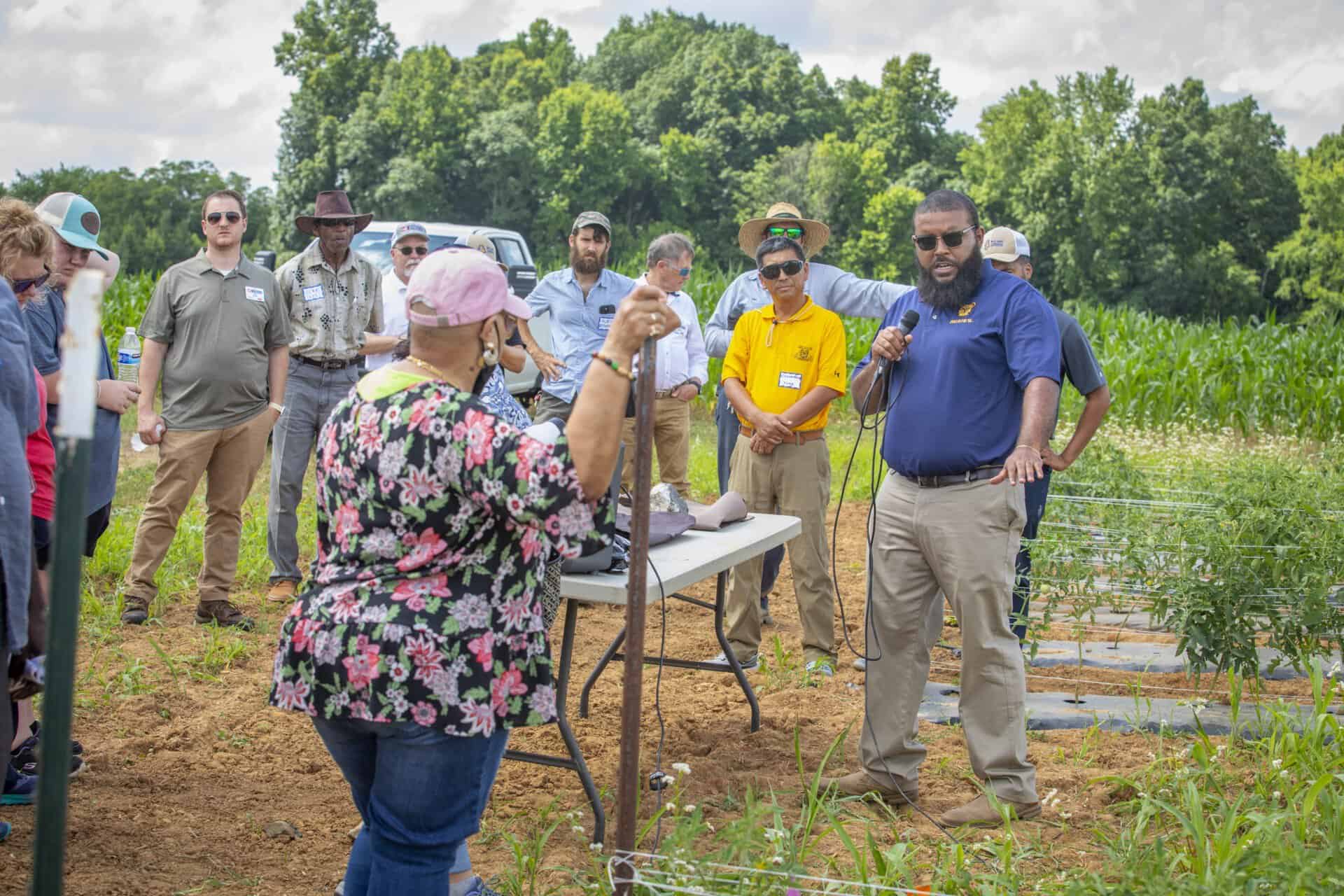
Trequan McGee, Ph.D., associate professor and horticulture extension specialist, offered the attendees the benefits of biodegradable mulch, such as paper or plastic, for cover crop production.
“A lot of times in commercial, large-scale operations, we use plastic mulches that are made from polyethylene,” said McGee. “The concept here is that we used biodegradable mulches that can be tilled right into the soil, and the microbes in the soil will begin to break down those materials over time.”
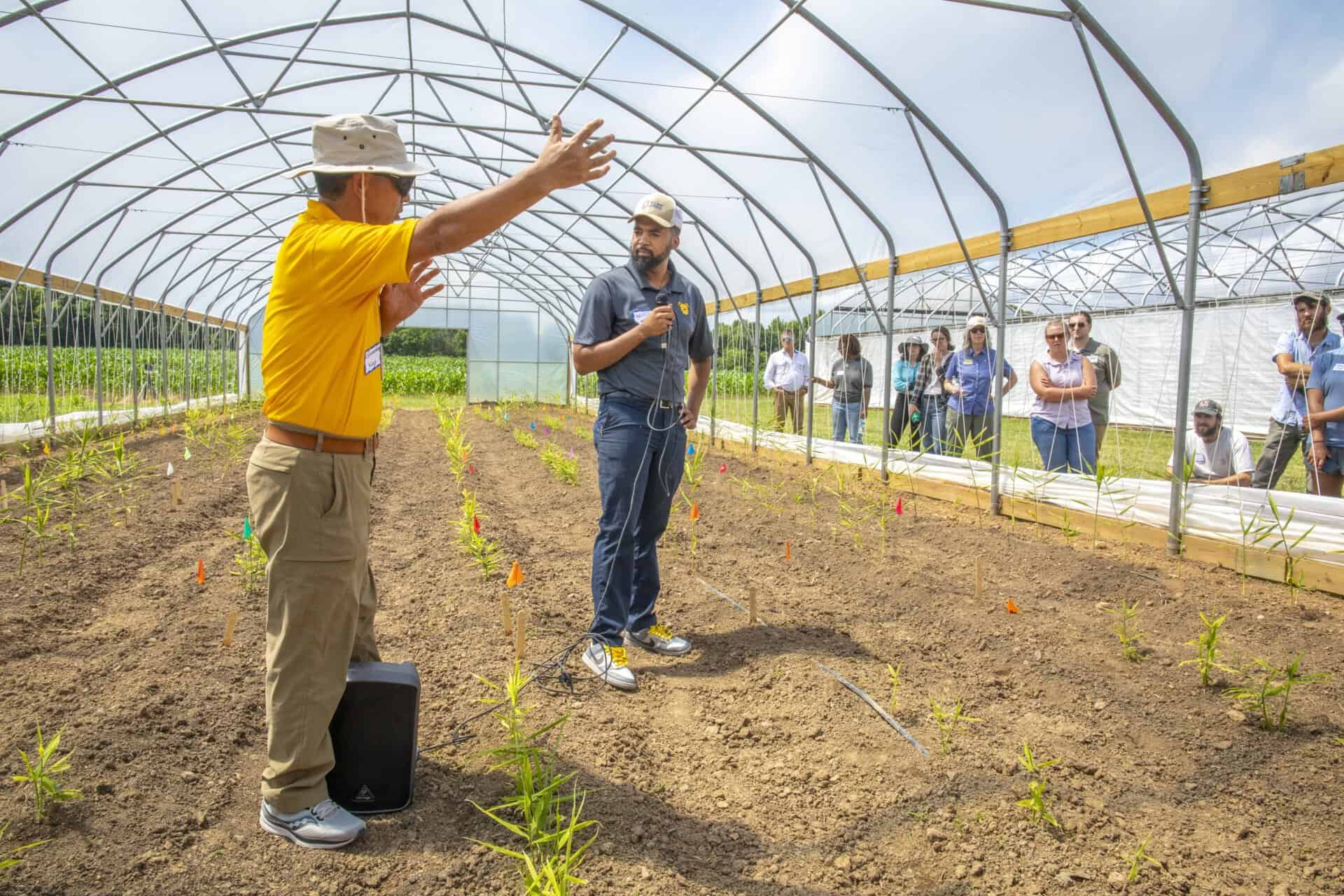
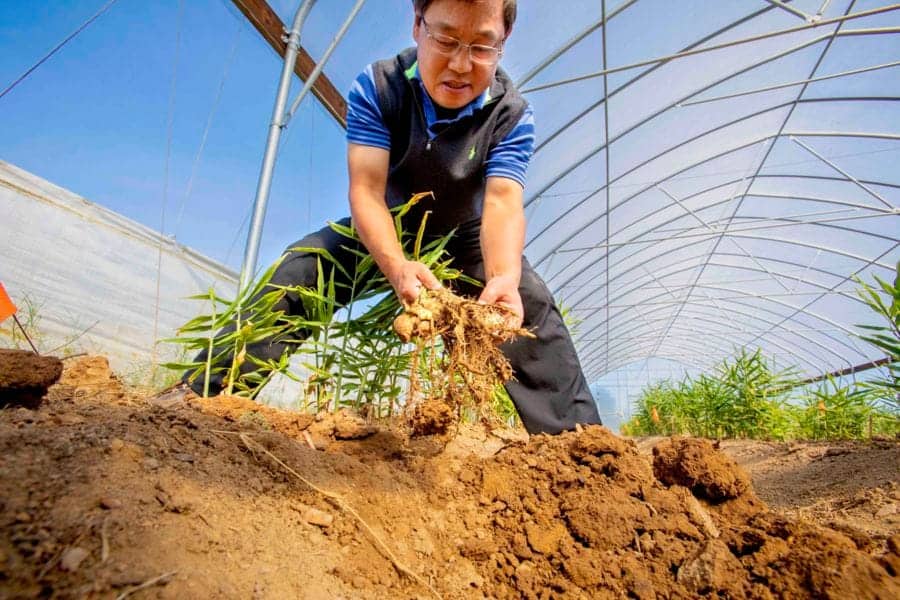
In the organic field, Ph.D. student William Lashley discussed the college’s current studies on tissue-culture ginger production, established by natural resources and environmental design professor Guochen Yang, Ph.D.
“In the beginning, we went from, ‘Can we produce it in North Carolina? Can we get a decent yield or grow it in a high-tunnel greenhouse?’ to the answer: Yes,” said Lashley. “Some of the most common ways to produce ginger in North Carolina are in the high-tunnel greenhouse. However, the newest part of our research is the artificial color shade, in order to see how artificial colors such as red, blue, white, dark and so on affect the growth and physiology of ginger.”
In a featured highlight of the event, guest speaker and 2024 N.C. Small Farmer of the Year Jim Hartman of Secret Garden Bees spoke to the guests inside the farm Pavilion. Hartman, an Army veteran turned beekeeper and honey producer, emphasized the importance of hiring veterans, particularly through the Work Opportunity Tax Credit and Boots on the Ground Apprenticeship Program, to help manage farm labor, recover taxable losses and support vet affairs.
“Veterans show up for work, for a long time,” said Hartman. “They don’t mind the heat, they don’t mind the cold. They’re comfortable wearing boots and coats. Good help is hard to find, but through these programs, you’re able to find and utilize a good, qualified person who wants to work.”