Think that onion peel or watermelon rind is trash? Think again.
Both are loaded with beneficial properties – antioxidants, polyphenols and other nutrients – that are not only good nutrition, but possibly even disease-fighters for such conditions as diabetes and obesity. Testing foods such as onion peel and watermelon to discover their health-promoting properties is the focus of the research of Hyewon Kang, Ph.D., associate professor of food and nutritional sciences in the Department of Family and Consumer Sciences.
To help her study the benefits of watermelon and onion peel, she has recently received two grants to find out more about the ways these common food by-products can be used as “food medicine.”
“Why are we always looking for medicine when we get sick? Why can’t food cure people?” said Kang. “I have the dream to study and to find out how food can help people become healthy.”

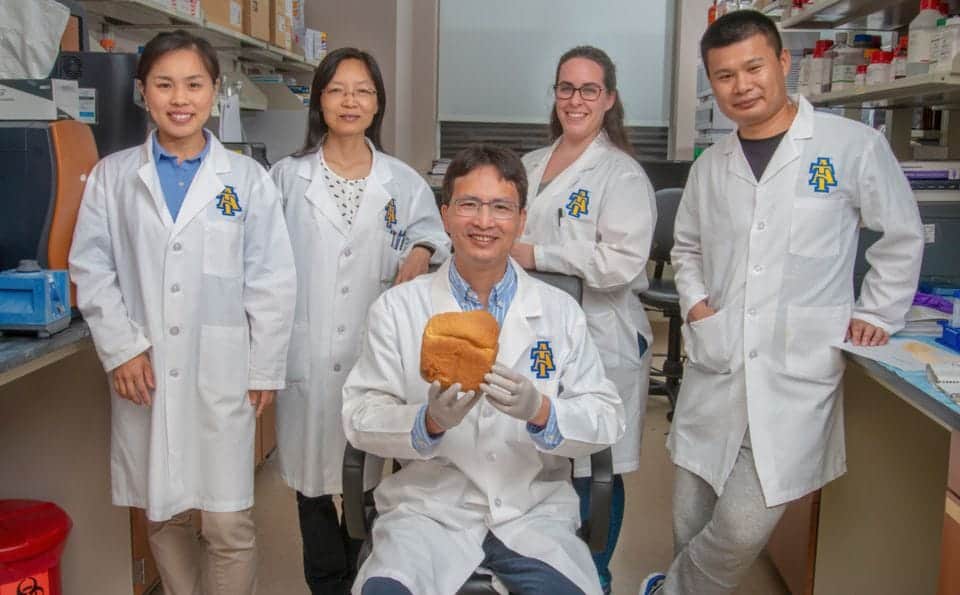
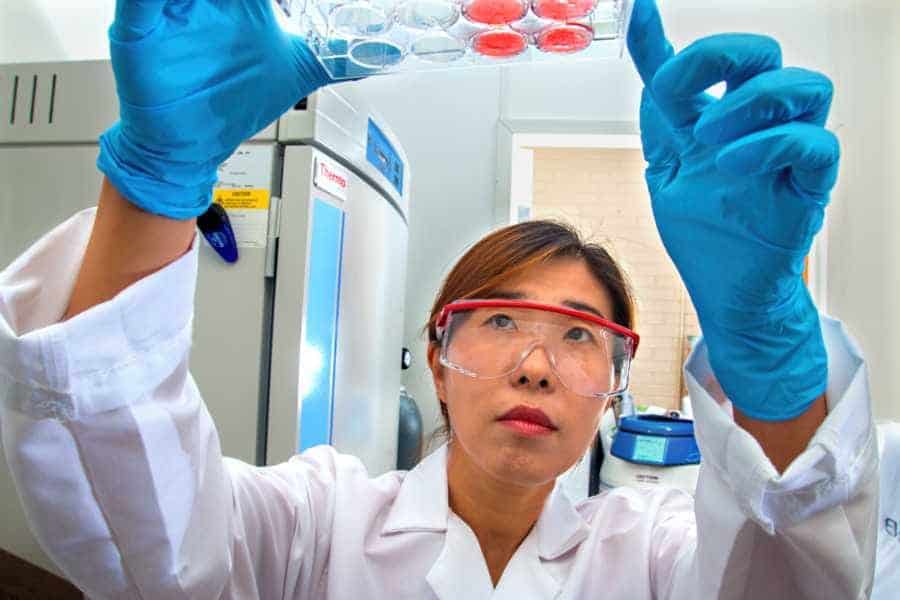
Hye Won Kang, Ph.D., is working to analyze the bioactive elements in onion peel and watermelon that can make them good medicine as well as good food.
Thanks to her new, one-year grant from the National Watermelon Promotion Board, Kang will be able to identify and test the bioactive compounds in watermelon flesh, rind and skin and assess their ability to regulate intestinal enzymes’ response to starch. This study has implications for people with diabetes, Kang said, because the body converts starch to glucose, a type of sugar. Too much glucose in the bloodstream, a condition called hyperglycemia, is a hallmark of both Type 1 and Type 2 diabetes.
Watermelon is often overlooked as a healthy food with anti-oxidant and anti-inflammatory properties because it tastes so good, Kang said,
“Watermelon tastes like a chunk of sugar, but it is actually 92 percent water, and has vitamins that are healthy for our system,” she said.
Based on her research, Kang has formed the hypothesis that watermelon flesh, rind and skin have three different bioactive compounds that can help prevent hyperglycemia, an excess of glucose in the bloodstream, by regulating intestinal enzymes that break down starch into glucose.
“Watermelon may prove to be good for diabetic people because of these compounds’ ability to help with carbohydrate digestion and regulate blood sugar levels, and its by-products may be good for you, too,” Kang said.
Kang has studied polyphenol-rich onion peel’s properties since 2014, particularly its effect on “brown fat,” the type of fat that is capable of burning calories. Packed with mitochondria, it is a potential ally in efforts to reduce obesity.
A two-year grant from the USDA NIFA’s Agriculture and Food Initiative (AFRI) will allow Kang to build on her existing research by looking at its effects on the gut microbiome of obese adults. This is the first time her study has involved human subjects.
“The study will test how the onion peel’s bioactive compounds can become available to the person who ingests them,” she said.
Kang’s previous studies have focused on tests in the lab and in rodents. This study will allow for the in vitro tests of feces provided by overweight humans.
The study will also look at digested onion peel extract’s influence on gut inflammation.
If successful, the study will shed new light on the way the gut functions in the development of obesity, and help to increase researchers’ understanding of human gut biome regulation.
USDA NIFA Agriculture and Food Research Initiative (AFRI) Competitive Grants Program-Foundational and Applied Science Program, 05/01/2020 – 04/30/2022, “Understanding the Function and Availability of Bioactive Compounds from Onion Peel on the Human Gut Microbiome”, PI, $181,680
National Watermelon Promotion Board, 05/01/2020 – 04/30/2021, “Evaluation of bioavailability and effect of watermelon bioactive compounds on intestinal carbohydrate-hydrolyzing enzymes”, PI, $23,608