A leading food scientist at N.C. A&T is part of a team that has received the most competitive grant offered by the NIH to investigate whether plant-rich diets can become the newest weapon in the fight against cardiovascular disease.
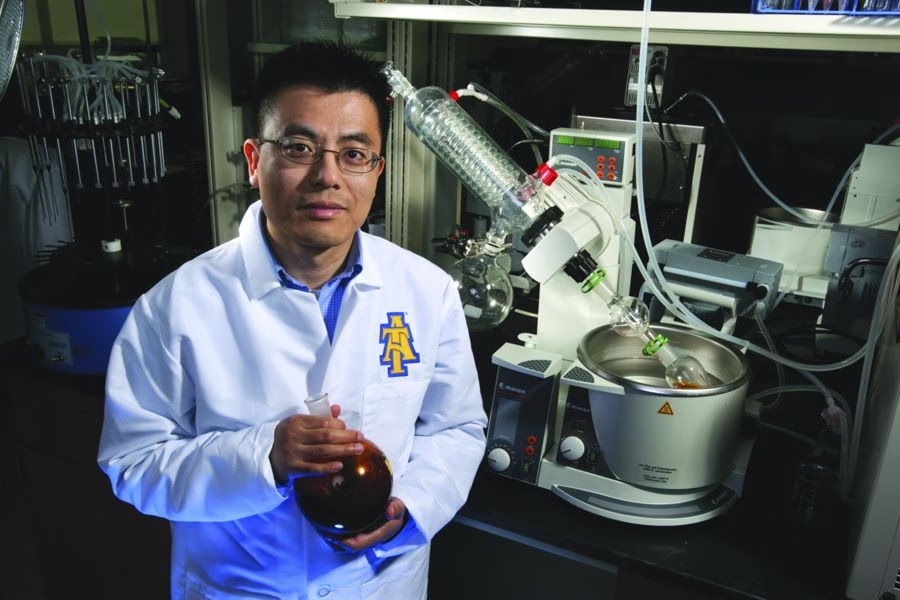
Shengmin Sang, Ph.D., a Distinguished Professor of Functional Foods in N.C. A&T’s College of Agriculture and Environmental Sciences, will conduct a controlled human feeding study and analyze data collected from that study. This project is funded by a five-year, $3.2 million grant from the NIH’s National Heart Lung and Blood Institute. N.C. A&T will receive the largest portion of the award, $1.4 million.
“We know that plant-based foods are good for human health and are linked to a reduced risk of cardiovascular disease, but the internal mechanisms of how they work are still unclear,” Sang said. “For this project, we want to provide scientific evidence that links plant-based food to the prevention of cardiovascular disease.”
Heart disease is the leading cause of death in the United States, according to the Centers for Disease Control and Prevention. Roughly one out of every three deaths in this country is attributed to heart disease, which annually costs more than $400 billion annually in health care costs, medicine expenditures and lost productivity.
Researchers previously have discovered that high levels of triglycerides and cholesterol can increase the risk of cardiovascular disease. Sang and his colleagues will seek to identify another potential biomarker of heart disease — carbonyl stress — that will help individuals monitor their health. They’ll do that by investigating whether flavonoids, which are compounds with anti-oxidant properties commonly found in fruits and vegetables, can reduce carbonyl stress, the overload of harmful compounds in the body that can induce cardiovascular disease and other chronic health conditions.
At his functional food lab at the Center for Excellence in Post‑Harvest Technologies at the N.C. Research Campus in Kannapolis, Sang will oversee a three-week trial in which a group of people will consume apples, blueberries, soy milk, green tea as flavonoid-rich foods. Sang then will collect and analyze blood and urine samples to measure the time and dose effects of diets both high and low in flavonoids, as well as levels of certain molecules and compounds formed when reactive carbonyl species in the body bind to proteins, fats and DNA. This data will be used to examine relationships between flavonoid metabolites and carbonyl and oxidative stress biomarkers.
In the study’s second phase, researchers will examine relationships between flavonoid metabolites, carbonyl and oxidative stress biomarkers and the risk of heart disease in three large epidemiological studies that represent a diverse cross-section of Americans.
Sang is one of three multi‑principal investigators on the project, along with Frank B. Hu, Ph.D., the Fredrick J. Stare Professor of Nutrition and Epidemiology at Harvard University’s T. H. Chan School of Public Health; and Qibin Qi, Ph.D., a professor of epidemiology and population health at Albert Einstein College of Medicine in New York City. Hu serves as the project’s contact principal investigator.
The project is funded by a R01 grant, the NIH’s most competitive grant program for biomedical and health-related research. Sang has won four previous R01 awards, including one in 2022 to fund related ongoing research into possible connections between flavonoids and the risk of type 2 diabetes.
“Dr. Sang is recognized as a leading expert in the study of functional foods — that is, foods that improve health beyond meeting basic nutritional needs. His participation on this project that’s being supported by the NIH’s most prestigious and most competitive life sciences award could unlock crucial biological mechanisms and further advance our knowledge into the relationship between nutrition and the prevention of cardiovascular disease,” said Radiah C. Minor, Ph.D., the CAES interim dean. “We are grateful that NIH continues to support Dr. Sang’s research.”